A UTV is not built like a car. One machine can carry textured plastic body panels, a powder-coated cage, a polycarbonate windshield, vinyl seats and rubber that spends its life in mud. The best UTV wash products are the ones that are gentle enough for every one of those materials at the same time.
The short answer: a pH-neutral foaming soap, soft tools, a plush drying towel, and a separate product for restoring plastic and for protecting anything painted or glass. Skip harsh degreasers, acid wheel cleaners and anything abrasive.
Here is what is safe for each material on a side-by-side, what to keep off it, and the routine that puts it all together.
Why UTV Materials Need a Gentler Wash
Most UTV body panels are molded, unpainted plastic. The color runs all the way through, but the surface is porous and slightly textured, so harsh chemicals soak in and leave it chalky and gray.
Powder coat is tough, but it is still a finish. Aggressive degreasers and stiff brushes dull it over time, and once it chips, rust starts working underneath.
Polycarbonate scratches far more easily than glass and reacts badly to some household cleaners. Treat it like the most delicate part of the machine, because it is.
Put all of that together and you want one soap that cleans hard but stays kind to everything. That is the job of a pH-neutral formula.
What Is Safe for UTV Plastic Body Panels?
Plastic panels want three things: a pH-neutral soap, plenty of lubrication, and a soft wash mitt or brush. Thick foam does the lubrication part, so grit slides off instead of being dragged across the panel.
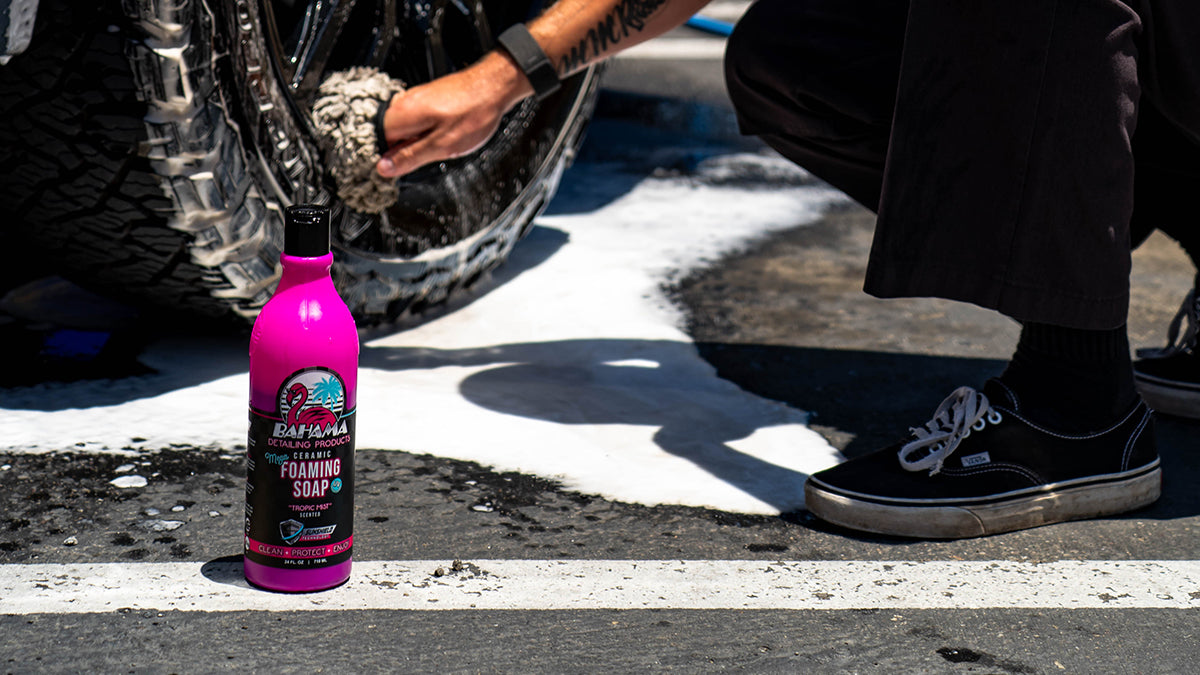
Ceramic Mega Foaming Soap is pH-neutral, runs through a foam cannon or a bucket, and lifts road film, mud and bug guts while leaving a beading ceramic layer with SunShield UV behind. That matters on plastic, because UV is what fades it in the first place.
If your panels are already gray, washing alone will not bring the color back. That is a restore job, covered below and in our guide on how to restore faded plastic.
Plastic mistakes to avoid
- Pressure washer tips held close to the panel edges and decals.
- Stiff brushes on smooth or glossy plastic.
- Household degreasers and all-purpose cleaners that leave a dry, chalky film.
- Greasy dressings that sling onto the seats and attract dust on the next ride.

Thick cannon foam that lifts road film, mud and bug guts, then leaves a beading ceramic layer behind. pH-neutral, so it is safe on any coating.
What Is Safe for a Powder-Coated Frame and Cage?
Powder coat handles the same pH-neutral soap as the body. Use a soft brush in the joints and seams where mud packs in, and let the foam dwell a minute so it softens dried dirt before you scrub.
Avoid acid-based wheel cleaners and strong alkaline degreasers on powder coat. They can haze the finish and attack it at any chip or weld seam.
After the wash, protect it based on its sheen. Satin and matte black powder coat, which most cages use, takes Ceramic Simple Finish along with the plastic and trim. Gloss powder coat and painted metal get Ceramic Final Touch Detail Spray instead.
While you are in there, look for chips. Touch them up before the next ride so water cannot get under the coating.
What Is Safe for a Polycarbonate Windshield or Roof?
Polycarbonate is where most UTV owners do damage without knowing it. It is clear like glass but much softer, so dust dragged across it leaves fine scratches you will see every time the sun hits it.
- Rinse first, and rinse a lot. Float off as much grit as you can before anything touches it.
- Wash with the same pH-neutral foam and a clean, soft mitt that has not touched the wheels.
- Never use ammonia-based glass cleaner or paper towels. Both are hard on polycarbonate.
- Blot it dry with a clean Lil' Bird instead of wiping it with a rag or squeegee.
Many aftermarket windshields carry their own hard coat, and the maker's care instructions vary. Before putting any coating or detail spray on a polycarbonate windshield, check what the manufacturer recommends.

Glass, mirrors, door jambs and every spot the big towel is too much for. Same 1600 GSM pile, seamless edge.
What Should You Keep Off Your UTV?
A lot of UTV damage comes from grabbing whatever is in the garage. Keep these off your machine:
- Dish soap. It strips protection and dries plastic out.
- Acid wheel cleaners. Hard on powder coat, anodized parts and bare aluminum.
- Household glass cleaners. Many contain ammonia, which is a bad match for polycarbonate.
- Abrasive pads and compounds on plastic or polycarbonate.
- One shared towel. A towel that has been through brake dust and tire dressing has no business on your windshield or seats.
If the machine is caked after a ride, see our guide on removing mud from a UTV without scratching the plastic before you start scrubbing.
The UTV Wash Routine: Wash, Dry, Restore, Protect, Finish
Every bottle has a towel built for it. Here is how the full routine runs on a side-by-side.
- Wash. Rinse from the top down, then foam the whole machine with Ceramic Mega Foaming Soap through a cannon or from a Grit Guard Bucket. Work the cab with Ceramic Interior Cleaner and a Starting Line towel on the dash, vinyl seats and screens.
- Dry. Sheet the hood, roof and big panels with a Big Bird. Use a Lil' Bird on the windshield, mirrors, seat edges and tight spots. Blot rather than drag. Water spots are made in the drying, not in the wash.
- Restore. Spray Ceramic Simple Finish on plastic panels, fender flares, tires, wheels, rubber and satin powder coat, then wipe with a Finish Line towel. Spray, wipe, walk away. If your wheels are gloss, give them a quick buff after.
- Protect. On painted panels, gloss powder coat and any chrome, spray Ceramic Final Touch Detail Spray, wipe it smooth into a consistent layer and let it dry 5 minutes.
- Finish. Buff it off with a dry Victory Lap. Never buff Final Touch with the Birds, because their deep pile drinks the coating off the panel. Keep it dry about 24 hours so it cures.
For tire and wheel specifics, our UTV tire and wheel care guide goes deeper.

Faded plastic, trim, rubber and tires back to like-new, then protected. Just as good on matte, satin, PPF and vinyl wrap.
Frequently Asked Questions
Can I use car wash soap on a UTV?
Yes, as long as it is pH-neutral. A pH-neutral foaming soap is safe on plastic, powder coat and paint, and it will not strip the protection you have already built up.
Is a pressure washer safe on UTV plastic?
Used at a distance, yes. Keep the tip well back from decals, panel edges, seals, bearings and electrical connectors, and let foam do the heavy lifting.
How do I clean a polycarbonate UTV windshield without scratching it?
Rinse heavily, wash with pH-neutral foam and a clean soft mitt, then blot dry with a clean Lil' Bird. Skip ammonia glass cleaners and paper towels.
What should I put on faded UTV plastic?
Ceramic Simple Finish, applied with a Finish Line towel after the machine is clean and dry. It brings faded plastic back to like-new and leaves SunShield UV protection behind.
Can I use Simple Finish on my UTV windshield?
No. Keep Simple Finish off glass and clear windshields. It is built for plastic, trim, rubber, tires, wheels and matte or satin finishes.
The Bottom Line
The safest UTV wash setup is simple: pH-neutral foam, soft tools, the right towel for each job, and the right bottle for each material. Get that right and your plastic stays dark, your cage stays clean and your windshield stays clear.
The Full System Set puts all four bottles in one box. Wash. Restore. Protect.

Wash, interior, restore and protect: all four Bahama ceramic bottles in one set. A pro ceramic coating is $1k+. This system only takes a couple hours.

Drying, interior, wheels and trim, and buffing the Final Touch coating, each with its own towel. No wheel grime on the dash, no drying towel soaking up your coating.