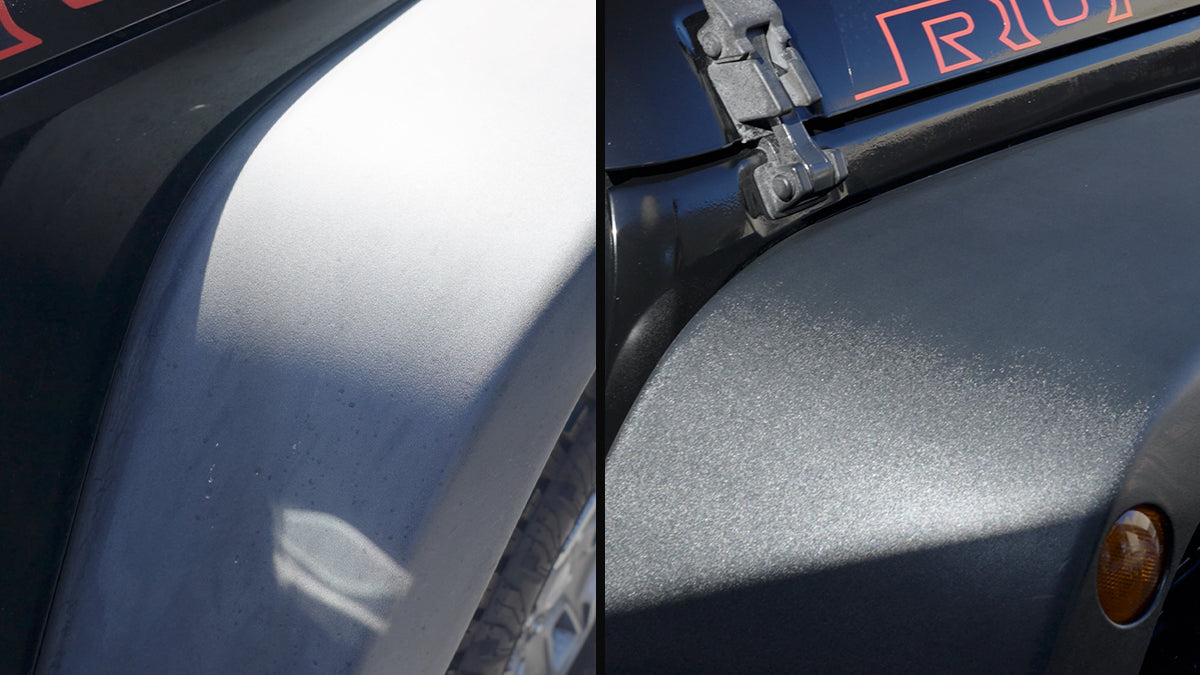
Black plastic fades. Truck trim, UTV panels, motorcycle fairings and SUV cladding all end up the same chalky gray if they live in the sun long enough.
The good news: you can restore faded plastic at home in minutes, and you can keep it from fading again. The trick is that restoring the color and protecting it from UV need to happen together. Most products only do the first half.
Here is why plastic fades, why most restorers wear off so fast, and the routine that actually fixes it.
Why Does Plastic Fade?
Plastic fade is UV damage. Plastic is made of long polymer chains, and UV radiation carries enough energy to break the bonds that hold those chains together.
Once they break, the surface turns chalky and porous. Pigment and the oils that gave the plastic its deep color work their way out, and what is left looks gray and dry.
Darker plastics usually look worse, faster, because they absorb more of that energy and the contrast shows every bit of fade. The same process attacks your paint and rubber seals too. Our guide on how UV rays destroy car paint covers the paint side.
Why Most Plastic Restorers Stop Working
Most plastic restorers fall into two camps: oily silicone dressings and wax-style coatings.
Silicone dressings fill the porous surface with oil, which darkens it right away. Then the oil evaporates or washes off, the plastic goes back to gray, and you are applying it again. Many of them sling onto paint, too.
Wax-style coatings sit on top of the plastic, wear away with weather and heat, and do nothing about the UV that caused the problem.
Neither one stops the damage. They cover it for a while, the sun keeps breaking down the plastic underneath, and the cycle repeats.
The Fix: Restore and Protect in One Pass
Restoration brings the color back. Protection stops the sun from taking it away again. You need both, and ideally from the same product, in the same pass.
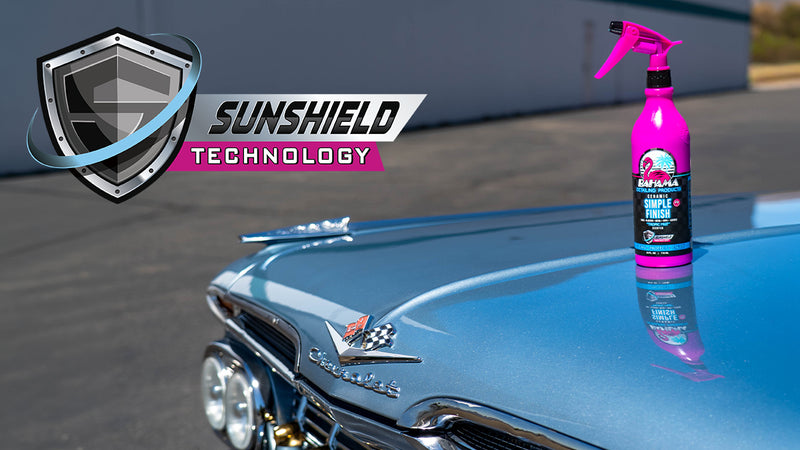
That is what Ceramic Simple Finish is built for. It restores faded plastic, trim, rubber and tires back to like-new, and it carries SunShield UV, so the fresh color has a shield over it the moment you wipe it on. A faded bumper comes back in about three minutes. Spray, wipe, walk away.
It is graphene and SiO2 based, not an oily dressing, so there is no sling and nothing greasy to collect dust.

Faded plastic, trim, rubber and tires back to like-new, then protected. Just as good on matte, satin, PPF and vinyl wrap.
How to Restore Faded Plastic, Step by Step
Restored plastic only looks as good as the surface underneath it. Clean first, then treat. The routine follows the Bahama order: Wash, Dry, Restore, Protect, Finish.
1. Wash: Ceramic Mega Foaming Soap
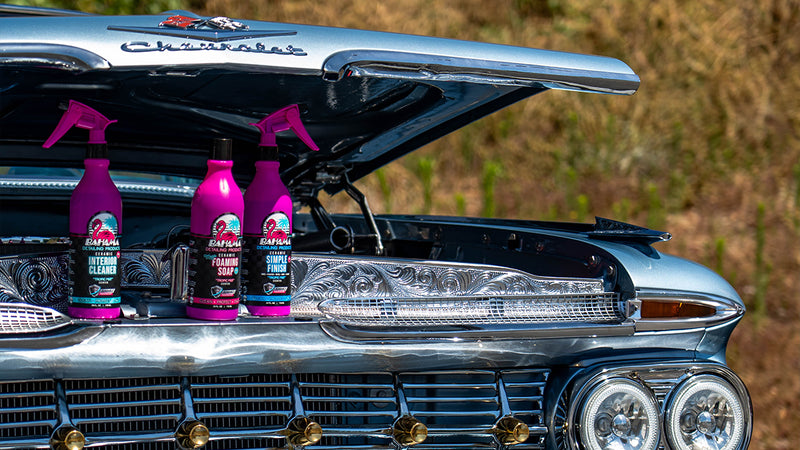
Wash the plastic, and ideally the whole vehicle, with Ceramic Mega Foaming Soap. Foam it on, let it dwell, then use a soft brush on textured plastic to lift dirt out of the grain. Rinse completely.
Old silicone dressing can leave a greasy film. If water still smears instead of sheeting on the plastic, wash it a second time before you restore.
2. Dry: Big Bird and Lil' Bird
Dry the panels with a Big Bird and use a Lil' Bird for trim strips, mirror caps, grilles and door jambs. Blot rather than drag.
The plastic needs to be fully dry. Water left in the texture will stop the product from laying down evenly.
3. Restore: Ceramic Simple Finish + Finish Line
Spray Ceramic Simple Finish onto the plastic or onto a Finish Line towel, then wipe it into the surface. Work small sections and watch the gray turn back to black as you go.
Use the short-nap side of the Finish Line to work product into textured trim, then the plush side to wipe it even. On deeply faded plastic, a second light coat after a few minutes evens out any blotchy spots.
Keep Simple Finish on plastic, trim, rubber, tires and wheels. It is not for gloss paint, glass or chrome, where it streaks. If you overspray onto paint, wipe it off right away.

Wheels, tires and trim. Dual-sided: a short nap to lift grime and a plush side to wipe it clean, so your finishing towels never do the dirty work.
4. Protect and 5. Finish: Final Touch + Victory Lap on the Paint Next to It
Restored trim looks even better next to protected paint. Once the plastic is done, spray Ceramic Final Touch Detail Spray onto the painted panels and glass, wipe it smooth and let it dry for 5 minutes.
Then buff it off with a dry Victory Lap. Never buff Final Touch with the Birds, because the thick drying pile soaks up the coating. Keep everything dry for about 24 hours so the layer cures.
Does It Work on Every Type of Vehicle Plastic?
Yes. Simple Finish works on exterior plastic regardless of what it is bolted to.
- Truck and SUV trim and cladding: the most dramatic before and after, since faded black next to clean paint is impossible to miss. Do bumpers, wheel arches, mirror caps and cowls in one session.
- UTV body panels and fenders: they live in the sun and get pressure washed constantly. See our guide on protecting a UTV from UV damage.
- Dirt bike and motorcycle plastics: brings back the factory color on shrouds, fenders and side panels, and helps mud release on the next ride.
- Rubber seals, gaskets and tires: the same UV that grays plastic dries out rubber. Simple Finish covers tire and rim together, with a quick buff on gloss rims after.
- Bed liners: a spray-in or drop-in liner that has gone gray takes it well.
How to Keep Restored Plastic From Fading Again
Restoring once is easy. Keeping it is about habit.
Wash with a ceramic soap. Ceramic Mega Foaming Soap leaves a ceramic layer with SunShield UV behind every time you wash, so you are topping up protection instead of stripping it. Harsh degreasers and all-purpose cleaners do the opposite.
Reapply when it tells you to. When water stops beading on the trim or the black starts to look dry, it is time for another wipe of Simple Finish. Vehicles that live outside in strong sun will need it more often than garaged ones.
Keep a dedicated towel. Your Finish Line handles plastic, trim and tires. It never goes on paint or glass. One towel per job, zero cross-contamination.
Park smart when you can. Shade and covers cut UV exposure, which means everything lasts longer.
Frequently Asked Questions
Can faded plastic be restored permanently?
UV damage to the plastic itself does not reverse, but you can bring the color back and keep it there. Restore with Ceramic Simple Finish, wash with a ceramic soap, and reapply when the plastic starts to look dry.
How long does it take to restore faded trim?
Not long. A faded bumper comes back in about three minutes with Simple Finish: spray, wipe, done. Most of your time goes into washing and drying properly first.
Will Simple Finish sling onto my paint?
No. It is not an oily dressing, so there is no sling. Wipe any overspray off gloss paint or glass right away, since those surfaces belong to Final Touch.
Can I use a heat gun to restore faded plastic?
A heat gun pulls oils to the surface for a temporary darkening, but it is easy to warp or burn the plastic. A spray and wipe restorer with UV protection is safer and lasts longer.
Does Simple Finish work on textured plastic?
Yes. Work it into the grain with the short-nap side of a Finish Line towel, then wipe even with the plush side.
The Lasting Fix for Faded Plastic
Faded plastic is a UV problem, so the fix has to include UV protection. Clean it, restore it with Simple Finish, and keep it topped up with a ceramic wash. For every bottle in this routine at once, the Full System Set protects the whole vehicle, not just the paint. Wash. Restore. Protect.

Wash, interior, restore and protect: all four Bahama ceramic bottles in one set. A pro ceramic coating is $1k+. This system only takes a couple hours.

Drying, interior, wheels and trim, and buffing the Final Touch coating, each with its own towel. No wheel grime on the dash, no drying towel soaking up your coating.