UV light is one of the main reasons paint fades, clear coat chalks and black trim turns gray. You cannot see it, and you cannot wash it off.
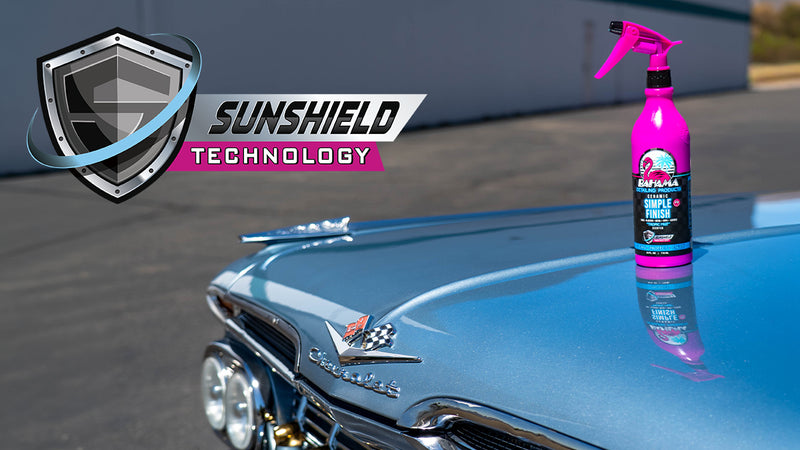
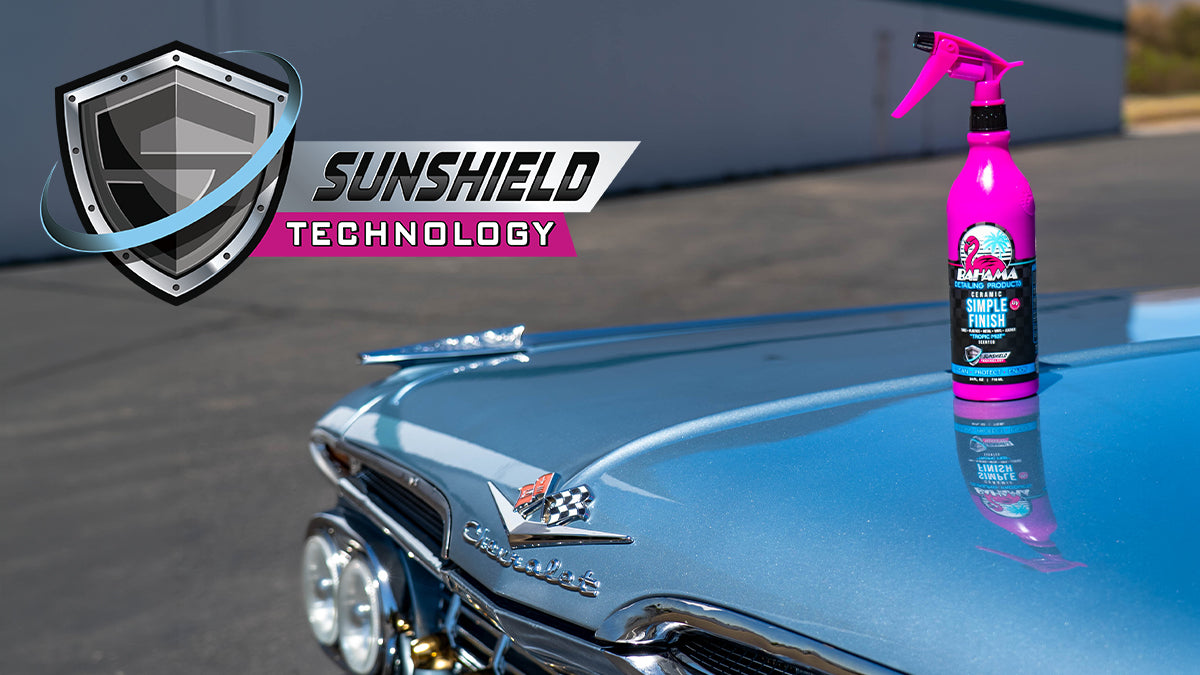
SunShield UV technology is Bahama's built-in UV protection. It covers the 290-400nm UV range, blocks 98% of UV at the clear coat, and it is in all four Bahama bottles, not just one. Every time you wash, restore or protect, you are also putting sunscreen on your vehicle.
Here is what UV actually does to a vehicle, how SunShield fits into the Bahama system, and how to keep that protection on every surface.
What Is SunShield UV Technology?
SunShield UV is the UV protection built into every Bahama formula. It sits alongside the Graphene + SiO₂ chemistry, so the same layer that beads water also shields the surface from sun.
The key numbers:
- 290-400nm coverage. That span covers the UV light that reaches the ground.
- 98% UV blocked at the clear coat.
- 14 days still beading and UV shielded in Sun Belt testing.
- Battle-tested in 108°F Sun Belt sun.
Because SunShield is in all four bottles, UV protection is not a separate step you have to remember. It comes with the wash, the interior wipe, the trim restore and the paint protection.
How Does UV Damage Car Paint?
Sunlight carries ultraviolet energy along with the light you can see. Most of the UV that reaches the ground is UVA, with a smaller share of UVB.
Clear coat is a polymer, a tight network of long molecular chains. UV energy breaks those chains. Over time, that breakdown shows up as:
- Dullness and haze, as the clear coat surface roughens.
- Chalky oxidation, especially on older single-stage paint and reds.
- Fading, as pigments underneath lose their strength.
- Clear coat failure, the peeling, cracked patches you see on cars that live outside.
Plastic trim, rubber, tires and interiors suffer the same way. That is why dashboards crack and black bumpers turn gray. For the full picture, read how UV rays destroy car paint.

The most ceramic of the four. Spray it on, wipe it smooth into a consistent layer, let it dry for 5 minutes, then buff. What is left is a streak-free, water-spot-free, ultra hydrophobic ceramic layer with UV protection.
How Do UV Absorbers Protect a Surface?
UV absorbers are compounds that take in UV energy and release it harmlessly, mostly as a small amount of heat, before it reaches the surface underneath. A good absorber can repeat that cycle again and again.
That is the difference between real UV protection and a shiny coating. A layer can look great and still let UV straight through. SunShield exists so the protection you put on is doing that job, not just making the paint look wet.
Your factory clear coat contains its own UV stabilizers, but they wear down over the life of the paint. An external layer reduces the UV load the clear has to handle, which helps it last.
Why Is SunShield in All Four Bottles?
UV does not only hit the hood. It hits the trim, the tires, the dash and the seats. Protection that covers only the paint leaves the rest to fade.
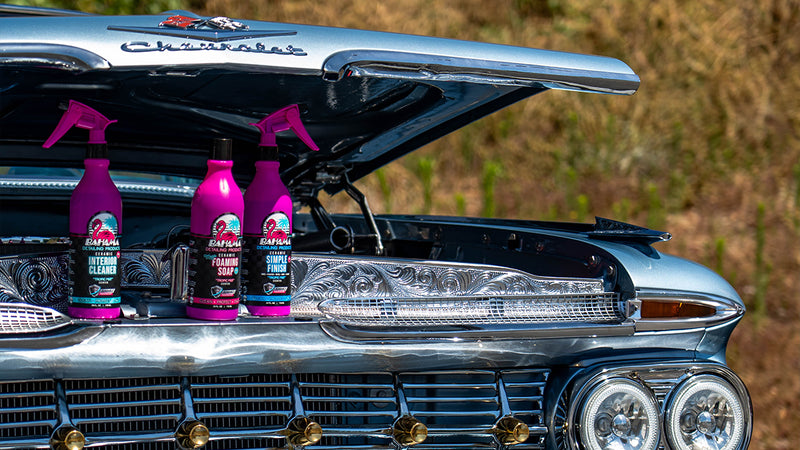
- Wash: Ceramic Mega Foaming Soap leaves a beading ceramic layer with SunShield UV after every wash.
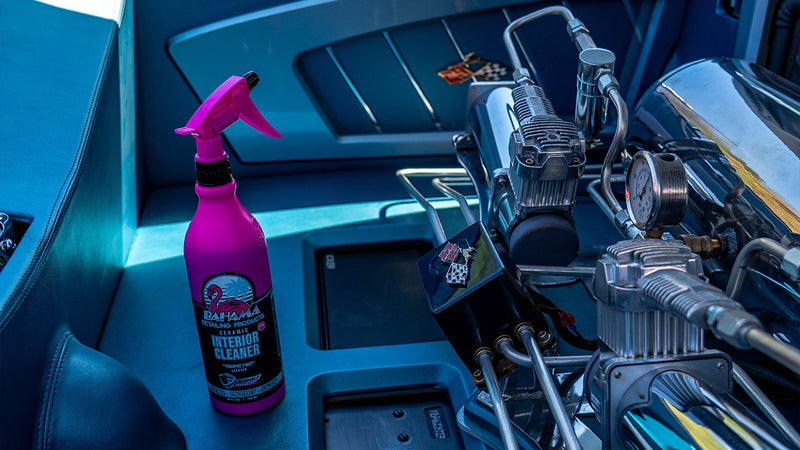
- Interior: Ceramic Interior Cleaner cleans and lays down UV protection in the same pass on dash, doors, leather, vinyl and screens.
- Restore: Ceramic Simple Finish brings faded plastic, trim, rubber, tires and wheels back to like-new with SunShield UV.
- Protect: Ceramic Final Touch Detail Spray is the most ceramic of the four and puts an ultra hydrophobic layer with SunShield UV on paint, glass and chrome.
How to Apply SunShield UV Protection to Your Whole Vehicle
Here is the full routine in site order. Each bottle has a towel built for it.
- Wash. Foam the vehicle with Ceramic Mega Foaming Soap through a foam cannon or from a Grit Guard Bucket. Inside, wipe surfaces with Ceramic Interior Cleaner on a Starting Line, which stays interior only.
- Dry. Blot big panels with a Big Bird and use a Lil' Bird for glass, mirrors and jambs. Water spots are made in the drying, not in the wash.
- Restore. Spray Ceramic Simple Finish on plastic, trim, rubber, tires and wheels, and wipe with a Finish Line. Keep it off gloss paint, glass and chrome.
- Protect. Spray Ceramic Final Touch on paint, glass and chrome. Wipe it smooth into a consistent layer and let it dry for 5 minutes.
- Finish. Buff with a dry Victory Lap, never a drying towel. Keep the vehicle dry for about 24 hours so it cures.
A full coat takes about an hour from wash to finish and lasts 3 to 6 months. Regular washes with the foaming soap top up the protection in between.

The towel for buffing Ceramic Final Touch. 450 GSM edgeless plush lifts the residue while the coating stays on the paint.
Does UV Protection Matter More in Some Climates?
Yes. UV is stronger at high altitude, in the desert and closer to the equator. A car that lives outside in the Sun Belt takes far more UV than one garaged up north.
But UV damage is cumulative everywhere. A vehicle with no protection fades in a mild climate too, just more slowly. If you are in high-sun country, read how to protect your car's paint from sun damage and keep protection topped up.
SunShield UV vs. Traditional Wax
Carnauba wax gives paint a nice look, but it was never built as a UV product, and it wears off quickly in heat. Once it is gone, the paint is bare.
A Graphene + SiO₂ layer with SunShield UV is built for exactly the conditions that kill wax: sun and heat. It layers and builds with every application. Our comparison of SiO2 vs. graphene explains the chemistry underneath.
Frequently Asked Questions
Which Bahama products contain SunShield UV?
All four: Ceramic Mega Foaming Soap, Ceramic Interior Cleaner, Ceramic Simple Finish and Ceramic Final Touch Detail Spray.
Does clear coat already protect against UV?
Factory clear coat has some UV stabilizers, but they wear down over time. An added layer of protection reduces the load on the clear so it lasts longer.
How long does SunShield UV protection last?
In Sun Belt testing, it was still beading and UV shielded at 14 days. A full Final Touch coat lasts 3 to 6 months, and each wash with the foaming soap tops it up.
Does SunShield protect plastic trim and interiors too?
Yes. Simple Finish carries it to trim, rubber and tires, and Interior Cleaner carries it to the dash, doors and seats.
Sunscreen for Every Surface
UV is slow, invisible and relentless, so the best protection is the kind you apply without thinking about it. With SunShield in every bottle, a regular routine keeps the whole vehicle covered. Wash. Restore. Protect. The Full System Set puts all four bottles in one box: one chemistry in four deliveries.

Wash, interior, restore and protect: all four Bahama ceramic bottles in one set. A pro ceramic coating is $1k+. This system only takes a couple hours.

Drying, interior, wheels and trim, and buffing the Final Touch coating, each with its own towel. No wheel grime on the dash, no drying towel soaking up your coating.