"Better than wax" is printed on a lot of bottles. Most of the time it means nothing. With graphene and SiO2 it actually describes something real: a different kind of layer on your paint, built from different material, that behaves differently with water, heat and sun.
Here is what changes at the molecular level when you move from wax to graphene and SiO2, why that shows up as tighter water beading and longer protection, and how to put it on your car.
How Does Wax Protect Paint?
Wax is a soft, oily film. Carnauba and most synthetic waxes are long, flexible molecules that lie on top of the clear coat and fill it in a little, which is why wax looks warm and feels smooth right after you apply it.
The weakness is the same thing: it is soft and it only sits there. Detergents dissolve it, heat softens it, and UV and friction wear it away. Wax protection is real, but it is short-lived by design.
What Do Graphene and SiO2 Do Differently?
SiO2 is liquid glass. As the carrier evaporates, it forms a thin, hard, glass-like layer on the clear coat instead of a soft film.
Graphene is a single-atom carbon lattice: a flat sheet of carbon atoms locked together in a honeycomb. It is 200x stronger than steel and used in body armor. In a detailing formula it reinforces the layer and adds slickness.
Put them together and you get a layer that is harder, slicker and more stable than wax. Graphene + SiO₂ = hydrophobics. And because it layers and builds with every application, each coat adds to the last instead of replacing it.
For a full comparison of the two materials, read SiO2 vs graphene, or start with what SiO2 is in car care products.
Why Does Water Bead on Graphene and SiO2?
Water molecules love to stick to each other and to surfaces they can grab onto. Bare or worn clear coat gives water something to hold, so it spreads into flat sheets and puddles.
A low-energy, slick surface gives water almost nothing to hold. The water pulls itself into tight, round beads that roll off with a little tilt or airflow. That is hydrophobic behavior.
Engineers measure it with contact angle: how steeply a drop stands up from the surface. SiO2 reaches a 110° contact angle, which means drops sit up tall instead of slumping flat. Graphene adds slickness on top, so beads release and roll more easily.

The most ceramic of the four. Spray it on, wipe it smooth into a consistent layer, let it dry for 5 minutes, then buff. What is left is a streak-free, water-spot-free, ultra hydrophobic ceramic layer with UV protection.
Why Does Hydrophobic Paint Stay Cleaner and Last Longer?
Beading is not just a party trick. It changes what happens to your paint between washes.
- Fewer water spots. Rain and tap water carry minerals. Water that rolls off takes them with it. Water that sits and dries leaves them behind as spots.
- Less contamination bonding. Grime, pollen and road film have a harder time sticking to a slick surface, so they rinse off instead of etching in.
- Easier, safer washes. When dirt releases easily, you wipe less. Less pressure means fewer chances to mar the paint.
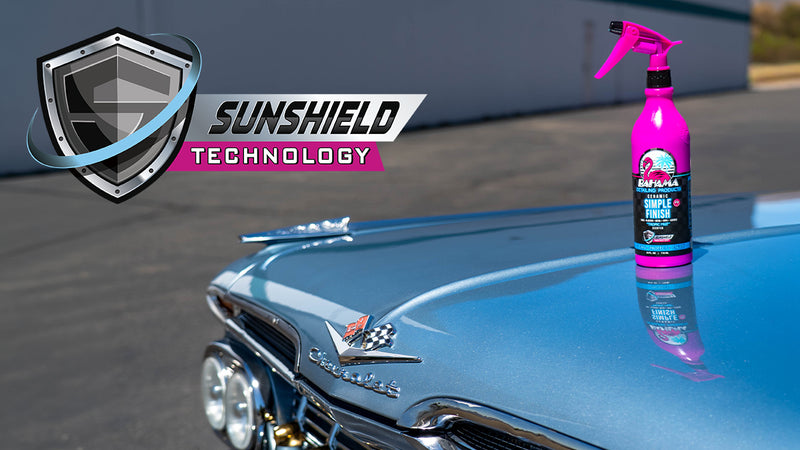
- UV defense that stays put. SunShield UV in every Bahama bottle blocks 98% of UV at the clear coat across the 290-400nm range, and a durable layer keeps that protection on the paint longer.
How Long Does Graphene and SiO2 Protection Last?
Wax is measured in weeks. A full coat of Ceramic Final Touch Detail Spray takes about an hour from wash to finish and lasts 3 to 6 months. Bahama protection is battle-tested in 108°F Sun Belt sun, and in that testing it was still beading and UV shielded at 14 days.
Part of that durability comes from the cure. Keep the surface dry for about 24 hours after a full coat so the layer can set, the same discipline a pro coating asks for.
Every wash with Ceramic Mega Foaming Soap also leaves a beading ceramic layer with SunShield UV behind, so the soap maintains the protection instead of stripping it.
How to Apply Graphene and SiO2 Instead of Wax
Every bottle has a towel built for it. Here is the full routine, in order.
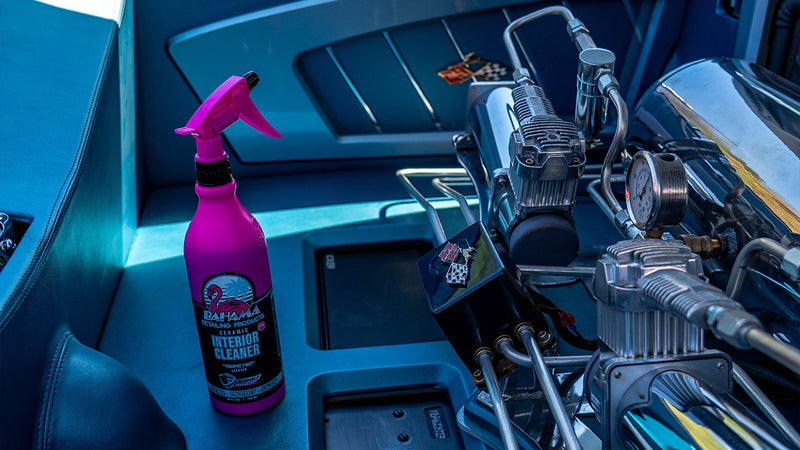
- Wash. In the shade, on cool paint. Foam with Ceramic Mega Foaming Soap through a foam cannon or a bucket with a Grit Guard Bucket. Inside, wipe the dash and seats with Ceramic Interior Cleaner and a Starting Line towel.
- Dry. Lay a Big Bird over the hood and roof and pull it toward you. Use a Lil' Bird for glass, mirrors and jambs. Water spots are made in the drying, not in the wash.
- Restore. Ceramic Simple Finish with a Finish Line towel on plastic, trim, rubber, tires and wheels. Keep it off gloss paint and glass.
- Protect. Final Touch on paint, glass and chrome. Spray, wipe it smooth into a consistent layer, and let it dry 5 minutes.
- Finish. Buff with a dry Victory Lap. Its edgeless weave lifts the residue while the coating stays on the paint. Never buff Final Touch with the Birds; their thick pile drinks the coating off the panel.
The liquid does half the work. The towel decides whether it comes off streaked or slick.

The towel for buffing Ceramic Final Touch. 450 GSM edgeless plush lifts the residue while the coating stays on the paint.
How Can You Tell if Your Paint Is Still Protected?
You do not need a lab. After a wash, mist a clean, dry panel with water or watch the next rain.
- Tight, round beads that roll off easily: protected.
- Flat, wide beads that cling: getting tired. A quick layer of Final Touch tops it up.
- Water sheeting into a film: time for a full coat.
For the deeper chemistry behind all this, see the science behind graphene and SiO2 detailing.
Frequently Asked Questions
Is graphene really better than wax?
For protection, yes. Wax is a soft film that wears away in weeks. Graphene and SiO2 form a harder, slicker layer that lasts 3 to 6 months and builds with each application.
Does a higher contact angle mean better protection?
It is one useful signal, since it tells you how well water and grime release. UV protection and durability matter just as much.
Can I put Final Touch over wax?
It works best on clean paint. Wash with Mega Foaming Soap first so Final Touch builds on the clear coat, not on old wax.
Can I use Simple Finish on paint instead?
No. Simple Finish is for plastic, trim, rubber, tires, wheels, matte paint, PPF and wraps. Gloss paint gets Final Touch.
The Bottom Line
Wax lays a soft film on your paint. Graphene and SiO2 build a hard, slick, hydrophobic layer that lasts months and gets stronger with every coat. Wash. Restore. Protect. A pro ceramic coating is $1k+; the Full System Set only takes a couple hours.

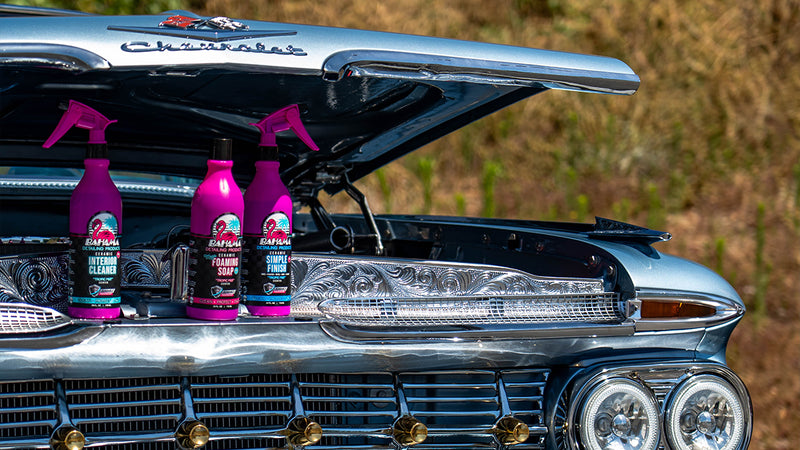
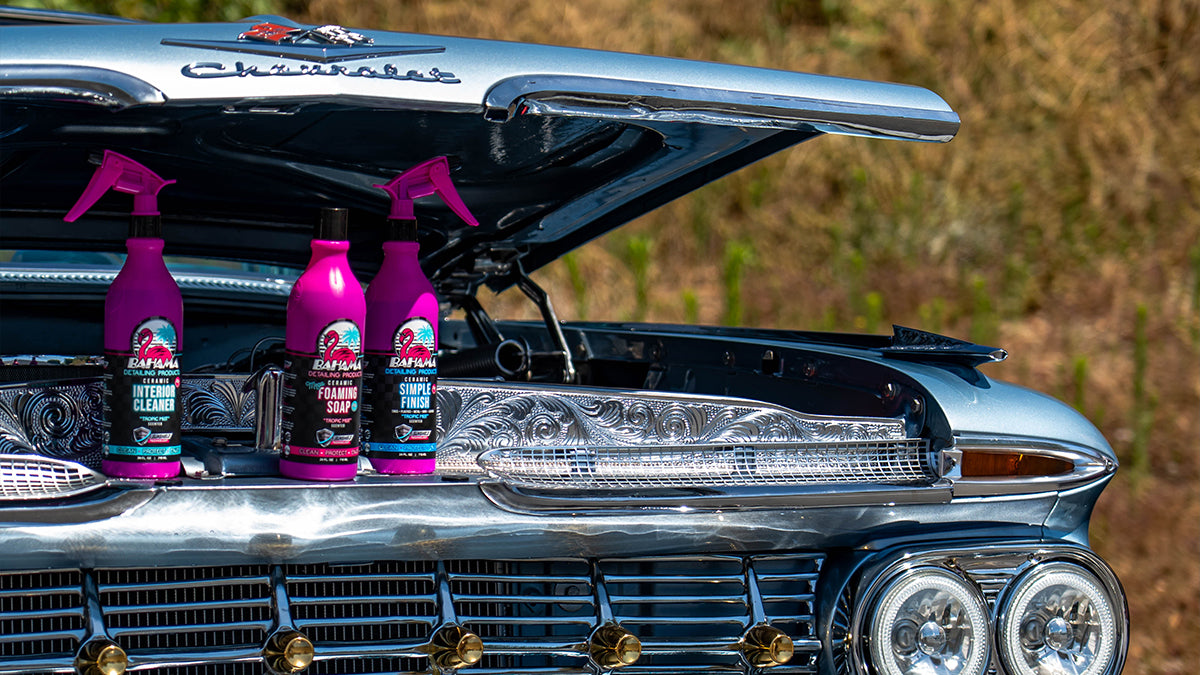
Wash, interior, restore and protect: all four Bahama ceramic bottles in one set. A pro ceramic coating is $1k+. This system only takes a couple hours.

Drying, interior, wheels and trim, and buffing the Final Touch coating, each with its own towel. No wheel grime on the dash, no drying towel soaking up your coating.