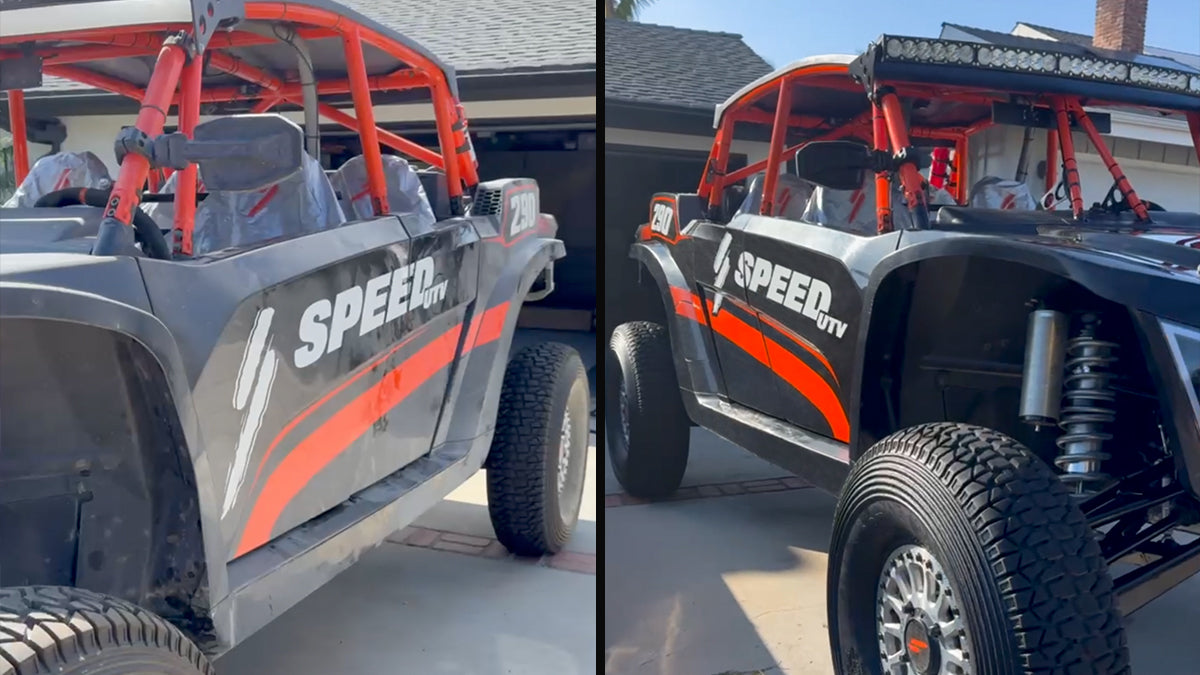
Mud is part of the deal with a UTV. The scratches are not. Most of the swirls and dull patches on side-by-side plastics come from the cleanup, not the trail.
To remove mud from a UTV without scratching plastic body panels, soften it before you touch it, rinse it off with volume instead of force, and wash with plenty of lubrication and soft tools. Then protect the plastic so the next load of mud lets go faster.
Here is the full process.
Why Do UTV Plastics Scratch So Easily?
Most UTV body panels are molded plastic, often with color running through the material rather than a thick clear coat on top. That plastic is softer than automotive clear coat, so grit leaves marks with less pressure.
Dried mud is full of sand and grit. Scrub it dry, or blast it at close range, and you drag those particles across the panel. Textured plastic also traps grit in its grain, which is why a quick wipe often makes things worse.
UV makes it harder. Sun-faded plastic is drier and chalkier, and it scuffs more easily than fresh plastic. For more on that, see how to protect a UTV from UV damage.
What Not to Do When Cleaning Mud Off a UTV
- Do not scrub dried mud. Soften it first.
- Do not use a narrow pressure washer tip up close. It can drive grit into the plastic, lift decals and force water into electrical connectors and bearings.
- Do not use dish soap or harsh degreasers on the body. They dry out plastic and strip protection.
- Do not use one rag for everything. The towel that wiped the wheels should never touch the hood.
- Do not wash in direct sun. Soap dries on hot plastic and leaves spots.
Step-by-Step: How to Remove Mud From a UTV
Here is the routine in site order: Wash, Dry, Restore, Protect, Finish. Each bottle has a towel built for it.
Step 1: Pre-rinse and soften
Start with a gentle, high-volume rinse from a wide fan or a hose. The goal is to soak the mud, not blast it. Hit the wheel wells, undercarriage and lower panels first, where the heaviest mud sits, and let water run off the top panels down.
If mud has baked on hard, keep it wet for a few minutes and rinse again. Each pass takes more off without you touching the plastic.
Step 2: Wash
Cover the machine in Ceramic Mega Foaming Soap through a foam cannon, or mix it in a Grit Guard Bucket. Let the foam sit and soften what is left. It is pH neutral, lifts mud and road film, and leaves a beading ceramic layer with SunShield UV behind.
Wash with a soft mitt in straight lines, top to bottom, rinsing the mitt in the bucket often. Use a soft brush on textured plastic and around fasteners. Do wheels and tires last with their own brush.
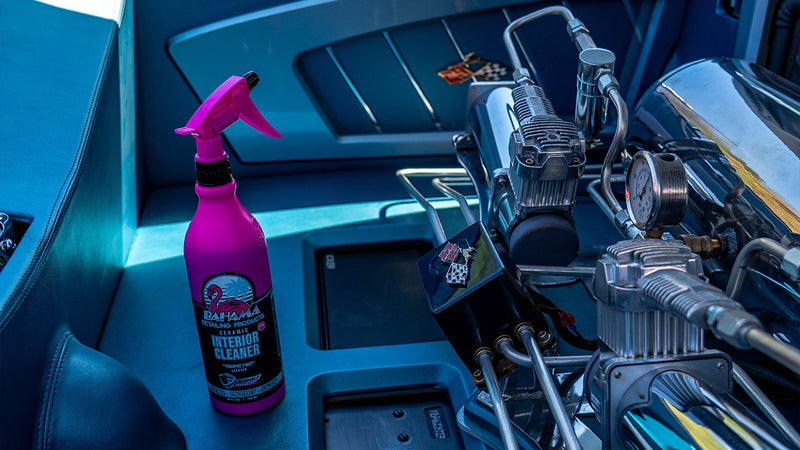
Inside the cab, wipe the dash, seats and controls with Ceramic Interior Cleaner on a Starting Line towel. It cleans and lays down UV protection in the same pass, with a no-gloss finish. Keep that towel in the cab and nowhere else.
Step 3: Dry
Blot the hood, roof and big panels with a Big Bird. Use a Lil' Bird for the windshield, mirrors, gauge cluster and tight spots around the cage. A leaf blower helps push water out of seams and connectors first.
Water spots are made in the drying, not in the wash, and dark plastic shows every one.

Thick cannon foam that lifts road film, mud and bug guts, then leaves a beading ceramic layer behind. pH-neutral, so it is safe on any coating.
Step 4: Restore
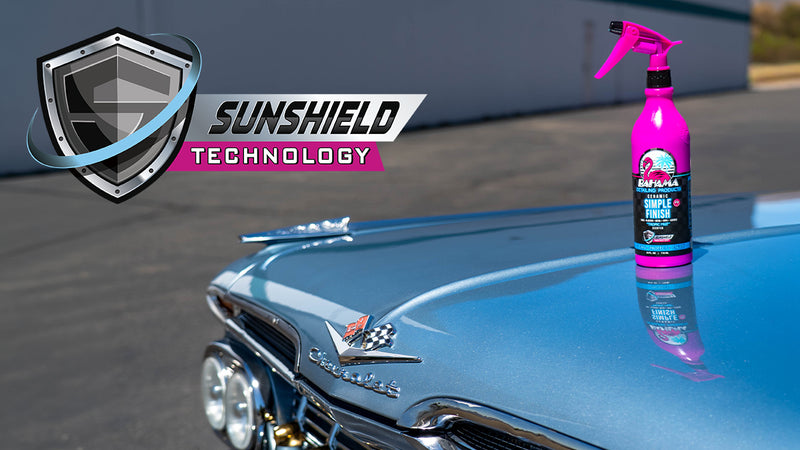
This is where UTV plastics come back. Spray Ceramic Simple Finish on the body panels, fenders, trim, tires and wheels, then wipe with a Finish Line towel. Treat the tire and rim together. On gloss rims, give them a quick buff after.
Simple Finish brings faded plastic back to like-new and protects it with SunShield UV. It is safe on matte finishes, vinyl wrap and PPF, which covers most of what a side-by-side wears. It goes on with spray and wipe, with no sling.
Step 5: Protect
Spray Ceramic Final Touch Detail Spray on any painted parts, a glass windshield and chrome. Wipe it smooth into a consistent layer and let it dry for 5 minutes. If your windshield is polycarbonate, check the maker's care guidance before applying any product.
Step 6: Finish
Buff with a dry Victory Lap. Never buff with a drying towel. Keep the machine dry for about 24 hours so the layer cures.

Faded plastic, trim, rubber and tires back to like-new, then protected. Just as good on matte, satin, PPF and vinyl wrap.
How Do You Clean Textured Plastic Without Scratching It?
Textured panels hold grit in the grain. Soak them longer, foam them twice if needed, and use a soft brush rather than a mitt so the bristles reach in without dragging grit across the surface.
Rinse each textured area well before moving on. Then restore it with Simple Finish to bring back even color.
How Protection Makes the Next Mud Wash Easier
Mud sticks to bare, porous plastic. A hydrophobic layer gives it less to grip, so more of it rinses away before you ever pick up a mitt.
Graphene + SiO₂ = hydrophobics, and the layer builds with every application. The more often you wash with the foaming soap and restore with Simple Finish, the easier each cleanup gets.
For a full wash and restore guide, see how to detail a UTV, and for product picks by surface, the best UTV wash products.
Frequently Asked Questions
Can I pressure wash a muddy UTV?
Yes, with a wide fan tip held well back from the panels. Keep it away from bearings, electrical connectors, decals and the radiator fins.
How do I get dried mud off UTV plastic?
Soak it, rinse with volume, then foam and let it dwell before you touch it. Never scrub dried mud dry.
What should I put on UTV plastics after washing?
Ceramic Simple Finish. It restores faded plastic and protects it with SunShield UV. Spray, wipe, walk away.
Can I use the same towel on wheels and plastic?
No. Wheel and tire grime is abrasive. Use a Finish Line on wheels and keep a clean one for the body.
Keep the Plastic Looking New
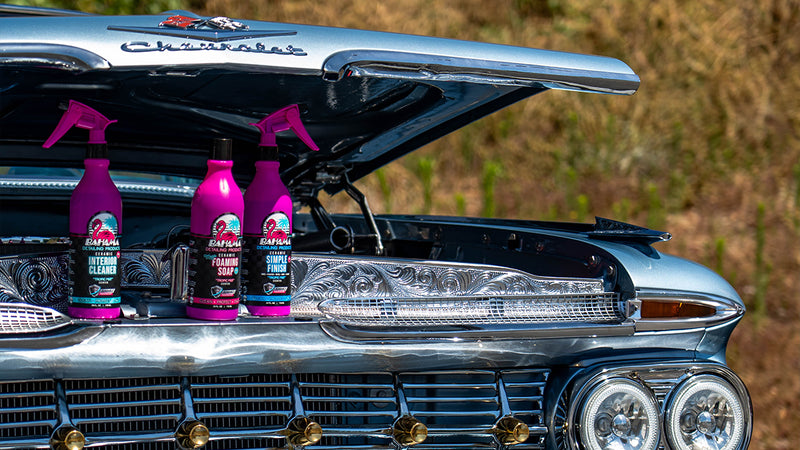
Soften, rinse, foam, then restore. That order keeps mud from turning into scratches. The Full System Set covers every bottle in this routine and protects the whole machine, not just the paint.

Wash, interior, restore and protect: all four Bahama ceramic bottles in one set. A pro ceramic coating is $1k+. This system only takes a couple hours.

Drying, interior, wheels and trim, and buffing the Final Touch coating, each with its own towel. No wheel grime on the dash, no drying towel soaking up your coating.