You have probably noticed "graphene" showing up on more car care labels. If you are skeptical, good. Detailing is full of buzzwords that mean nothing once the bottle is open.
Here is the short answer. The best graphene car soap does two jobs in one pass: it cleans like a proper pH-neutral wash, and it leaves a thin graphene and SiO2 layer behind that makes water bead and roll. A traditional car wash soap only does the first job, and some of them quietly undo your protection while doing it.
This guide covers what graphene actually is, what it changes about a wash, how to tell a real graphene soap from a label, and how to use one in a full routine.
What Is Graphene, and Why Is It in a Car Soap?
Graphene is a single-atom lattice of carbon, arranged in a flat honeycomb. It is about 200x stronger than steel and is used in body armor. That is the material science version of "this stuff is tough."
On its own, graphene is not a soap ingredient. What makes it useful in a wash is the pairing with SiO2, silicon dioxide, the same building block as glass. SiO2 is often called liquid glass, and on a clean panel it pushes water to a 110° contact angle, which is the point where water stops sheeting flat and pulls into tight beads.
Put the two together and you get the short version of the whole category: Graphene + SiO₂ = hydrophobics. If you want the deeper chemistry, our breakdown of SiO2 vs. graphene goes layer by layer.
What Does a Traditional Car Wash Soap Actually Do?
A traditional car soap is a surfactant and a lubricant. It loosens dirt, wraps it, and lets it rinse away without dragging across the paint. That is a real job and a good soap does it well.
The problem is what happens after the rinse. A basic soap leaves nothing behind, so the panel is clean but bare. Strong or high-pH soaps go a step further and start stripping whatever wax or sealant you already put down.
That means every wash with the wrong soap is a small step backward, and you end up reapplying protection just to get back to where you started.
Why Graphene Car Soap Outperforms Traditional Soap
It cleans and protects in the same pass
A graphene soap still lifts road film, mud and bug guts. The difference is that it deposits a beading ceramic layer as you wash, so the panel walks away protected instead of naked.
It builds instead of strips
Because the soap is pH neutral, it does not attack an existing coating. The layer it leaves behind layers and builds with every application, so regular washing adds to your protection rather than wearing it down.
Water behaves differently afterward
This is the part you can see. After a graphene wash, rinse water beads and slides off instead of sitting in flat sheets. Less water left on the panel means less to dry, and an easier dry means fewer chances to mark the paint.
UV protection rides along
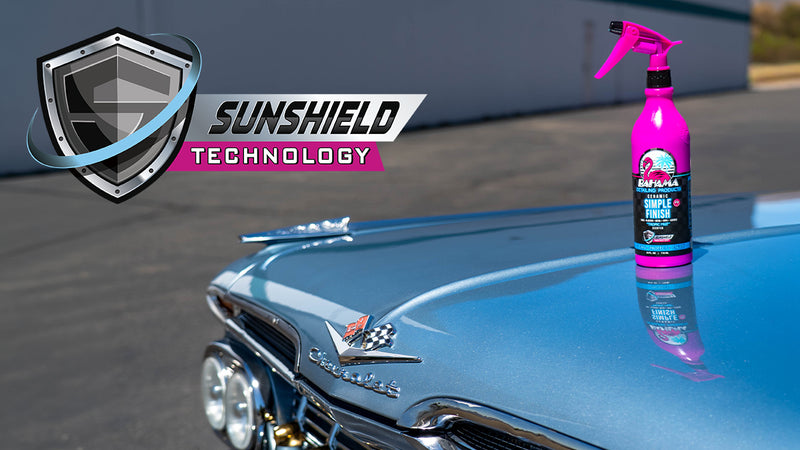
Every Bahama bottle carries SunShield UV, the soap included. Washing is the thing you do most often, so it is the most natural place to keep topping up UV protection. Here is how SunShield UV works across the system.
How to Choose the Best Graphene Car Soap
The word graphene on the front proves nothing. Check these before you buy.
- pH neutral. If the label does not say it, assume it is not. pH neutral is what makes a soap safe on any coating, wax, PPF or wrap.
- Graphene and SiO2 together. Graphene alone is a marketing line. The SiO2 is what does the beading.
- Foams properly. Thick foam that clings gives the surfactants time to work and adds lubrication under your wash mitt. Runny foam slides off before it does anything.
- Works in a foam cannon and a bucket. You should not need special gear to get the benefit.
- Safe on everything you own. Paint, plastic, rubber, wheels, bikes, UTVs. One soap for the whole garage beats a shelf of single-use bottles.
Ceramic Mega Foaming Soap checks every box: graphene plus SiO2, pH neutral, built for a foam cannon or a bucket, in a 24 fl oz bottle with a Tropic Mist scent.

Thick cannon foam that lifts road film, mud and bug guts, then leaves a beading ceramic layer behind. pH-neutral, so it is safe on any coating.
How to Wash Your Car with Graphene Soap: The Full Routine
A great soap only gets you so far. The rest of the result comes from the order you work in and the towel you use at each step. Every bottle has a towel built for it.
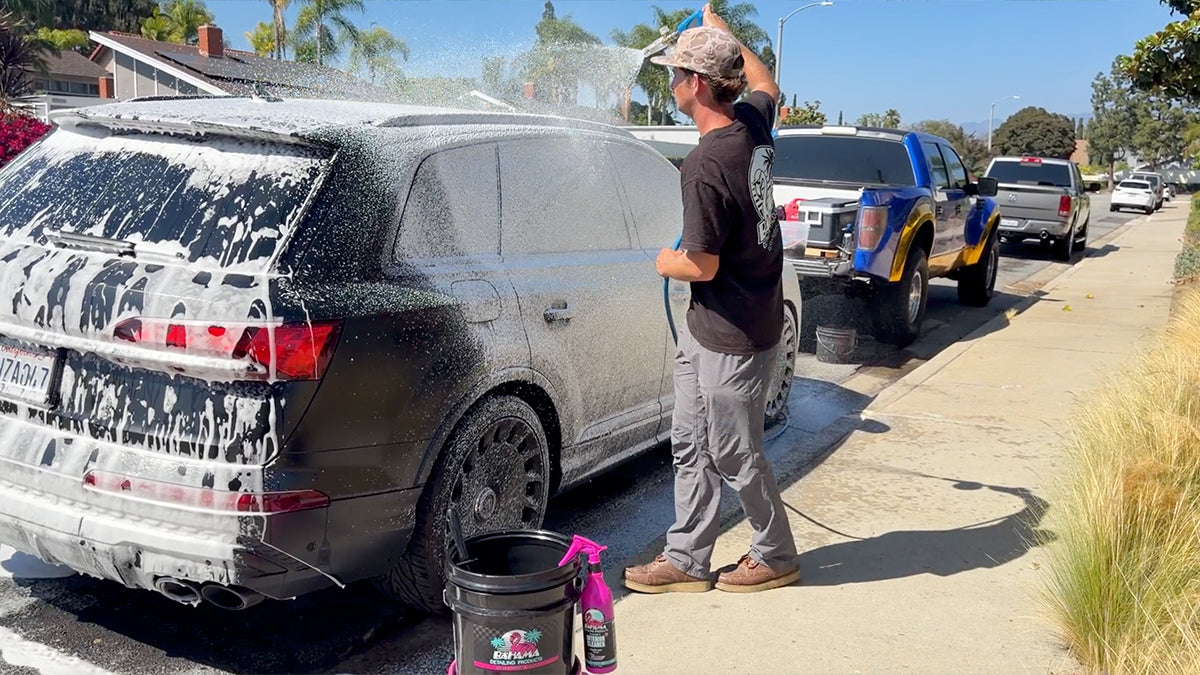
- Wash. Pre-rinse to knock off loose grit. Foam the car with Ceramic Mega Foaming Soap through a foam cannon, or mix it in a Grit Guard Bucket so grit settles below the guard instead of going back onto your mitt. Work top down, in the shade, on a cool panel, then rinse.
- Dry. Lay a Big Bird drying towel over the roof, hood and tailgate and pull it across in one pass. Blot rather than drag. Use a Lil' Bird for mirrors, glass and door jambs. Water spots are made in the drying, not in the wash.
- Restore. Spray Ceramic Simple Finish on plastic trim, rubber, tires and wheels, and wipe it in with a Finish Line towel. Keep it off gloss paint and glass.
- Protect. Mist Ceramic Final Touch Detail Spray onto paint, glass and chrome, wipe it smooth into an even layer, and let it dry for 5 minutes.
- Finish. Buff the panel with a dry Victory Lap. Never buff Final Touch with the Birds: they are built to absorb, and they will pull the coating off the panel. Keep the car dry for about 24 hours so the layer cures.
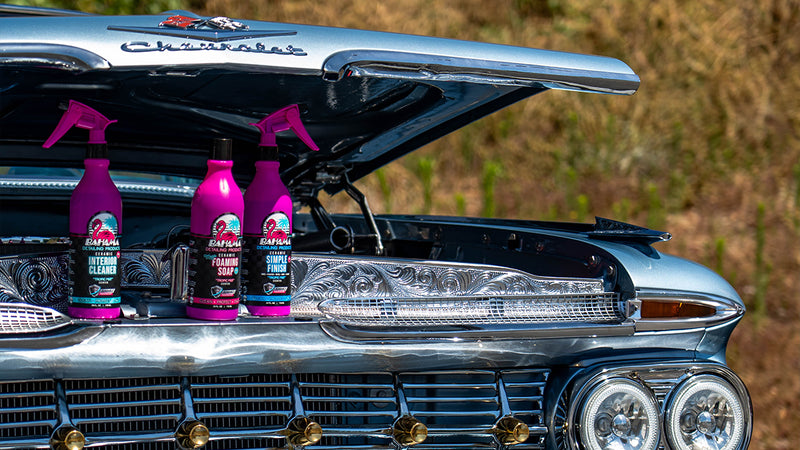
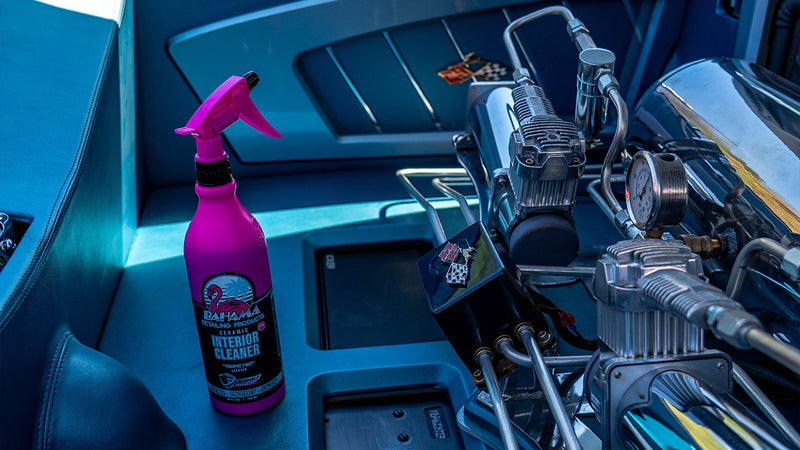
If you are working on the cabin too, Ceramic Interior Cleaner with a Starting Line towel handles the dash, doors and screens. For the complete walkthrough, see how to detail your car at home.

Sheets a roof, hood or tailgate dry in one pull. Seamless edge, so nothing hard ever touches the paint.
Mistakes That Waste a Good Soap
- Washing in direct sun. Foam dries on a hot panel before it can work, and you chase spots for the rest of the session.
- One bucket, no guard. The grit you rinse off the mitt goes straight back onto the paint.
- Drying with an old bath towel or a chamois. Most swirl marks are put there by a towel. A plush drying towel lifts water instead of pushing grit around.
- Using the wheel towel on the paint. A towel that has been through brake dust and tire dressing has no business on your clear coat. One towel per job.
- Stripping first "to be safe." If your soap is pH neutral, there is no reason to strip a healthy layer before each wash. Let it build.
Frequently Asked Questions
Is graphene car soap safe on a ceramic coating?
Yes, as long as it is pH neutral. Ceramic Mega Foaming Soap is pH neutral and safe on any coating, and its own layer builds on top of what is already there.
Can I use graphene soap in a foam cannon?
Yes. Ceramic Mega Foaming Soap is built for a foam cannon or a bucket. In a bucket, a grit guard keeps the dirt you rinse off your mitt away from the paint.
Does graphene soap replace wax or a sealant?
It adds a beading layer every wash, but it is the first step, not the last. For the full hydrophobic layer on paint, glass and chrome, follow it with Ceramic Final Touch and buff with a Victory Lap.
How often should I wash with graphene car soap?
Wash whenever the car is dirty. Because the soap builds instead of strips, frequent washing works in your favor. Our detailing schedule lays out a realistic rhythm.
Is graphene car soap safe on bikes, UTVs and plastic?
Yes. It is pH neutral and safe on paint, plastic, rubber, decals and wheels, so one bottle covers the whole garage.
The Bottom Line
A traditional soap cleans. A good graphene car soap cleans and leaves protection that builds every time you wash. Pair it with the right towel at every step and the whole routine gets easier. Wash. Restore. Protect. The Full System Set puts all four bottles in one box: the last 4 detailing products you'll ever need.

Wash, interior, restore and protect: all four Bahama ceramic bottles in one set. A pro ceramic coating is $1k+. This system only takes a couple hours.

Drying, interior, wheels and trim, and buffing the Final Touch coating, each with its own towel. No wheel grime on the dash, no drying towel soaking up your coating.