"How often should you detail your car?" gets a lot of vague answers. The honest one: it depends less on the calendar and more on what your car is telling you, plus how much protection is already on it.
Here is a schedule that works for most daily drivers: wash whenever it's dirty, refresh the interior and trim monthly, put down a full protection coat every 3 to 6 months, and do a deep reset once or twice a year. Below is what each tier involves, how to adjust it for your climate and driving, and the signs that tell you it's time.
Why Is a Detailing Schedule Better Than Detailing When You Feel Like It?
Because damage is cumulative. Bird droppings, bug guts, road film and UV don't wait for your free Saturday. They work on the paint and trim every day.
A schedule also makes every session shorter. A car that gets a quick wash and dry often never builds up the kind of grime that needs a whole afternoon. And when the protection layer is maintained, dirt sits on the coating instead of bonding to the paint.
The trick is matching the job to the interval. Not everything needs doing every time.
The Detailing Schedule at a Glance
- As needed, same day: bird droppings, bug splatter, tree sap.
- Every wash: Wash and Dry, plus a quick interior wipe.
- Monthly: full interior, Restore the trim and tires, a quick protection top-up.
- Every 3 to 6 months: a full protection coat on paint, glass and chrome.
- Once or twice a year: a deep reset: decontaminate the paint, check for swirls, clean the engine bay and door jambs properly.
For most daily drivers, "every wash" lands somewhere between weekly and every other week. Garage-kept weekend cars can stretch it. Commuters parked outside under trees can't.
What Should You Do Every Wash?
This is the backbone of the schedule. Done right, it keeps the protection you've built instead of wearing it away.
Wash
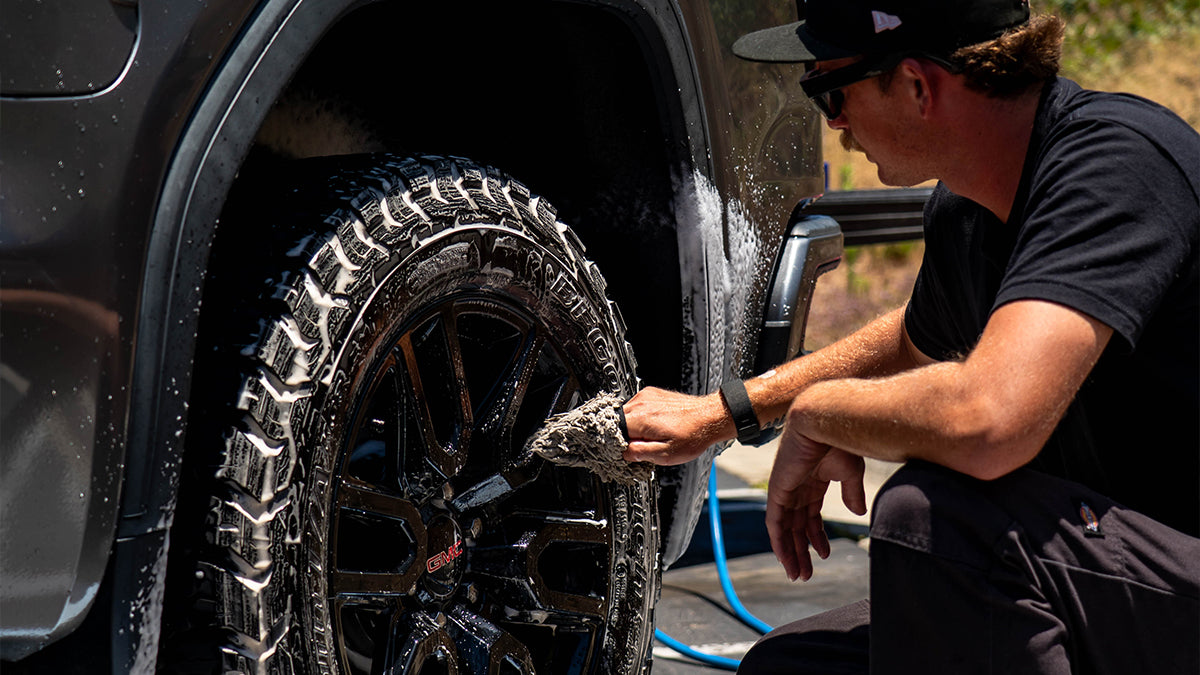
Rinse, then foam the car with Ceramic Mega Foaming Soap. It's pH neutral and safe on any coating, and it leaves a beading ceramic layer with SunShield UV behind, so every wash tops up protection instead of stripping it. Wash top to bottom with a soft mitt and a Grit Guard Bucket, and do the wheels last with their own tools.
Dry
Water spots are made in the drying, not in the wash. Pull a Big Bird across the roof, hood and trunk, blotting rather than dragging. Use a Lil' Bird for mirrors, glass and door jambs.
Quick interior
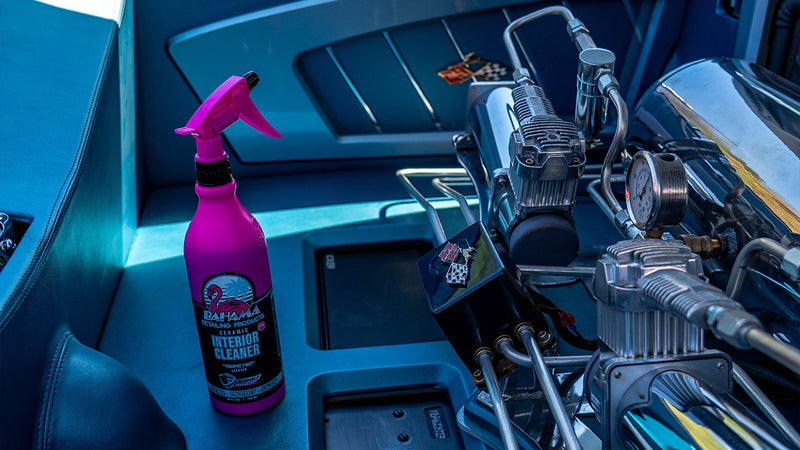
Mist Ceramic Interior Cleaner onto a Starting Line towel and wipe the high-touch spots: steering wheel, shifter, door pulls, screens. It cleans and lays down UV protection in the same pass with a streak-free, no-gloss finish.

Thick cannon foam that lifts road film, mud and bug guts, then leaves a beading ceramic layer behind. pH-neutral, so it is safe on any coating.
What Should You Do Monthly?
Once a month, add the jobs that don't need doing every wash but fall apart if you ignore them.
Full interior
Vacuum, then do the whole cabin with Interior Cleaner and a Starting Line: dash, door panels, console, leather and vinyl seats. Keep that towel inside the car. A towel that has been through brake dust and tire dressing has no business on your dash.
Restore
Spray Ceramic Simple Finish on the plastic trim, rubber seals, tires and wheels, then wipe it in with a Finish Line towel. On wheels, do the tire and rim together; gloss rims get a quick buff after. It also covers matte paint, PPF, vinyl wrap and bed liner. Keep it off gloss paint, glass and chrome.
Protection top-up
After the wash and dry, mist Ceramic Final Touch Detail Spray on a panel, wipe it smooth, let it dry 5 minutes, and buff with a dry Victory Lap. Between full coats, this is your quick detail spray.
What Should You Do Every 3 to 6 Months?
This is the full protection coat, and it's the step that replaces wax and a pro coating.
- Wash with Mega Foaming Soap and Dry completely with the Big Bird and Lil' Bird.
- Restore trim, tires and wheels with Simple Finish and a Finish Line.
- Protect every panel, the glass and the chrome with Final Touch: spray, wipe smooth into a consistent layer, let it dry 5 minutes.
- Finish by buffing with a dry Victory Lap. Never buff Final Touch with the Birds; a drying towel drinks the coating off the panel.
A full coat takes about an hour from wash to finish and lasts 3 to 6 months. Keep the car dry for about 24 hours afterward so it cures. The layer builds with every application, so each coat adds to the last.

The most ceramic of the four. Spray it on, wipe it smooth into a consistent layer, let it dry for 5 minutes, then buff. What is left is a streak-free, water-spot-free, ultra hydrophobic ceramic layer with UV protection.
What Should You Do Once or Twice a Year?
The deep reset. Plan a longer session, ideally before summer and before winter.
- Decontaminate the paint. After washing, slide your fingertips over the paint inside a thin plastic bag. If it feels gritty, a clay bar removes the bonded contamination washing leaves behind.
- Check for swirls. Look at the paint under direct sun or a single bright light. If you see circular haze, a polish (by hand or by a pro) is the fix. A protection spray won't remove swirls.
- Door jambs, trunk gutters, fuel door. Wash, dry with a Lil' Bird, restore any rubber seals.
- Engine bay. A gentle clean of plastic covers, finished with Simple Finish on the plastics, makes leaks easy to spot.
Then follow it with a full protection coat, because freshly clayed or polished paint should never be left bare.
How Should You Adjust the Schedule for Your Car?
Parked outside in strong sun: UV works every day. Keep the monthly Restore step and don't stretch the full coat to its limit. Our guide to desert driving damage covers heat, UV and dust in detail.
Winter road salt or coastal air: wash more often, and rinse the wheel wells and underside every time. Salt left sitting is the problem.
Garage-kept weekend car: wash when it's dusty or after a drive, and lean on the Final Touch top-up between full coats.
Dark paint: shows everything. Be strict about one towel per job, because most swirl marks are put there by a towel.
Off-road or work trucks: rinse the same day you come home, before the mud dries.
What Signs Mean It's Time to Detail?
- Water sheets off the paint instead of beading: time for a full Final Touch coat.
- Black trim looks gray or chalky: time to Restore.
- The dash looks dusty again a day after you wiped it, or the steering wheel feels slick: time for the interior.
- Paint feels gritty after a wash: time to decontaminate.
- Circular haze in direct sun: time to look at correction.
If you're just getting started, the car detailing guide for beginners explains every step above, and How to Detail Your Car at Home walks through a full session.
Frequently Asked Questions
How often should you wash a car?
Whenever it's dirty. For most daily drivers that means weekly or every other week, and sooner after bird droppings, bugs, salt or mud.
How often should you wax or coat your car?
Final Touch replaces wax. A full coat lasts 3 to 6 months, and a quick mist and buff after washes keeps it topped up in between.
Can you detail a car too often?
Not with gentle products and clean towels. The damage comes from harsh soaps, dirty towels and automatic brush washes, not from frequency.
How often should you clean the interior?
Wipe the high-touch spots every wash and do the full cabin monthly. Use a dedicated interior towel so wheel and exterior grime never reach the dash.
Make It a Habit
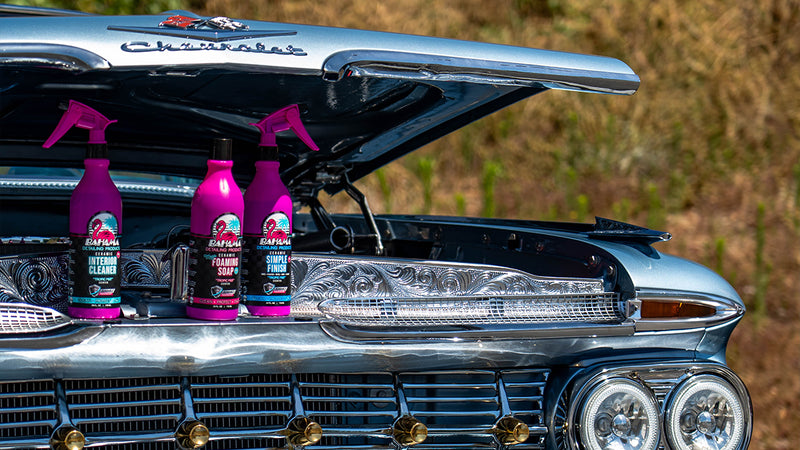
The best schedule is the one you actually follow, and it gets easy when every bottle has a towel built for it. The Premium Towel Set gives you 12 towels across four types, so every job on this calendar has the right one. One towel per job. Zero cross-contamination.

Wash, interior, restore and protect: all four Bahama ceramic bottles in one set. A pro ceramic coating is $1k+. This system only takes a couple hours.

Drying, interior, wheels and trim, and buffing the Final Touch coating, each with its own towel. No wheel grime on the dash, no drying towel soaking up your coating.