

Walk into any premium detailing product discussion, and you'll hear two names thrown around: SiO2 and graphene. Both show up on every serious ceramic coating. Both claim to be the future of paint protection. And almost nobody knows what the difference is, or why the best products use both.
The confusion is understandable. These are legitimately complex materials, and the marketing blur the lines intentionally. But understanding what each one actually does, and how they work together, changes everything about which products you choose and why.
What SiO2 Actually Is and What It Does
SiO2 is Silicon Dioxide, the same compound that makes up sand and glass. In detailing, it's used in the form of ceramic particles that bond to your paint and form a hard protective layer.
Here's what SiO2 does once it cures on your paint. First: it becomes glass-hard. The molecular structure locks into place, creating a shell that has a hardness rating comparable to actual glass. Second: it's chemically resistant. SiO2 doesn't react with acids, alkalines, or contaminants the way traditional wax does. Bird droppings, acid rain, road chemicals, they don't break down the SiO2 layer the way they obliterate carnauba wax. Third: the cured SiO2 layer is extremely hydrophobic. Water beads and sheets off. Fourth: it has an insanely high melting point, over 3,000°F. Summer heat doesn't soften it or seduce its effectiveness.
The result is a durable, chemical-resistant protective layer that can last months rather than weeks. This is why SiO2 was revolutionary when it first became available as a consumer product. Before SiO2, the only way to get this kind of protection was a professional ceramic coating application that cost $500–$2,000 and required professional paint prep.
But SiO2 has one real limitation: it's rigid. Once it cures into that glass-hard shell, that's the structure you're locked into. It doesn't flex or adapt to thermal expansion on the paint surface.
Featured Product
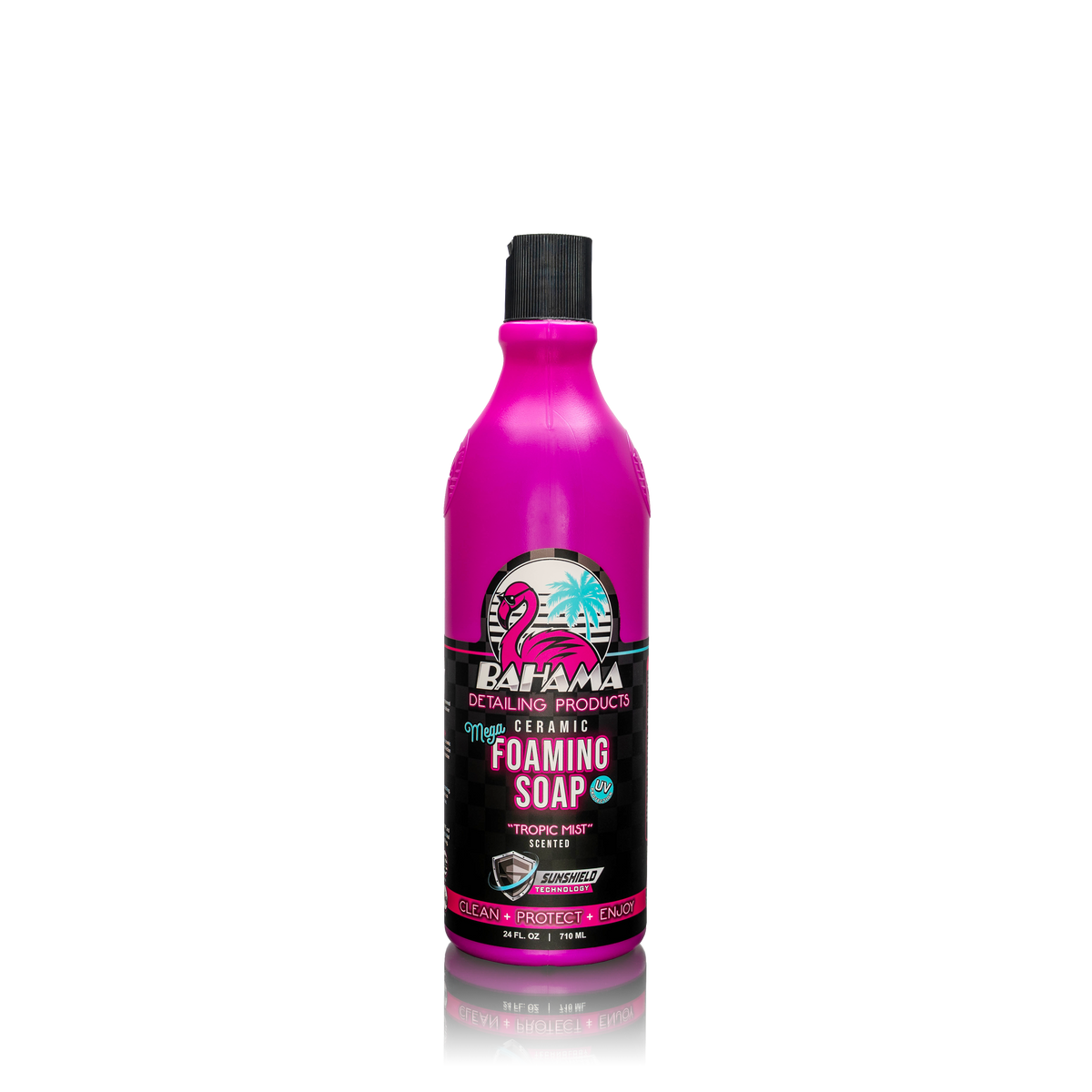
Mega Ceramic Foaming Soap
The only soap you need. Graphene + SiO2 + SunShield UV in every wash. Uses both technologies to build a barrier that's hard, flexible, and protected against UV and contamination.
Graphene + SiO2 SunShield UV Every WashShop Now →
What Graphene Actually Is and What It Does
Graphene is a single layer of carbon atoms arranged in a honeycomb lattice, literally one atom thick. It's one of the strongest materials known to science by weight, and it has properties that make it exceptional as a detailing material.
When graphene is applied to your paint (always combined with SiO2, never alone), it adds several crucial properties to the protective layer. First: exceptional heat dissipation. Graphene conducts heat away from the surface faster than almost any other material. This means when your car is sitting in direct sunlight, the graphene layer actually draws heat away from your paint, reducing thermal stress on the clear coat. Second: graphene is flexible. Unlike SiO2's rigid structure, graphene maintains elasticity. This means the protective layer can expand and contract slightly as your paint expands and contracts with temperature changes, reducing stress and micro-cracking. Third: graphene is incredibly hard, harder than SiO2, but without the brittleness of a fully glass-like coating.
Graphene also dramatically improves the shine and slickness of a protective layer. When combined with SiO2, you get not just better protection but a dramatically deeper, more reflective finish.
The limitation of pure graphene is that it doesn't provide the same chemical resistance that SiO2 does. Graphene alone isn't as resistant to acids and alkali. But combined with SiO2, graphene solves SiO2's main weakness, rigidity and brittleness, while SiO2 adds chemical resistance to graphene's relatively soft surface characteristics.
Head-to-Head: Where They Actually Differ
Hardness and Scratch Resistance
SiO2 creates a glass-hard surface that's harder than graphene alone. But graphene adds flexibility, which paradoxically makes the combined layer more resistant to actual-world scratching because it can absorb minor impact without cracking. Pure SiO2 is harder but more brittle. That's why professional-grade products combine both.
Heat Resistance
Both handle heat extremely well compared to wax. But graphene is superior at actively dissipating heat away from the paint surface. SiO2 just doesn't burn or melt. Graphene actually keeps your paint cooler. For vehicles in extreme heat or dark-colored cars, graphene's heat dissipation is a real advantage.
UV Protection
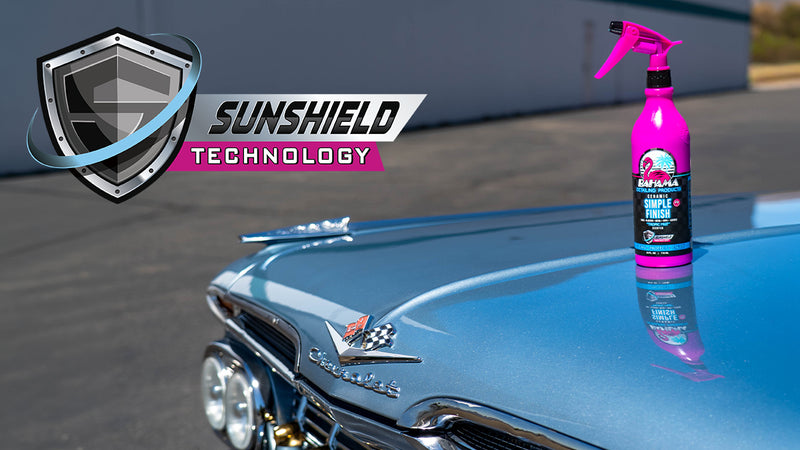
Neither SiO2 nor graphene is inherently a UV blocker. They don't absorb or filter UV rays. What they do is create a protective barrier that keeps UV from reaching the clear coat directly. To add actual UV protection, both are combined with UV-absorbing compounds, like Bahama's SunShield UV Technology, which sits on top of or within the SiO2/graphene layer.
Hydrophobic Properties
Both SiO2 and graphene are hydrophobic. SiO2 creates a water contact angle of 90-105 degrees (water beads). Graphene-enhanced SiO2 can reach 110-130 degrees, water sheets off almost immediately rather than beading. The effect is dramatic and affects drying time and the way your car looks after rain.
Durability and Lifespan
Pure SiO2 can last 3-6 months with normal driving. Graphene-enhanced SiO2 typically lasts 4-8 months. Neither breaks down quickly under normal conditions, the protective layer just gradually thins from washing, traffic, and light abrasion. The presence of graphene does extend usable lifespan, though SiO2 alone is already dramatically better than wax.
Why the Best Products Combine Both
This is the key insight that marketing obscures: SiO2 and graphene aren't competitors. They're complementary. SiO2 alone is rigid and hard but brittle. Graphene alone is flexible and heat-resistant but less chemically resistant. Together, they create a protective layer that's hard and flexible, heat-resistant and durable, hydrophobic and scratch-resistant.
That's the entire logic behind products like Mega Ceramic Foaming Soap. It contains both technologies because both are necessary. The SiO2 provides the hardness and chemical resistance. The graphene adds flexibility, heat dissipation, and a deeper shine. Neither one is the "better" technology, they're better together.
Consumer products that tout only SiO2 or only graphene are usually compromising on performance. Professional detailers and premium product makers have moved entirely toward graphene-enhanced SiO2 formulations because the combination is measurably superior to either alone.
Featured Product
Simple Finish Detailing Spray
Spray it on, wipe it off. Seals your paint with a final layer of graphene + SiO2 + SunShield protection that lasts for weeks between washes. The fastest way to maintain a protected finish.
Graphene + SiO2 Quick Seal Instant ShineShop Now →
What to Look For on Product Labels
Now that you understand what each technology does, here's how to make informed decisions when shopping.
Look for products that explicitly list both SiO2 and graphene. If a label mentions only one, it's either sacrificing protection or using misleading marketing. Many brands use the word "graphene" broadly but include minimal graphene by weight while making SiO2 the base, that's fine, but understand what you're buying.
Check for pH neutral formulations. Both SiO2 and graphene work best in a pH neutral environment (around 7.0). Highly acidic or alkaline products can degrade the protective layer or interfere with bonding. Bahama's products are all pH neutral specifically to preserve both SiO2 and graphene performance.
Look for UV protection as a separate add-on. SiO2 and graphene are the base protection. SunShield UV Technology (or equivalent UV blockers) should be listed separately, because that's where UV protection specifically comes from. If a label claims UV protection but doesn't mention UV-blocking compounds, it's marketing hype.
Verify third-party testing if available. Legitimate ceramic products undergo hardness testing, adhesion testing, and durability testing. If a brand can show independent lab results, that's a credible signal.
The Bottom Line
SiO2 vs. graphene isn't a real choice, it's a false choice pushed by brands trying to simplify something that's actually nuanced. The question that matters is: does this product contain both SiO2 and graphene? If it does, and if it includes UV protection and is pH neutral, you're buying genuine ceramic protection.
The science shows that graphene-enhanced SiO2 formulations are the current standard for premium consumer protection. It's what professional detailers use. It's what the most expensive aftermarket ceramic coatings contain. And now it's available in wash soaps and detailing sprays that work with your normal wash routine.
When you're comparing products, look for that combination. Look for both technologies. Look for the complete package. That's where real protection is.
Complete Your Routine
The Full Bahama Lineup
Mega Ceramic Foaming Soap · Simple Finish Detailing Spray
Graphene + SiO2 + SunShield UV Technology. Every product. Every surface. Every ride.