Matte and satin paint look incredible and punish shortcuts. The finish is designed to scatter light instead of reflecting it, so anything that fills, polishes or smooths the surface leaves a shiny patch you cannot undo.
The good news: washing and protecting a matte or satin finish is not harder than gloss paint. It is just different. Use a pH-neutral soap, never polish or wax, blot it dry, and protect it with a product built for matte, like Ceramic Simple Finish.
This matte paint detailing guide covers what to use, what to avoid, and the step-by-step routine that keeps a flat finish looking even and protected.
Why Is Matte Paint So Hard to Maintain?
Gloss clear coat is smooth, so light bounces straight back. Matte and satin clear coats have a deliberately textured surface that scatters light. That texture is the look.
Anything that changes the texture changes the look. Polish and compound flatten it, which creates a shiny spot. Waxes and glazes fill it, which creates blotchy, uneven sheen. Rubbing hard at one stain does the same thing on a smaller scale.
That is why the usual paint correction playbook does not apply. On matte, you cannot buff out a mistake. Prevention and the right products are everything.
What Not to Use on Matte or Satin Paint
- Wax, glaze or polish. All of them fill or level the surface and leave shiny, patchy areas.
- Compounds and clay with heavy pressure. Abrasion flattens the texture permanently.
- Automatic car washes. The brushes scratch, and the wax or shine add-ons are made for gloss paint.
- Gloss-focused detail sprays and shine products. If the label promises shine, keep it off matte.
- Harsh, high-alkaline cleaners. They can stain or dry out the finish and strip protection.
The same rules apply to matte vinyl wraps and matte PPF. If your matte look is a wrap, our guide on how to protect a vinyl wrap goes deeper on film care.
How to Wash Matte Paint the Right Way
Wash technique matters more on matte than anywhere else, because you cannot polish out a mistake.
- Work in the shade on a cool surface. Soap or hard water that dries on matte paint can leave marks that are tough to remove.
- Pre-rinse thoroughly to remove loose grit before anything touches the paint.
- Foam and dwell. Ceramic Mega Foaming Soap is pH neutral and safe on any coating. Through a foam cannon, it softens road film so you need less contact.
- Two buckets, light pressure. Use a soft mitt, a rinse bucket and a Grit Guard Bucket to keep grit off the panel. Straight-line passes, no scrubbing, no circles.
- Rinse well, top down, so no soap film is left to dry on the surface.
Bird droppings, bug splatter and tree sap need fast attention on matte. Soften them with soapy water and let them lift. Do not scrub one spot hard, or you will burnish it.

Thick cannon foam that lifts road film, mud and bug guts, then leaves a beading ceramic layer behind. pH-neutral, so it is safe on any coating.
How to Dry a Matte Finish Without Streaks
Dragging a towel across matte paint is how you burnish it. Blot instead.
Lay a Big Bird flat over the hood or roof, pat it down and lift. At 1600 GSM, it holds up to 8x its weight in water, so one pass usually does it. Use a Lil' Bird for mirrors, badges, door jambs and the edges where water hides.
Water spots are made in the drying, not in the wash. On matte, spots are much harder to remove, so dry completely and do not let the car air dry in the sun.
How to Protect Matte and Satin Paint
Protection on matte has one job: guard the finish from UV, water and contamination without changing how it looks. That rules out wax and most gloss sprays.
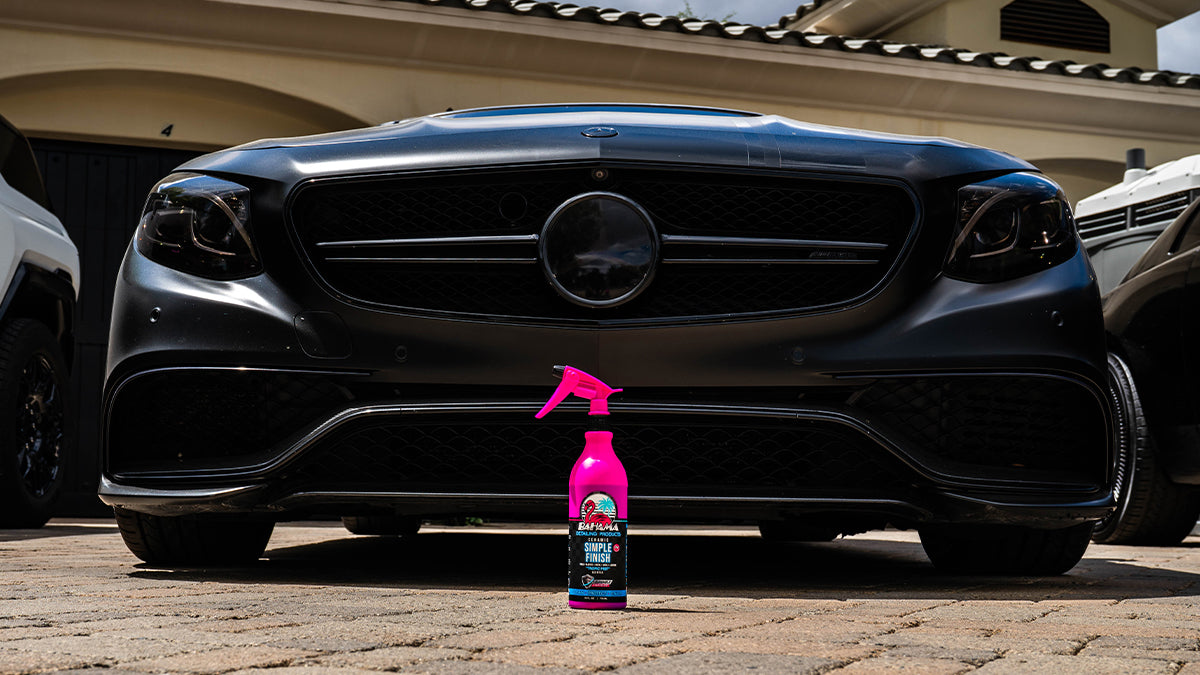
Ceramic Simple Finish is the Bahama product for matte and satin paint, PPF and vinyl wrap. It is the same bottle you use on plastic, trim, rubber and tires, which is why it suits a flat finish: it is made to protect surfaces that are not supposed to shine. It carries Graphene + SiO₂ for hydrophobics and SunShield UV, the protection built into all four Bahama bottles.
Apply it with a Finish Line towel. Spray a light mist on a panel or onto the towel, wipe it evenly in straight lines, and move on. Spray, wipe, walk away. Even coverage is the goal, so work panel by panel and do not double-load one spot.

Faded plastic, trim, rubber and tires back to like-new, then protected. Just as good on matte, satin, PPF and vinyl wrap.
The Matte Paint Routine: Wash, Dry, Restore, Protect, Finish
Here is the full Bahama routine adapted for a matte or satin car. Each bottle has a towel built for it.
- Wash. Ceramic Mega Foaming Soap, two buckets, light straight-line passes.
- Dry. Blot with a Big Bird on the large panels and a Lil' Bird on the details. Never drag.
- Restore. Ceramic Simple Finish with a Finish Line towel on the matte or satin paint, plus the plastic trim, rubber, tires and wheels. One product covers the whole body.
- Protect. Ceramic Final Touch Detail Spray goes on the glass and any chrome only, never on the matte paint. Spray, wipe smooth and let it dry 5 minutes.
- Finish. Buff the glass and chrome with a dry Victory Lap. Keep that towel off the matte panels. Keep everything dry for about 24 hours so it cures.
One towel per job, zero cross-contamination. The towel you use on glass should never carry Final Touch onto the matte paint.
How Often Should You Protect Matte Paint?
Re-apply Simple Finish when water stops beading tightly or the finish starts to look uneven. Cars that live outside in strong sun need it more often than garaged cars.
Between full details, a gentle wash with Ceramic Mega Foaming Soap tops up the protection, since the layer builds with every application. For more on keeping high-end finishes right, see how to detail an exotic car and what is safe for PPF and ceramic coatings.
Frequently Asked Questions
Can you wax matte paint?
No. Wax fills the texture that makes matte paint look flat, which leaves shiny, blotchy patches. Use a matte-safe protectant like Ceramic Simple Finish instead.
Can you take a matte car through a car wash?
Avoid automatic washes. The brushes can mark the finish, and the wax and shine add-ons are made for gloss paint. Hand wash with a pH-neutral soap.
How do I remove bird droppings from matte paint?
Act fast. Soak the spot with soapy water or a wet towel to soften it, then lift it off gently. Never scrub, because pressure burnishes matte paint.
Is Ceramic Simple Finish safe on matte PPF and satin wraps?
Yes. Simple Finish is built for matte and satin paint, PPF and vinyl wrap, as well as plastic, trim, rubber and tires.
Can I polish out a scratch on matte paint?
Not without changing the finish. Polishing flattens the texture and leaves a shiny spot. Light marks are best left to a matte specialist.
Keep It Flat, Keep It Protected
Matte paint rewards a simple rule set: gentle wash, blot dry, matte-safe protection, and nothing that promises shine. Get those right and the finish stays even and protected. The Full System Set puts all four bottles in one box, so every surface, matte panels included, has the right product. Wash. Restore. Protect.

Wash, interior, restore and protect: all four Bahama ceramic bottles in one set. A pro ceramic coating is $1k+. This system only takes a couple hours.

Drying, interior, wheels and trim, and buffing the Final Touch coating, each with its own towel. No wheel grime on the dash, no drying towel soaking up your coating.