

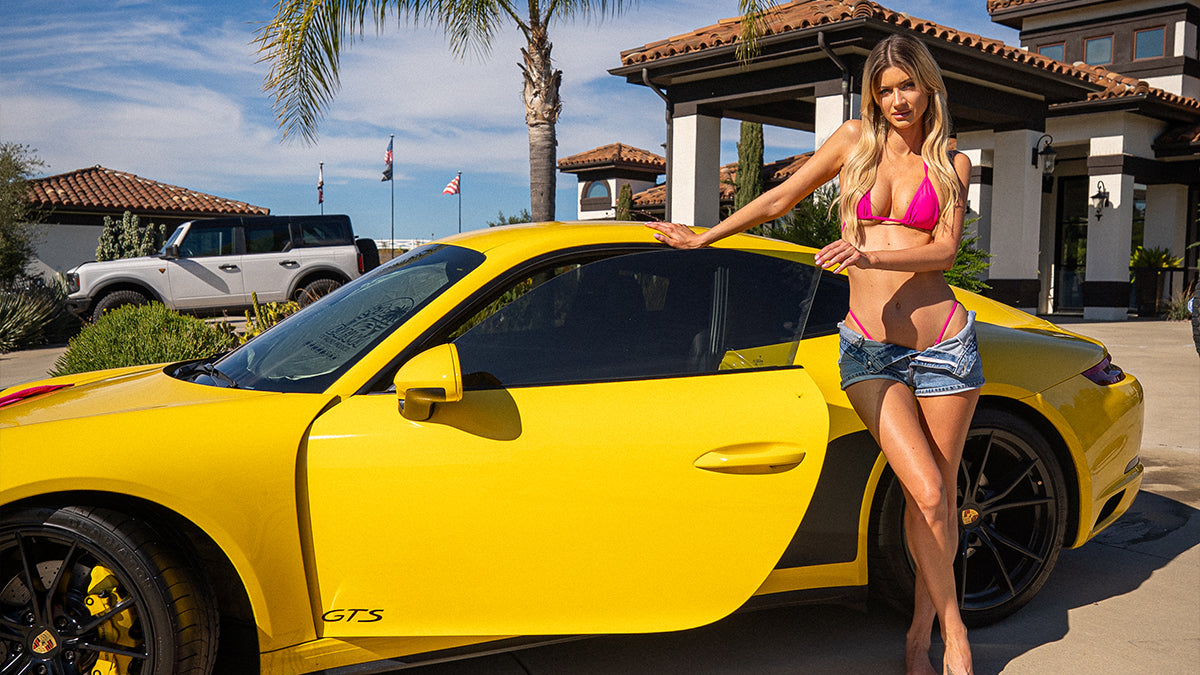
Exotic and supercar ownership comes with paint care challenges that most detailing advice doesn't address. Carbon fiber panels, exposed weave finishes, matte and satin factory paint, aggressive aero components, and paint so thin on some exotic body panels that a single pass with the wrong compound can cut through to primer, these aren't hypothetical concerns. They're the reality of caring for vehicles worth $200,000 to over $1 million. Here's what the correct approach looks like.
The Exotic Paint Problem
Many exotics use specialized coatings that require product-specific care. Key concerns:
- Matte and satin finishes: Any product that creates gloss will destroy the finish. No wax, no standard detail spray, no gloss-enhancing compounds.
- Thin clear coat: Some European and Italian exotic manufacturers use significantly thinner clear coat than American or Japanese vehicles. Single-stage paint correction on these vehicles requires paint thickness gauges and professional-level experience.
- Exposed carbon fiber weave: The resin surface is durable but requires UV protection. Standard paint products work on sealed carbon fiber.
- PPF (paint protection film): PPF-covered panels require specific cleaners and detail sprays that won't degrade the film adhesive or cause yellowing over time.
pH-Neutral Chemistry: Non-Negotiable
On exotic paint, pH-neutral products are the only acceptable choice. Alkaline cleaners can react with specialty coatings. Acidic wheel cleaners near body panels are a risk. Bahama Graphene Wash & Coat is pH-neutral across its full concentration range, making it safe for every exotic finish type, including matte, PPF-covered, and single-stage paint.

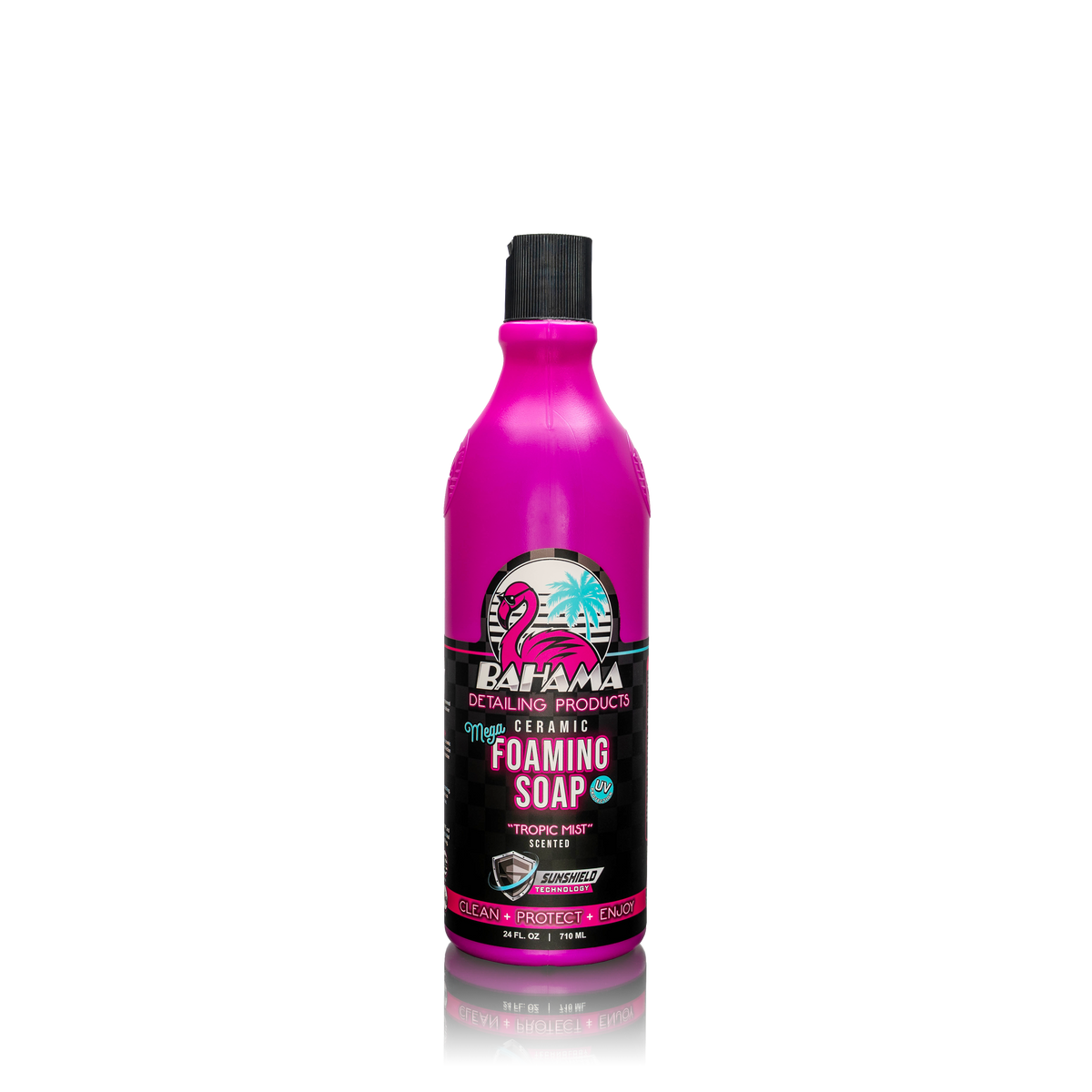
Mega Ceramic Foaming Soap
Exotic-safe ceramic foam, pH neutral, paint-safe formula that lifts road film and brake dust without swirling delicate clear coats.
Washing an Exotic Correctly
The two-bucket method is the minimum standard. For vehicles with PPF or ceramic coating, add a third consideration: wash mitts should be premium microfiber or lambswool, never synthetic sponges that can trap particles. Pressure washing PPF edges at close range risks lifting film edges, maintain a 30+ cm distance and use fan spray rather than direct jet on film seams.
For matte-finish exotics: wash normally with Bahama Graphene Wash & Coat. The pH-neutral formula and graphene component are matte-safe. Do not apply any finishing product designed to add gloss or shine.
Graphene Protection on Exotic Finishes
Graphene + SiO2 protection is compatible with gloss, matte, satin, and PPF surfaces. The molecular bonding mechanism doesn't alter finish appearance, it fills micro-pores and creates a hydrophobic barrier without adding gloss agents.
Bahama Detail Spray on a matte exotic: the formula is engineered to be finish-neutral, meaning it restores protection and removes contaminants without altering the matte appearance. Test on a hidden panel first on any specialty finish you haven't used the product on before.
Carbon Fiber Care
Exposed weave carbon fiber is sealed with a UV-stable resin during manufacturing. The resin can yellow and develop micro-cracks over time from UV exposure. Protection strategy:
- Wash with pH-neutral shampoo and soft microfiber
- Apply a UV-protective detail spray or dedicated carbon fiber sealer after washing
- Inspect for resin cracks annually: resin repair is straightforward, resin replacement is expensive

Ceramic Simple Finish
A show-quality ceramic protectant that adds depth and gloss to exotic paint while building UV protection that lasts for months.
Interior Care on Exotics
Alcantara, carbon fiber interior panels, and exotic leather require specific products. Alcantara should be brushed in one direction with a soft bristle brush after cleaning. Avoid getting Alcantara excessively wet. Carbon fiber interior pieces can be wiped with a damp microfiber and detailed with the same exterior graphene spray. Exotic leather (Nappa, semi-aniline) requires a pH-neutral leather cleaner and a high-quality conditioner without silicone.
Frequently Asked Questions
Can I use Bahama Graphene Wash & Coat on PPF?
Yes. Bahama Graphene Wash & Coat is safe for all PPF brands. It cleans without damaging film adhesive and the graphene component provides surface protection over the PPF itself.
How do I maintain a matte exotic's finish?
Wash with pH-neutral shampoo, dry with soft microfiber, and apply a matte-safe sealant. Never use products with gloss enhancers, wax, or shine-boosting compounds on matte paint.
What's the risk of machine polishing on exotic paint?
On exotics with thin clear coat, machine polishing without a paint depth gauge risks cutting through clear coat to base coat. Any paint correction on high-value exotics should involve professional assessment of paint thickness before beginning.
Your Exotic Deserves Precision Care
The investment in an exotic deserves a care approach that matches the vehicle's engineering. pH-neutral chemistry, graphene protection compatible with every finish type, and products designed for precision application make Bahama's system the right choice for vehicles where there are no second chances.