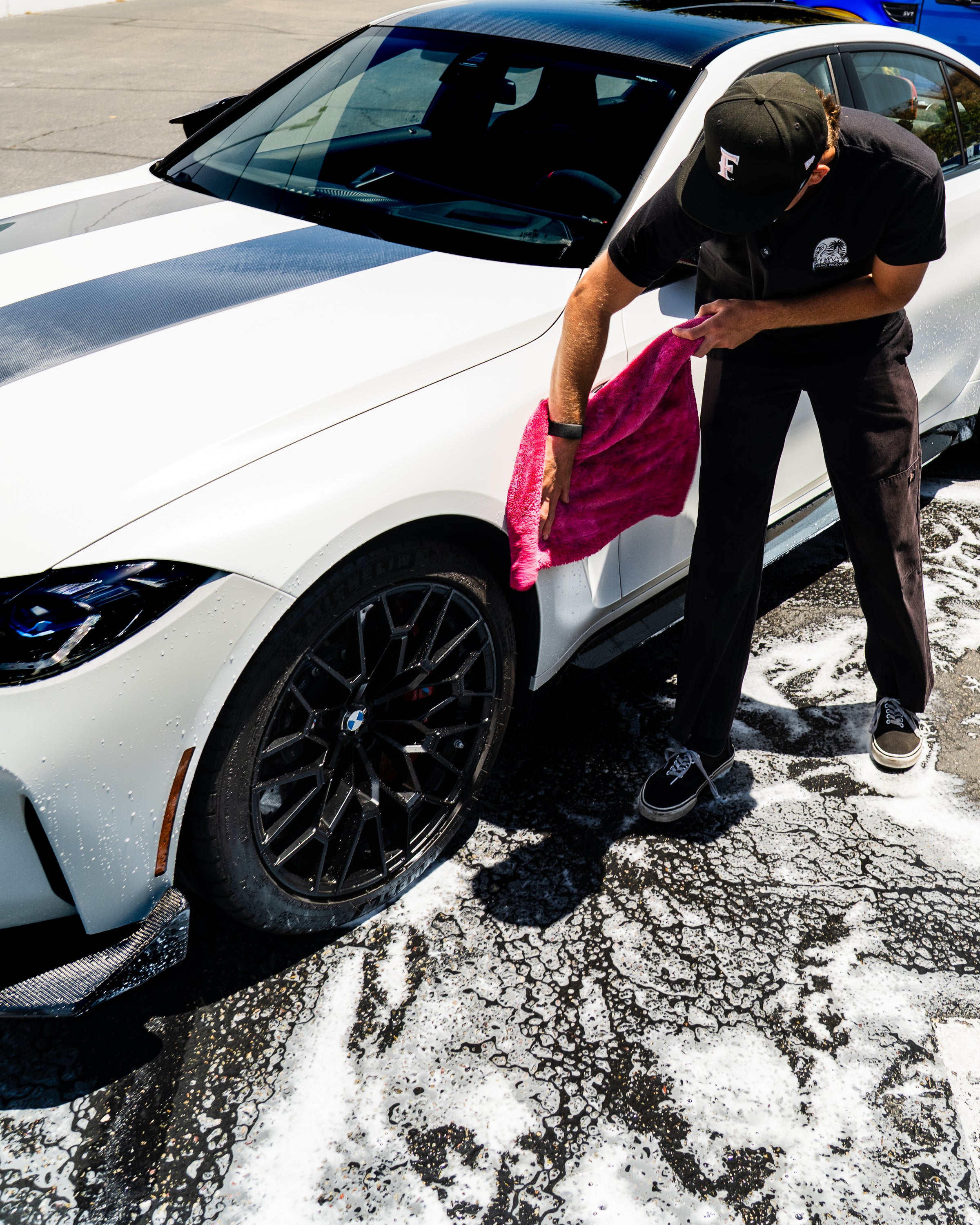
A wrap is a serious investment, and it is easy to ruin with products made for paint. If you want to protect a vinyl wrap, you need three things: a pH-neutral wash, a gentle drying method, and a UV-blocking layer made for film rather than clear coat.
Vinyl is not paint. It is a thin polymer film held on by adhesive, and there is no clear coat standing between the sun and the color. This guide covers what wears a wrap out, what to keep off it, and the routine that keeps it looking fresh.
Why Do Vinyl Wraps Fail Early?
UV Fading
On paint, the clear coat takes the sun first. On a wrap, the colored film is the top layer, so UV goes straight to work on the pigment. Hoods, roofs and the top of the bumper fade first and fastest.
Solvents and Wax at the Edges
Solvent-heavy waxes, polishes and tire shines can soften the film and creep under the edges, where they attack the adhesive. A lifted edge collects dirt and water, and it only grows from there.
Harsh Soaps
Strong alkaline soaps, the kind many automatic washes use, can leave film looking cloudy or hazy. pH-neutral is the rule.
Heat and Pressure
Very hot water and a pressure washer aimed at a seam both stress the adhesive. Heat from the sun does the same over time, which is why desert cars lose wraps sooner.
Scrubbing
Stiff brushes and dirty towels leave fine scratches in film. On matte and satin vinyl you can't polish them out, so prevention is the only option.
What Not to Use on a Vinyl Wrap
- Carnauba or paste wax. It leaves a blotchy, uneven finish, especially on matte and satin film.
- Polish or compound. These are abrasive and will cut through the film or burnish matte into shiny patches.
- Alkaline or acidic soaps and degreasers. Stick to a pH-neutral wash.
- Solvent-based tire shine that slings onto lower panels and edges.
- Stiff brushes and automatic car washes. Brushes scratch, and high-pressure jets lift edges.
- Hot water or steam. Cool to lukewarm water is safest for the adhesive.
If you are unsure about a product, test it on a low, hidden spot of film first.
How to Wash a Wrapped Car Safely
Technique matters as much as chemistry. Wash in the shade on cool panels.
- Rinse gently. Use a hose or a pressure washer on a wide fan, held well back. Never aim the jet straight at a seam, edge or corner.
- Foam it. Ceramic Mega Foaming Soap through a foam cannon or a Grit Guard Bucket. It is pH neutral, lifts road film and bug guts without scrubbing, and leaves a beading ceramic layer with SunShield UV behind.
- Top down, one panel at a time. Use a clean mitt and light pressure. Rinse the mitt against the grit guard before every panel so you are not dragging grit across the film.
- Wipe with the edges, not into them. Move along a seam, never toward a lifted corner.
- Rinse and dry right away. Minerals in tap water bond to film as it evaporates.
For drying, blot with a Big Bird on the large panels and a Lil' Bird around mirrors, door jambs and badges. Blotting instead of dragging protects soft film. Water spots are made in the drying, not in the wash.

Thick cannon foam that lifts road film, mud and bug guts, then leaves a beading ceramic layer behind. pH-neutral, so it is safe on any coating.
How to Protect a Vinyl Wrap From UV
This is where most wrap owners fall short. Because vinyl has no clear coat, UV protection is the main event, not an extra.
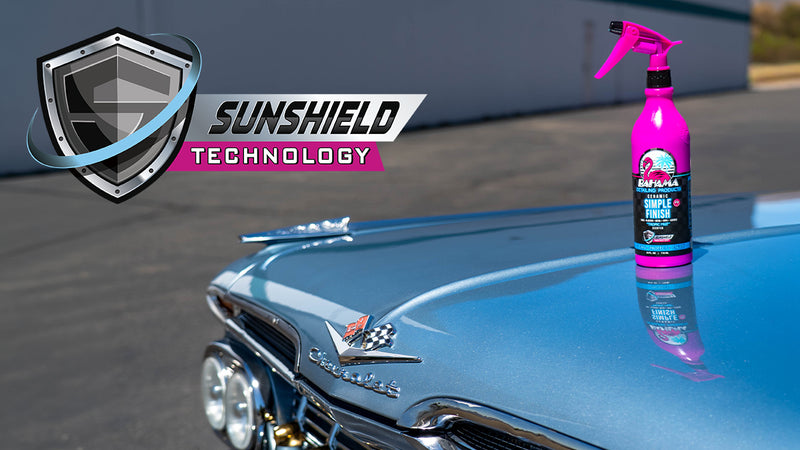
Ceramic Simple Finish is the Bahama bottle built for wraps. It is made for vinyl wrap, PPF, matte and satin finishes, plus the plastic, trim, rubber and tires around them. Spray it on, wipe it in with a Finish Line towel, and walk away. No buffing marathon, no sling.
It carries SunShield UV and the same graphene + SiO2 chemistry as the rest of the system. Graphene + SiO₂ = hydrophobics, so water beads and rolls off the film instead of drying into spots. The layer builds with every application.
Use Finish Line for this step and nothing else. One towel per job. Zero cross-contamination. A towel that has been through brake dust and tire dressing has no business on your film.
What About Glass, Chrome and Unwrapped Paint?
Keep Simple Finish off glass and chrome. Those surfaces, plus any gloss paint you left unwrapped, get Ceramic Final Touch. Spray, wipe smooth, let it dry 5 minutes, then buff with a dry Victory Lap. Keep it dry for about 24 hours so it cures.

Faded plastic, trim, rubber and tires back to like-new, then protected. Just as good on matte, satin, PPF and vinyl wrap.
Matte, Satin and Gloss Wraps: Does the Routine Change?
Barely. The wash is the same for every finish. The differences are in what you avoid.
- Matte and satin: never wax, polish or use a shine product. Wipe with straight, light passes. Simple Finish is made for matte and satin, so it is your protect layer.
- Gloss and color-shift film: same wash, same Simple Finish step. Swirls show easily on gloss film, so the towel discipline matters even more.
- Textured film like carbon-look vinyl: dirt sits in the grain, so let the foam dwell a little longer before you touch it.
Most swirl marks are put there by a towel. That is true on paint and doubly true on soft film. The guide on matte and satin care goes deeper on flat finishes.
How Often Should You Wash and Protect a Wrap?
Let exposure set the pace.
- Garaged: wash every few weeks or when it looks dirty, and give the film a Simple Finish pass every few washes.
- Parked outside: wash every couple of weeks and add Simple Finish every wash or two.
- Full sun or desert heat: wash often and add Simple Finish after every wash. SunShield is battle-tested in 108°F Sun Belt sun, but the sun still wins if you skip sessions.
- Fleet and business wraps: the wrap is your billboard, so treat it like the car that lives outside.
Between washes, deal with bird droppings and bug splatter quickly. Both are acidic and can stain film. Soak them with a little soapy water before you wipe so you are not grinding them in. If you drive a dusty or sunny climate, our guide to desert driving damage has more.
Keep the Wrap Looking New
A wrap lasts as long as you protect it. pH-neutral foam, a gentle blot dry, and a Simple Finish pass with its own towel will keep the color fresh and the edges down. Wash. Restore. Protect. For the whole lineup in one box, the Full System Set is $135 instead of $150.
Frequently Asked Questions
Can you put a ceramic product on a vinyl wrap?
Yes, if it is made for film. Ceramic Simple Finish is built for vinyl wrap, matte, satin and PPF, and adds a hydrophobic, UV-protected layer that builds with every application.
Can I take a wrapped car through an automatic car wash?
Avoid it. Brushes scratch film and high-pressure jets can lift edges. A hand wash with pH-neutral foam is far safer.
Is it safe to pressure wash a vinyl wrap?
Gently. Use a wide fan tip, stay well back from the surface, and never aim the jet at seams, edges or corners.
Should I wax a vinyl wrap?
No. Wax leaves matte and satin film blotchy and solvent-based waxes can attack the edges. Use Simple Finish instead.

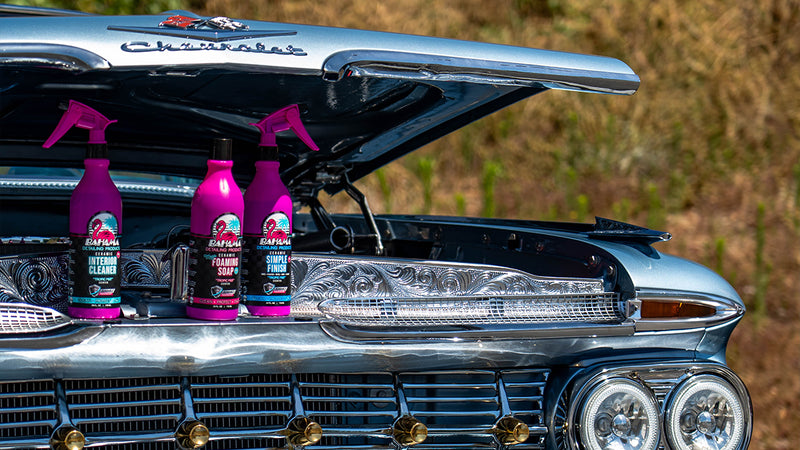
Wash, interior, restore and protect: all four Bahama ceramic bottles in one set. A pro ceramic coating is $1k+. This system only takes a couple hours.

Drying, interior, wheels and trim, and buffing the Final Touch coating, each with its own towel. No wheel grime on the dash, no drying towel soaking up your coating.