Carnauba wax has been the classic car ritual for generations: a Saturday, a tin of paste, and a lot of elbow grease. It still has fans, and for good reason.
But when it comes to classic car paint protection, modern graphene + SiO2 chemistry does the actual protecting job better. It lasts longer, beads harder, blocks UV and keeps working through wash after wash. Here is an honest look at both, and how to switch your classic over without risking original paint.
What Does Carnauba Wax Do Well?
Wax earned its reputation. It is forgiving to apply, easy to remove by hand, and enthusiasts love the warm look it gives older paint.
It is also familiar. If you have cared for the same car for decades, you know exactly how your paint reacts to it, and that confidence matters on a finish you cannot replace.
The trade-off is durability. Wax is a soft layer sitting on top of the paint. Heat, rain and every wash wear it down, so you are back with the tin and the applicator long before a modern coating would need attention.
What Does Graphene + SiO2 Do Differently?
SiO2 is silicon dioxide, often called liquid glass. It forms a thin, hard, slick layer on the surface, and at a 110° contact angle water pulls into tight beads instead of sitting flat.
Graphene is a single-atom carbon lattice, 200x stronger than steel and used in body armor. Paired with SiO2, it gives you the core idea behind the Bahama system: Graphene + SiO₂ = hydrophobics.
The practical difference for a classic owner:
- It lasts longer. A full coat of Ceramic Final Touch Detail Spray lasts 3 to 6 months.
- It builds. The system layers and builds with every application, rather than wearing away to nothing.
- It sheds water. Ultra hydrophobic beading means less water sits on the paint and dries into spots.
- It is fast. A full coat takes about an hour from wash to finish. No buffer, no paste, no sore shoulders.
For the deeper science, read how graphene changes paint protection.

The most ceramic of the four. Spray it on, wipe it smooth into a consistent layer, let it dry for 5 minutes, then buff. What is left is a streak-free, water-spot-free, ultra hydrophobic ceramic layer with UV protection.
Why UV Protection Matters Most on a Classic
For an older car, UV is the long game. Sunlight slowly breaks down paint, which shows up as fading, chalkiness and oxidation. Single-stage paint with no clear coat on top is especially exposed.
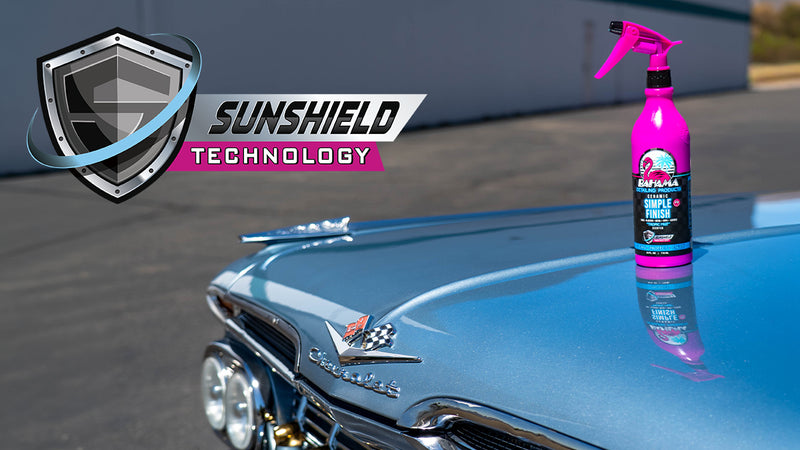
Wax offers limited UV defense, and it fades as the wax wears. Bahama's SunShield UV technology covers the 290-400nm UV range and blocks 98% of UV at the clear coat. All four Bahama bottles carry it, so the wash, the trim care and the interior wipe-down all add UV protection, not just the final coat.
If your classic already shows dull, chalky paint, deal with that first. Our guide to removing oxidation from classic car paint walks through it. Then protect the corrected paint so it stays that way.
Is Graphene Safe for Original Paint?
It is a fair question. Original paint is irreplaceable, and nobody wants to be the owner who tried something new and regretted it.
Final Touch is not abrasive and not a polish. It does not cut or level the paint; it lays a protective layer on top. The wash step uses Ceramic Mega Foaming Soap, which is pH neutral and safe on any coating.
Still, treat any new product on original paint the way a careful owner treats everything: test it on a small, hidden area first, let it cure, and look at it in daylight before you do the whole car.
How to Switch a Classic From Wax to Graphene
The switch is one session. Follow the same order every time: Wash, Dry, Restore, Protect, Finish.
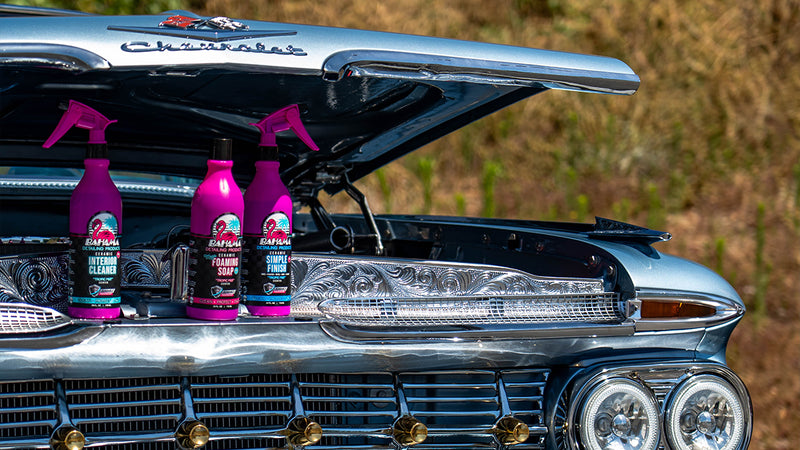
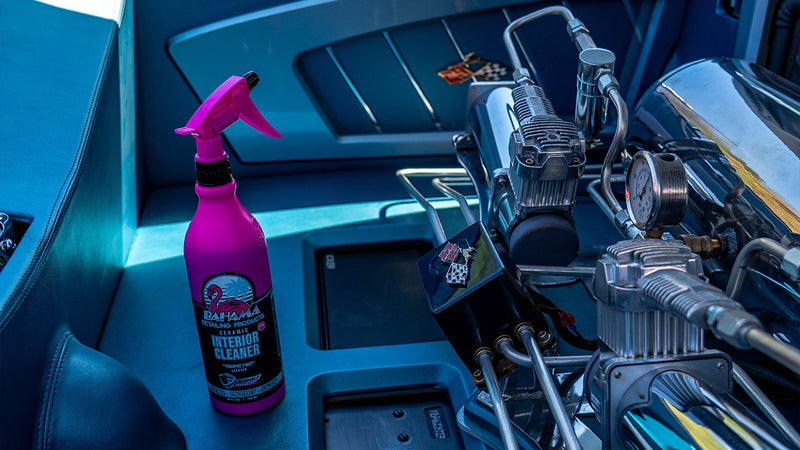
- Wash. Foam the car with Ceramic Mega Foaming Soap through a foam cannon or from a Grit Guard Bucket, working top down in the shade. If the car has a heavy build-up of old wax, remove it with a panel-prep wipe before you protect, so the new layer goes onto clean paint. Inside, wipe the dash, door cards and upholstery with Ceramic Interior Cleaner on a Starting Line towel.
- Dry. Pull a Big Bird slowly across the hood, roof and trunk, or blot. Use a Lil' Bird on chrome trim, mirrors and door jambs. Water spots are made in the drying, not in the wash.
- Restore. Spray Ceramic Simple Finish on rubber seals, tires, vinyl tops and plastic trim, and wipe it in with a Finish Line towel. Keep it off the paint, glass and chrome.
- Protect. Spray Final Touch on the paint, glass and chrome one panel at a time. Wipe it smooth into a consistent layer and let it dry for 5 minutes.
- Finish. Buff it off with a dry Victory Lap. Keep the car dry for about 24 hours so the layer cures.
From then on, every wash with the foaming soap tops up the protection, and a fresh Final Touch coat every few months keeps it strong.

The towel for buffing Ceramic Final Touch. 450 GSM edgeless plush lifts the residue while the coating stays on the paint.
Graphene vs Wax: Which Should You Choose?
If you enjoy the ritual of waxing and your car lives in a garage under a cover, wax is not going to ruin anything. It is just more work for less protection.
If your classic gets driven, sees sun, or sits outside at shows, graphene + SiO2 is the better tool. It lasts months instead of needing constant reapplication, it handles UV properly, and it replaces the wax entirely.
For product picks across the whole car, see the best detailing products for classic cars.
Frequently Asked Questions
Can I put graphene protection over existing wax?
For the best result, remove old wax first so the new layer sits on clean paint. Graphene + SiO2 protection performs best on a properly washed, wax-free surface.
Will graphene change how my classic paint looks?
The character of the paint stays the same. What changes is how it behaves: water beads and rolls off, and the surface feels slick.
How often do I reapply graphene protection on a classic car?
A full Final Touch coat lasts 3 to 6 months. Each wash with Ceramic Mega Foaming Soap adds a beading ceramic layer in between.
Is graphene better than carnauba wax for UV protection?
Yes. SunShield UV blocks 98% of UV at the clear coat, and it is in every Bahama bottle, so protection builds across the whole routine.
The Best Protection Your Classic Has Had
Carnauba earned its place in car culture, but your classic's paint deserves protection that lasts. Wash. Restore. Protect. The Full System Set is the last 4 detailing products you'll ever need, and it covers the whole car, not just the paint.

Wash, interior, restore and protect: all four Bahama ceramic bottles in one set. A pro ceramic coating is $1k+. This system only takes a couple hours.

Drying, interior, wheels and trim, and buffing the Final Touch coating, each with its own towel. No wheel grime on the dash, no drying towel soaking up your coating.