Park outside long enough and the sun will take your paint apart. UV rays destroy car paint slowly: the color goes flat, the clear coat turns chalky, and the black trim fades to gray years before anything mechanical wears out.
The fix is not complicated. Keep a UV-blocking layer on every surface the sun hits, and renew it every time you wash. Here is what the damage looks like, why old-school wax falls short, and the routine that stops it.
What Do UV Rays Actually Do to Car Paint?
Ultraviolet light sits just past the violet end of what you can see, in the 290 to 400nm range. You can't see it, but your paint soaks it up every hour the car sits outside.
That energy breaks the chemical bonds in the clear coat. The finish loses clarity, goes hazy, then chalky. That is oxidation. Once it reaches peeling clear coat, no spray brings it back, and the panel needs a body shop.
UVA vs. UVB
UVA has the longer wavelength and reaches deeper into a finish. Its damage is slow and cumulative, the kind you only notice after a few summers.
UVB carries more energy and is hard on polymers. That is why rubber seals, tire sidewalls and unpainted plastic crack and fade. The atmosphere blocks UVC, so that one is not your problem.
Plastic, Rubber and Trim Go First
Paint has a clear coat standing guard. Black trim, bumper plastic, seals and tires do not. On most vehicles the first sign of sun damage is a gray, blotchy bumper, not faded paint. If yours is already there, our guide on how to restore faded plastic walks through the fix.
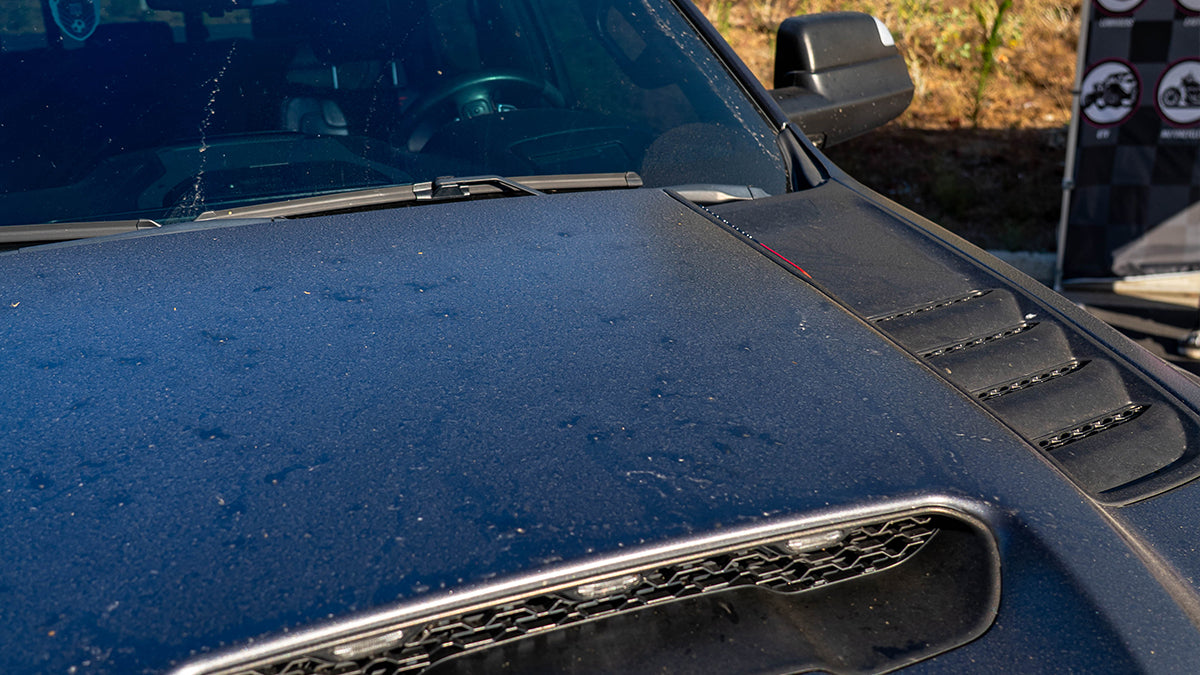
Signs Your Paint Already Has UV Damage
- Flat color that looks dull even right after a wash.
- Chalky residue that comes off on a fingertip or towel, common on red and black single-stage paint.
- Hazy clear coat on the roof, hood and trunk lid, the panels that face the sky.
- Gray trim and brown tires where the rubber and plastic have dried out.
- Peeling or flaking clear coat, which means the damage is past what a detail can fix.
Horizontal panels always go first because they take the sun head-on. Check the roof before you check the doors.
Why Car Wax Can't Keep Up With the Sun
Carnauba wax has been the default for generations, and it does put a layer between your paint and the weather. The trouble is that layer is soft. Heat softens it, detergents wear it down, and bird droppings, sap and road film chew through it.
On a car that lives outside in a hot climate, wax gives up fast. Almost nobody rewaxes often enough to keep up, so the paint spends most of its life uncovered.
Wax also only goes on paint. It does nothing for the plastic, rubber and trim that fade first.
How Graphene, SiO2 and SunShield UV Stop the Damage
Professional ceramic coatings fixed the durability problem, at a price. A pro ceramic coating is $1k+, the shop keeps your car for days while it cures, and it only covers the clear coat.
Bahama puts that chemistry into bottles you use in your own driveway. Graphene is a single-atom carbon lattice, 200x stronger than steel. SiO2 is liquid glass. Graphene + SiO₂ = hydrophobics: water beads and rolls off instead of sitting on the panel and drying into spots. For the deep dive, read the science behind graphene + SiO2 detailing.
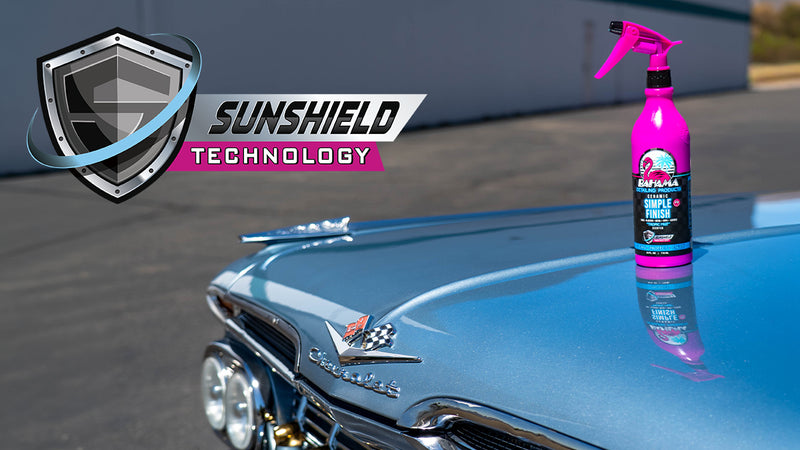
The UV part is SunShield, and all four Bahama bottles carry it. That means every step of the routine lays down UV protection, not just the last one. SunShield blocks 98% of UV at the clear coat, and it is battle-tested in 108°F Sun Belt sun: 14 days still beading and UV shielded. More on how it works in What Is SunShield UV Technology?
The UV Protection Routine: Wash, Dry, Restore, Protect, Finish
Do this in the shade on cool panels. Every bottle has a towel built for it, so use the right one at each step.
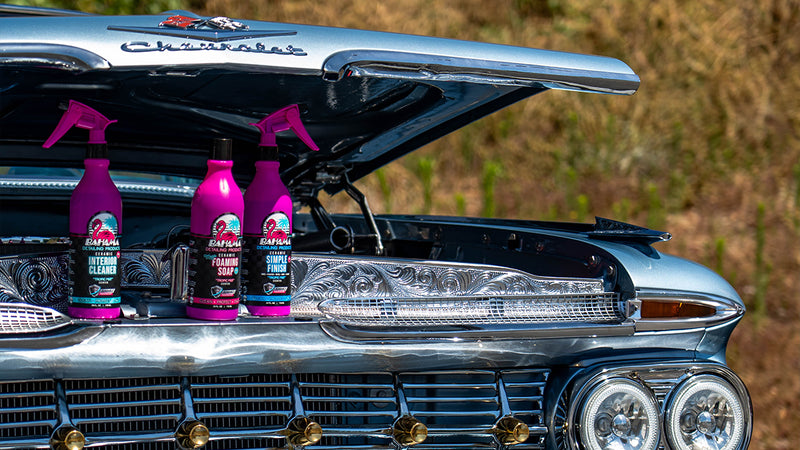
- Wash. Foam the car with Ceramic Mega Foaming Soap through a foam cannon or a Grit Guard Bucket. It lifts road film, mud and bug guts and leaves a beading ceramic layer with SunShield UV behind. It is pH neutral and safe on any coating.
- Dry. Blot the big panels with a Big Bird and use a Lil' Bird for mirrors, glass and door jambs. Blot, don't drag. Water spots are made in the drying, not in the wash.
- Restore. Spray Ceramic Simple Finish on plastic, trim, rubber, tires and wheels, then wipe with a Finish Line towel. Faded trim comes back and picks up UV protection in the same pass. Keep it off gloss paint, glass and chrome.
- Protect. Spray Ceramic Final Touch on paint, glass and chrome, wipe it smooth into an even layer, and let it dry 5 minutes.
- Finish. Buff it off with a dry Victory Lap. Then keep the car dry for about 24 hours so the layer cures.
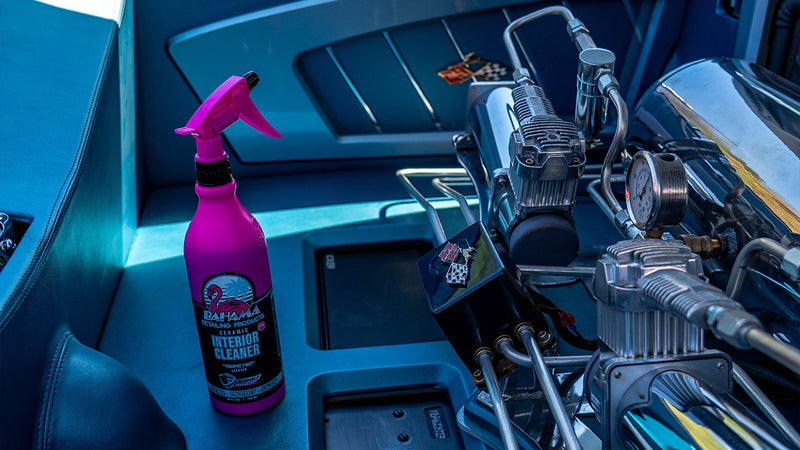
Don't skip the cabin. Sun through the glass fades dashboards and dries out leather. Wipe the dash, doors, leather, vinyl and screens with Ceramic Interior Cleaner and a Starting Line towel. It cleans and lays down UV protection in the same pass, with a streak-free, no-gloss finish.

The most ceramic of the four. Spray it on, wipe it smooth into a consistent layer, let it dry for 5 minutes, then buff. What is left is a streak-free, water-spot-free, ultra hydrophobic ceramic layer with UV protection.

Faded plastic, trim, rubber and tires back to like-new, then protected. Just as good on matte, satin, PPF and vinyl wrap.
How Often Should You Renew UV Protection?
A full Final Touch coat takes about an hour from wash to finish and lasts 3 to 6 months. In between, every wash with Mega Foaming Soap tops up the ceramic and UV layer, so a regular wash is doing real protective work, not just cleaning.
The chemistry layers and builds with every application. The more sessions you put in, the stronger the barrier gets, which is the opposite of a pro coating that peaks the day it cures.
Parking matters too. Shade, a carport or a breathable cover cuts the hours of exposure, and nosing the car away from the afternoon sun spares the hood. For a full plan, see how to protect your car's paint from sun damage.
The Bottom Line
UV damage is slow, quiet and almost entirely preventable. Keep a fresh UV layer on the paint, plastic, rubber, glass and cabin, and renew it every time you wash. Wash. Restore. Protect. The Full System Set puts all four bottles in one box for $135: the last 4 detailing products you'll ever need.
Frequently Asked Questions
Can UV damage on car paint be reversed?
Light dullness and early oxidation can usually be polished out with a dedicated polish. Peeling or flaking clear coat cannot; that panel needs a refinish. Either way, protect the paint as soon as you are done.
Does car wax protect against UV rays?
A little, for a short time. Wax is soft, breaks down in heat and detergents, and only covers paint. A full Final Touch coat lasts 3 to 6 months, and the rest of the system covers the plastic and rubber that wax ignores.
Are dark cars more vulnerable to sun damage?
Yes. Dark paint absorbs more heat and shows oxidation, haze and swirls sooner than light colors. Black and dark gray cars benefit most from a consistent UV routine.
Do I need UV protection if my car is garaged?
You need it less often, but every drive and every parking lot is exposure. A garaged car on the same routine simply holds its protection longer between full coats.

Wash, interior, restore and protect: all four Bahama ceramic bottles in one set. A pro ceramic coating is $1k+. This system only takes a couple hours.

Drying, interior, wheels and trim, and buffing the Final Touch coating, each with its own towel. No wheel grime on the dash, no drying towel soaking up your coating.