Graphene and SiO2 show up on a lot of detailing labels now, usually with very little explanation. The science behind graphene + SiO2 car detailing is worth understanding, because it tells you what these products can do for your paint and what they can't.
The short version: SiO2 lays down a thin, glass-like layer that water hates, graphene reinforces it, and together they make a surface that beads water, stays cleaner and builds with every application. Here is how that works, in plain language.
What Is Graphene?
Graphene is carbon arranged in a single-atom lattice, a flat honeycomb sheet just one atom thick. Its discovery won a Nobel Prize in Physics, and it is one of the most studied materials in modern science.
The headline number: graphene is 200x stronger than steel. It is strong enough that it is used in body armor. That strength comes from the way each carbon atom locks to its neighbors across the whole sheet.
From Pencil Lead to Paint Protection
Pencil graphite is just stacked sheets of carbon. Peel a single layer away and you have graphene. Its properties change completely when it goes from a loose stack to one tight sheet, which is why materials scientists got so excited about it.
In car care, graphene works alongside other ingredients in a liquid formula you can spray and wipe. It is not a solid sheet laid over your car. Think of it as reinforcement inside the protective layer rather than the whole layer.

The most ceramic of the four. Spray it on, wipe it smooth into a consistent layer, let it dry for 5 minutes, then buff. What is left is a streak-free, water-spot-free, ultra hydrophobic ceramic layer with UV protection.
What Is SiO2, and Why Is It Called Liquid Glass?
SiO2 is silicon dioxide, the same compound found in quartz, sand and window glass. In detailing it is often called liquid glass, because it goes on as a liquid and leaves a thin, glass-like layer behind.
SiO2 is the backbone of the ceramic coatings that pro shops install. It fills the tiny peaks and valleys in a paint surface and leaves it smoother and slicker. Our explainer on what SiO2 is in car care goes deeper.
What a 110° Contact Angle Means
Detailers measure water repellency with the contact angle: the angle where the edge of a water droplet meets the surface. A flat, spread-out puddle has a low angle. A tall, round bead has a high one.
SiO2 gives a 110° contact angle. In practice that means water pulls into tight beads that roll off the panel instead of lying flat and drying into spots.
Why Graphene and SiO2 Work Better Together
The way we put it: Graphene + SiO₂ = hydrophobics. SiO2 brings the glass-like, water-hating surface. Graphene brings structure and strength to the layer.
- Water beads and sheets off. Less water sitting on the panel means fewer mineral spots when it dries.
- Dirt struggles to stick. A slick, hydrophobic surface gives road film and dust less to grab, so the next wash is easier.
- It layers. The nanotechnology bonds on a molecular level and builds with every application, so each session adds to the last.
That last point is the big difference from a pro coating. A professional coating peaks the day it cures and declines from there. A layering system gets stronger the more you use it. For a head-to-head, read SiO2 vs. graphene.
Why Graphene and SiO2 Beat Wax
Wax is a soft layer that sits on top of the paint and wears away quickly in heat, rain and detergent. Graphene and SiO2 bond to the surface and layer up. More on that in Better Than Wax.
Where SunShield UV Fits In
Hydrophobics handle water and dirt. The sun needs its own answer. Every Bahama bottle carries SunShield UV, which covers the 290 to 400nm UV range and blocks 98% of UV at the clear coat.
It is battle-tested in 108°F Sun Belt sun, with 14 days still beading and UV shielded. Because all four bottles carry it, every step of the routine adds UV protection: paint, glass, plastic, rubber, tires and the cabin.
How to Put the Science on Your Car
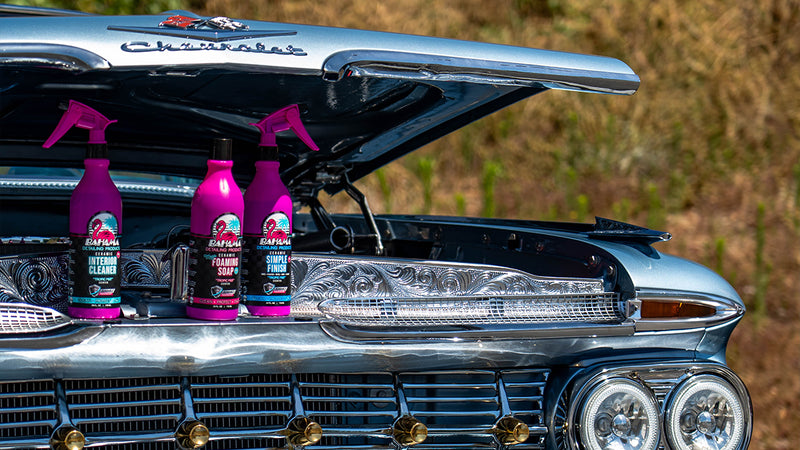
Each Bahama bottle carries the same graphene, SiO2 and SunShield UV stack, tuned for a different surface. One chemistry in four deliveries. Here is the routine in order, with the towel for each step.
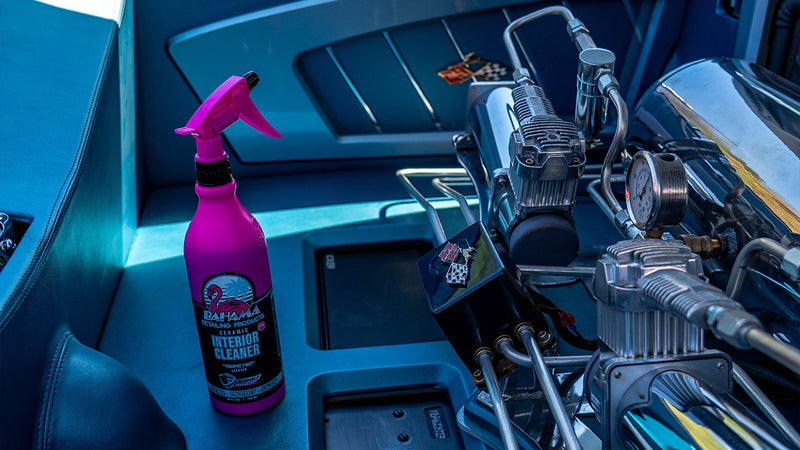
- Wash. Ceramic Mega Foaming Soap through a foam cannon or a Grit Guard Bucket. It lifts road film and bug guts and leaves a beading ceramic layer behind. Inside, use Ceramic Interior Cleaner with a Starting Line towel on the dash, doors, leather, vinyl and screens.
- Dry. A Big Bird for the big panels and a Lil' Bird for glass, mirrors and jambs. Water spots are made in the drying, not in the wash.
- Restore. Ceramic Simple Finish on plastic, trim, rubber, tires and wheels, wiped with a Finish Line towel. Not for gloss paint, glass or chrome.
- Protect. Ceramic Final Touch, the most ceramic of the four, on paint, glass and chrome. Spray, wipe smooth, dry 5 minutes. It is ultra hydrophobic.
- Finish. Buff with a dry Victory Lap, then keep the car dry for about 24 hours to cure.
A full coat takes about an hour from wash to finish and lasts 3 to 6 months.

The towel for buffing Ceramic Final Touch. 450 GSM edgeless plush lifts the residue while the coating stays on the paint.
Science That Works
Graphene and SiO2 are real materials science, not marketing words: strength from graphene, liquid glass from SiO2, and hydrophobics from the pair. Wash. Restore. Protect. A pro ceramic coating is $1k+; the Full System Set puts the same chemistry in your hands for $135, and it only takes a couple hours.
Frequently Asked Questions
Is graphene in car care products real graphene?
Yes, but not as a solid sheet. It is carried in a liquid formula alongside other ingredients so you can spray and wipe it, and it reinforces the protective layer it forms.
What is the difference between SiO2 and graphene?
SiO2 is silicon dioxide, or liquid glass, and gives the slick, water-beading surface. Graphene is a single-atom carbon lattice that adds strength. Bahama uses both together.
Is graphene better than a ceramic coating?
Graphene works best with SiO2, the core of a ceramic coating, rather than instead of it. Combining them in a layering system gives you coating-style hydrophobics that build with every application.
Do graphene + SiO2 products protect against UV?
Hydrophobics alone don't block UV. Bahama adds SunShield UV to all four bottles, which blocks 98% of UV at the clear coat.

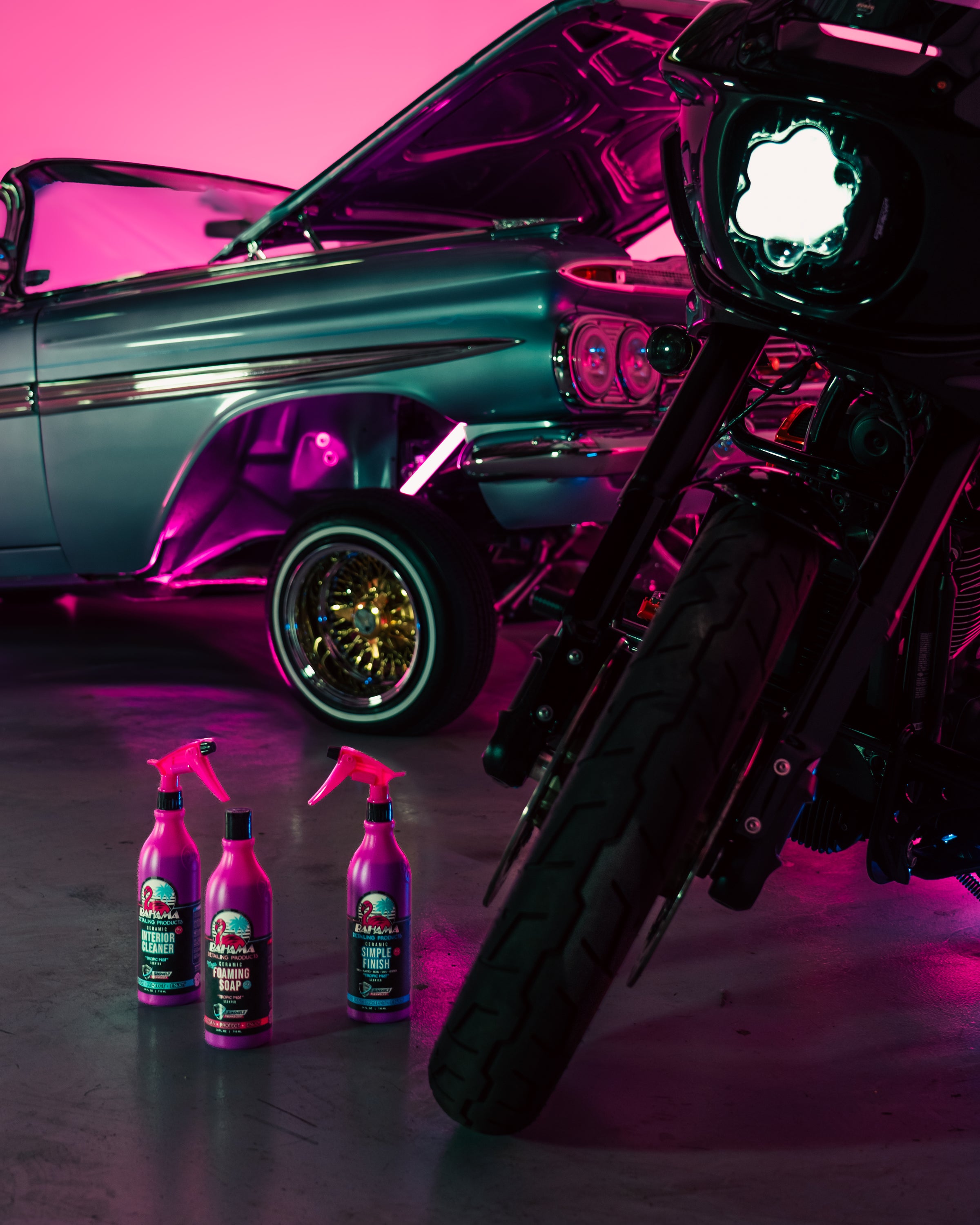
Wash, interior, restore and protect: all four Bahama ceramic bottles in one set. A pro ceramic coating is $1k+. This system only takes a couple hours.

Drying, interior, wheels and trim, and buffing the Final Touch coating, each with its own towel. No wheel grime on the dash, no drying towel soaking up your coating.