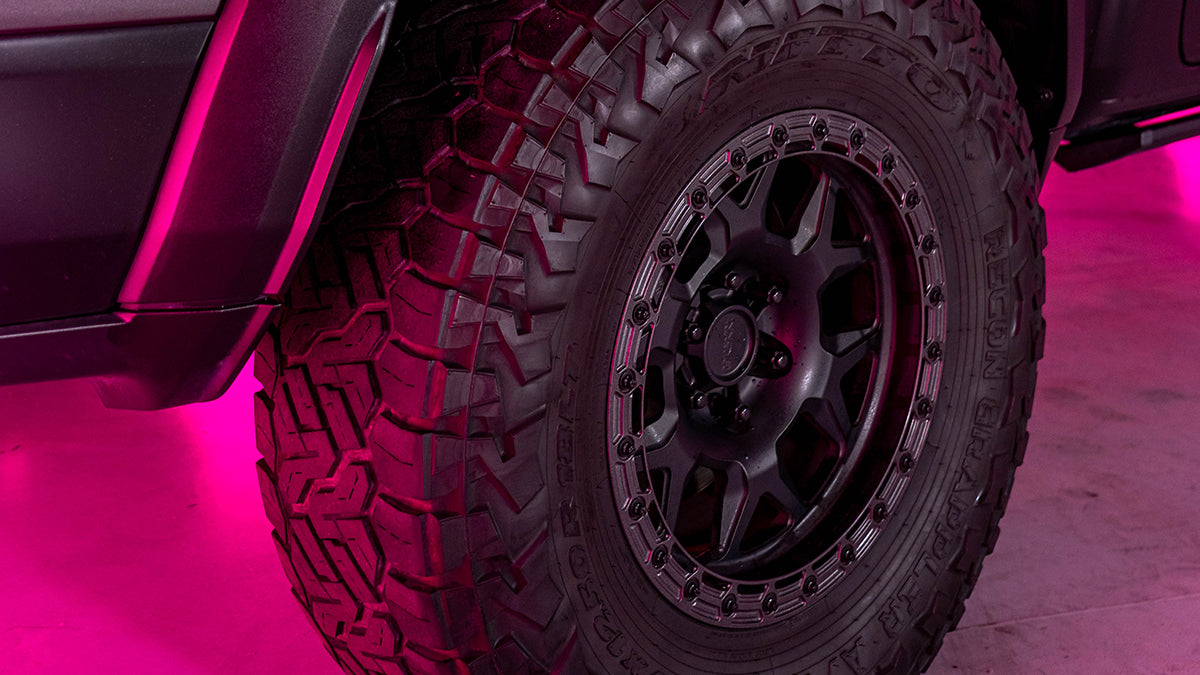
Off-road tires take a beating that street tires never see: packed mud, sharp rock, sand, heat and long days in the sun. Most owners only notice them when they look brown, chalky or cracked.
Good off-road truck tire care is simple. Clean the tires properly after the trail, protect the rubber from UV and drying out, and check them while they are clean. Do that and your tires look better, wear more evenly and last longer.
Why Do Off-Road Tires Need Extra Care?
Aggressive tread holds mud and stones that a quick rinse never reaches. Left in place, packed mud hides cuts and keeps moisture against the rubber.
Sidewalls get the worst of it. They scrape rock, flex hard at low pressure and sit in the sun all day. UV breaks rubber down over time, which shows up as fading, browning and eventually fine cracks.
And the wrong tire shine can make it worse. Wet, greasy dressings attract dust and sling onto paint the first time you drive off.
How to Clean Off-Road Tires After the Trail
Knock off the heavy mud first
Rinse the wheel wells and tread to soften packed mud, then dig out stones stuck in the tread with a blunt tool. Do not use a sharp pick that can nick the rubber.
Wash tire and wheel together
Foam the tire and rim with Ceramic Mega Foaming Soap and scrub the sidewall with a stiff tire brush. Use a softer brush on the rim face. Keep these brushes for wheels only.
The soap lifts mud and road film and leaves a beading ceramic layer with SunShield UV behind. If the sidewall still foams brown, that is old dressing and road grime coming off; scrub and rinse until it runs clean.
Rinse and dry
Rinse thoroughly, including inside the barrel and around the lug nuts. Blot the rim dry with a Lil' Bird so water does not dry into spots. For wheels and undercarriage specifically, see how to clean off-road truck wheels after trail use.
How Do You Protect Off-Road Tires From UV and Cracking?
Once the tire is clean and dry, protect it. A bare, clean sidewall is fully exposed to the sun.
Ceramic Simple Finish is built for this. Spray it on the tire and the rim together, wipe it in with a Finish Line towel, and walk away. It brings faded rubber back to a deep, like-new look with SunShield UV protection, and it dries without sling, so it stays on the tire instead of spraying down your paint.
If your rims are gloss, give them a quick buff after. Chrome rims are the exception: keep Simple Finish on the rubber and protect chrome with Final Touch instead.
Use the dual-sided Finish Line the way it was designed. The short-nap side lifts leftover grime from the sidewall; the plush side wipes the product even. It takes the dirty work so your finishing towels never have to.

Faded plastic, trim, rubber and tires back to like-new, then protected. Just as good on matte, satin, PPF and vinyl wrap.
The Full Off-Road Truck Detailing Routine
Tires are one part of the job. When you do the whole truck, follow the same order every time: Wash, Dry, Restore, Protect, Finish.
- Wash. Wheels and tires first with their own brushes, then foam the body with Ceramic Mega Foaming Soap and wash with a mitt and a Grit Guard Bucket. Inside, wipe the dash, doors and seats with Ceramic Interior Cleaner on a Starting Line towel.
- Dry. Sheet water off the hood, roof and bed with a Big Bird. Use a Lil' Bird on mirrors, door jambs and rims.
- Restore. Spray Ceramic Simple Finish on tires and wheels, fender flares, bumpers, plastic trim and the bed liner, and wipe it in with a Finish Line towel.
- Protect. Spray Ceramic Final Touch Detail Spray on paint, glass and chrome, wipe it smooth into a consistent layer and let it dry for 5 minutes.
- Finish. Buff it off with a dry Victory Lap, never a drying towel, and keep the truck dry for about 24 hours so it cures.
A towel that has been through brake dust and tire dressing has no business on your paint. Keep the Finish Line on wheels and tires and nowhere else.

Wheels, tires and trim. Dual-sided: a short nap to lift grime and a plush side to wipe it clean, so your finishing towels never do the dirty work.
How Can You Make Off-Road Tires Last Longer?
Cleaning and dressing protect the rubber. These habits protect the tire.
- Air back up after the trail. Driving at trail pressure on pavement builds heat and wears tires fast. Carry a compressor.
- Inspect while they are clean. Look for sidewall cuts, chunking in the tread and stones wedged deep in the grooves. A clean tire hides nothing.
- Rotate on schedule. Follow your tire maker's guidance. Off-road tires wear unevenly if they stay in one position.
- Check alignment and balance after hard hits. A bent component or lost weight shows up as uneven wear.
- Park out of the sun when you can. UV works on parked tires every day, so shade and regular protection both help.
For more on keeping dressing on the tire, read how to make tire dressing last longer.
What Should You Avoid on Off-Road Tires?
- Greasy, wet-look dressings. They collect dust and sand on the trail and sling onto paint.
- Harsh, high-alkaline cleaners left to dry on rubber. They can leave the sidewall dry and dull.
- High-pressure spray at close range on the sidewall or bead. Keep the nozzle back.
- Sharing towels. One towel per job. Zero cross-contamination.
Frequently Asked Questions
How do I keep off-road tires from turning brown?
Scrub the sidewall clean with soap and a stiff brush until the foam runs clear, then protect the rubber with Simple Finish so it stays dark and UV protected.
Can I dress the tire and the rim with the same product?
Yes. Simple Finish covers tire and rim together in one pass. Give gloss rims a quick buff after, and protect chrome with Final Touch instead.
Does tire dressing sling onto paint?
Greasy dressings often do. Simple Finish dries without sling, so it stays on the tire.
How often should I clean off-road tires?
After every muddy or dusty trip. Packed mud holds moisture and hides damage, and a quick clean makes inspection easy.
The Bottom Line
Clean the tread, scrub the sidewall, protect the rubber and check for damage while it is clean. Wash. Restore. Protect. The Full System Set protects the whole truck, not just the paint, from tires to glass.

Wash, interior, restore and protect: all four Bahama ceramic bottles in one set. A pro ceramic coating is $1k+. This system only takes a couple hours.

Drying, interior, wheels and trim, and buffing the Final Touch coating, each with its own towel. No wheel grime on the dash, no drying towel soaking up your coating.