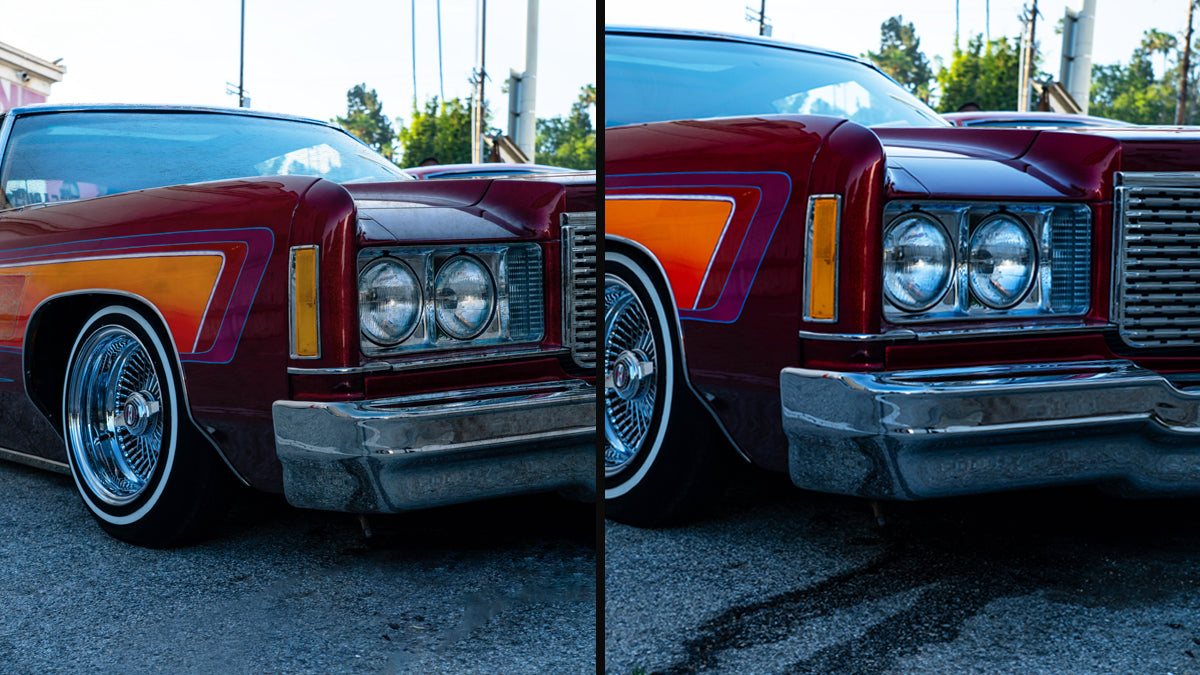
Oxidized paint on a classic looks chalky and flat, like the color has been washed out and left to dry. The good news: most oxidation sits on the surface, and you can remove oxidation from classic car paint without damaging it if you take off as little as possible.
The rule is simple. Clean first, use the gentlest polish that works, and protect the fresh paint right away. Vintage finishes are often thinner than modern ones, so patience beats horsepower every time.
What Is Paint Oxidation?
Sunlight and oxygen break down the binders in paint. On single-stage finishes, the color coat itself goes chalky. On base coat and clear coat finishes, the clear coat goes hazy first.
That dead layer scatters light instead of reflecting it, which is why the color looks dull. Polishing removes the dead layer and exposes healthy paint underneath. Nothing you spray on will remove it on its own.
Single-Stage vs. Clear Coat
Many classics wear single-stage paint: color and protection in one layer, with no clear coat on top. A quick test tells you which you have. Rub a hidden spot with a little polish on a white applicator. If the pad turns the color of the car, it is single-stage. If it stays white or slightly gray, there is a clear coat.
Step 1: Wash and Decontaminate Before You Polish
Never polish dirty paint. Grit trapped under a pad turns into scratches.
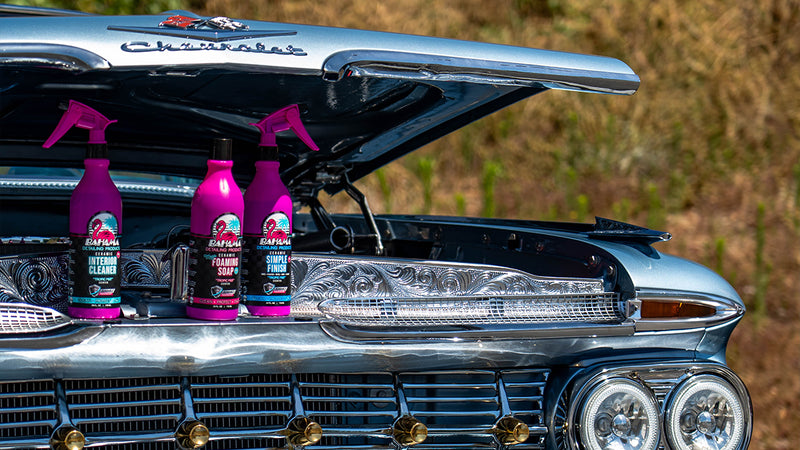
- Wash. Foam the car with Ceramic Mega Foaming Soap and wash from a Grit Guard Bucket so the grit stays at the bottom of the bucket. It is pH neutral, gentle on old paint, and lifts road film without scrubbing.
- Dry. Blot the panels with a Big Bird and use a Lil' Bird for door jambs, trim edges and chrome. Blot rather than drag on soft vintage paint. Water spots are made in the drying, not in the wash.
- Clay. Run a clay bar with plenty of lubricant over the paint. If it feels gritty, bonded contamination is still there, and the polish will drag it around.
Tape off rubber seals, emblems and raw trim edges before you polish. Polish residue stains old rubber and is hard to get out of pitted chrome.
Step 2: Judge the Oxidation, Then Polish It Off
How Bad Is It?
- Light: the color is dull but you can still see a reflection. A fine finishing polish by hand usually does it.
- Moderate: the paint looks chalky and the reflection is mostly gone. A dual-action polisher on a low speed with a soft finishing pad is the safe step up.
- Heavy: the paint is nearly white, cracked or crazed, or the clear coat is peeling. That is past polishing. Talk to a paint professional before you touch it.
Always start on a hidden test spot like the door jamb or inside the fuel door. Use the least aggressive pad and polish that works, and only step up if you have to.
By Hand for Light Oxidation
Put a few drops of a dedicated finishing polish on a foam applicator. Work a small section in straight, overlapping passes with light to moderate pressure, then wipe the residue off with a clean microfiber you keep just for polish. Hand polishing is slow, but it gives you full control and almost no risk on thin lacquer.
By Machine for Moderate Oxidation
A dual-action polisher is the safe choice on vintage paint. Keep it on a low speed, use a soft finishing pad, and work small sections. Let the machine do the work and keep pressure light. Avoid rotary buffers unless you have real experience: they build heat fast and can burn through thin edges.
Watch the Edges
Body lines, panel edges and high spots have the thinnest paint. Skip them with the machine and finish them by hand.
Wipe polish residue off while it is still slightly damp, using clean towels and flipping often. The goal is bare, clean paint with nothing left on it.
Step 3: Restore, Protect and Finish the Fresh Paint
Freshly polished paint has nothing on it. Protect it the same day.
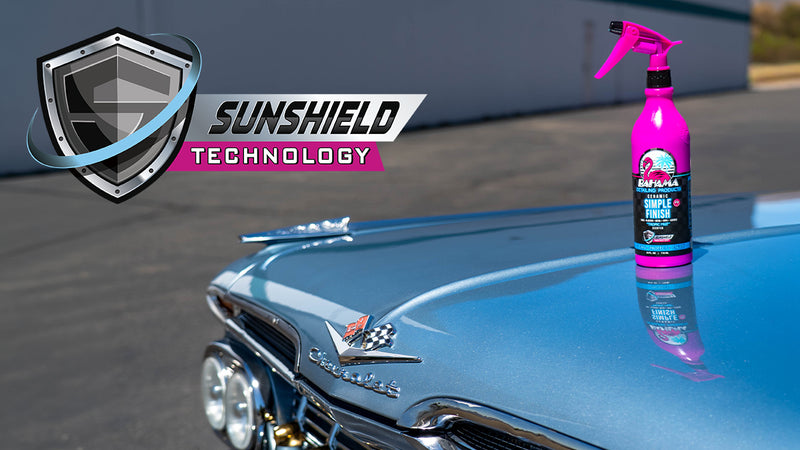
- Restore. Old rubber seals, black trim, vinyl tops and tires age just as fast as paint. Spray Ceramic Simple Finish on them and wipe with a Finish Line towel. It brings faded rubber and trim back and lays down SunShield UV. Keep it off the paint, glass and chrome.
- Protect. Spray Ceramic Final Touch on the polished paint, glass and chrome. Wipe it smooth into a consistent layer and let it dry 5 minutes. Final Touch is not a polish and it is not abrasive, so it will not remove oxidation. Its job is to protect the paint you just uncovered.
- Finish. Buff it off with a dry Victory Lap. Then keep the car dry for about 24 hours so it cures.
Final Touch carries graphene, SiO2 and SunShield UV, which blocks 98% of UV at the clear coat. A full coat takes about an hour from wash to finish and lasts 3 to 6 months. It also builds with every application, which suits a car you plan to keep for decades.

The most ceramic of the four. Spray it on, wipe it smooth into a consistent layer, let it dry for 5 minutes, then buff. What is left is a streak-free, water-spot-free, ultra hydrophobic ceramic layer with UV protection.

The towel for buffing Ceramic Final Touch. 450 GSM edgeless plush lifts the residue while the coating stays on the paint.
How to Keep Oxidation From Coming Back
Oxidation is the sun winning a long game. Take the sun out of the equation as much as you can.
- Store it covered. A garage or a breathable, soft-lined cover makes the biggest difference.
- Wash with a protective soap. Mega Foaming Soap leaves a ceramic layer with SunShield UV, so every wash tops up protection between Final Touch coats.
- Keep the towels separate. One towel per job. Zero cross-contamination. Most swirl marks are put there by a towel, and vintage paint shows every one.
- Polish rarely. Every polish removes a little paint. Good protection means you only need to polish when the paint truly needs it.
For the rest of the car, see how to detail a classic car and why graphene beats wax on classic paint.
The Bottom Line
Oxidation that looks permanent is usually a thin dead layer you can polish away. Wash, clay, polish gently, then lock it in with Final Touch and a Victory Lap. The Full System Set has every bottle for the job: a pro ceramic coating is $1k+, and this system only takes a couple hours.
Frequently Asked Questions
Will polishing remove the color from my classic car?
Polishing removes a very thin layer, and on single-stage paint some color on the pad is normal. Use the gentlest polish that works and avoid edges and body lines, where paint is thinnest.
Can I use compound on single-stage paint?
Only if a finishing polish fails and you have tested on a hidden spot. Compound cuts much faster, which is risky on thin vintage paint.
Does a detail spray remove oxidation?
No. A detail spray like Final Touch protects paint, it does not polish it. Remove the oxidation with a polish first, then protect with Final Touch.
How do I know if the oxidation is too far gone?
If the paint is cracked, crazed, flaking or nearly white after a test polish, it needs professional paint work rather than more polishing.

Wash, interior, restore and protect: all four Bahama ceramic bottles in one set. A pro ceramic coating is $1k+. This system only takes a couple hours.

Drying, interior, wheels and trim, and buffing the Final Touch coating, each with its own towel. No wheel grime on the dash, no drying towel soaking up your coating.