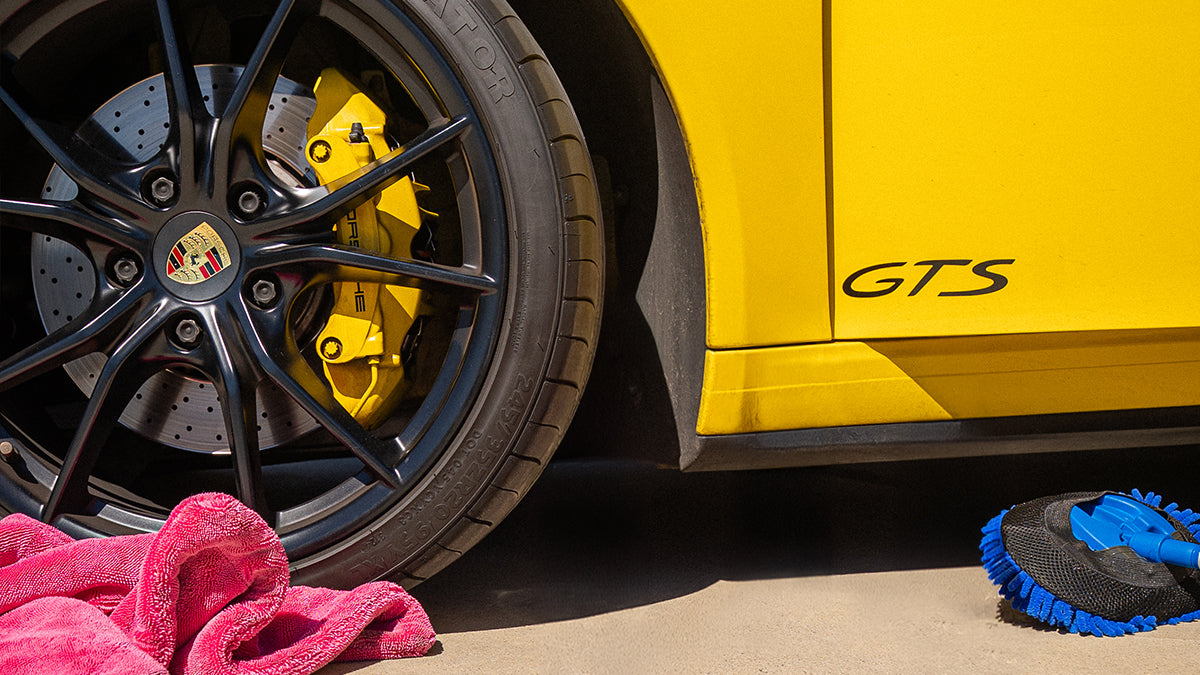
Exotic wheels are expensive, often forged, and finished in polished, painted, powder-coated or carbon surfaces that do not forgive harsh chemicals or a gritty brush. Brake dust is the thing that attacks them most often.
The answer is simple: remove brake dust from exotic car wheels with a pH neutral wash, soft dedicated tools and a cool wheel, then lay down protection so the next clean is easier. No acids, no shortcuts, no towel that has also touched your paint.
Here is how to do it, finish by finish.
Why Is Brake Dust So Hard on Exotic Wheels?
Brake dust is a mix of pad material and metal particles, and it comes off hot. Left on a wheel, it bakes on through repeated heat cycles and gets harder to move each drive.
On a standard alloy, the usual fix is a strong wheel acid and a stiff brush. On a polished, anodized or custom-finished forged wheel, that same approach can stain, haze or etch the surface. Repairs on these wheels are slow and expensive.
Many exotics also run carbon ceramic brakes. Their dust is different from the iron-heavy dust of standard brakes, and you do not want aggressive chemicals running off the wheel onto rotors and calipers. A pH neutral wash avoids that question entirely.
What Should You Use to Clean Exotic Wheels?
- A pH neutral soap. Ceramic Mega Foaming Soap is pH neutral and safe on any coating, and it leaves a beading ceramic layer behind.
- A dedicated wheel bucket. Keep it separate from your paint bucket. A Grit Guard Bucket keeps grit at the bottom instead of on your brush.
- Soft brushes, one per area. A soft barrel brush, a soft face brush and a small detailing brush for lug nuts and spoke edges.
- Wheel-only towels. A towel that has touched brake dust never goes back on paint.
Skip strong acids, stiff bristles, and anything labeled for "heavy duty" wheels unless you know it is safe on your exact finish.
Step-by-Step: How to Remove Brake Dust Without Damaging Rims
Here is the full routine in site order. Wheels come first in the wash so their grime never splashes onto clean paint.
- Let the brakes cool. Never spray water on hot rotors or wheels. Wait until you can rest your hand on the wheel comfortably.
- Wash. Rinse the wheel well, caliper and barrel first, then the face, so dirty water runs away from the finished surface. Foam the wheel with Ceramic Mega Foaming Soap and let it soften the dust. Work the barrel, then the face, then the lug area with soft brushes. Rinse well. Then wash the rest of the car top to bottom with a fresh mitt.
- Dry. Dry the body with a Big Bird, blotting the big panels. Use a Lil' Bird for mirrors, glass and door jambs. Water spots are made in the drying, not in the wash, and on a polished wheel they show.
- Restore. Spray Ceramic Simple Finish on the tire and rim together and wipe with a Finish Line towel. The short nap side lifts any leftover film and the plush side wipes the wheel dry and clean. On gloss or polished faces, give it a quick buff after with a clean side.
- Protect. Spray Ceramic Final Touch Detail Spray on the paint, glass and any chrome trim. Wipe it smooth and let it dry for 5 minutes.
- Finish. Buff with a dry Victory Lap, never a drying towel. Keep the car dry for about 24 hours so the layer cures.
Keep every product off rotor faces and brake pads. Spray onto the towel, not into the spokes, when you work near the brakes.

Faded plastic, trim, rubber and tires back to like-new, then protected. Just as good on matte, satin, PPF and vinyl wrap.
How to Clean Each Exotic Wheel Finish
Polished forged aluminum
The most delicate finish. Soft brushes, pH neutral soap and gentle pressure only. Simple Finish on the metal and a quick buff after. If the aluminum is already oxidized, use a dedicated metal polish first. No spray product removes oxidation.
Painted or clear-coated wheels
Treat them like body panels. Wash gently, dry, and protect the tire and rim with Simple Finish, then buff the gloss face.
Powder-coated wheels
Durable, but harsh chemicals still dull them. Standard pH neutral wash and Simple Finish work well.
Anodized wheels
Anodizing can fade with strong alkaline or acidic cleaners. Stay pH neutral.
Satin and matte wheels
Do not polish them. Simple Finish is safe on matte and satin finishes and protects them with SunShield UV.
Carbon fiber wheels
Treat the resin like clear coat: soft tools and pH neutral soap. For more on carbon, read how to clean carbon fiber on a supercar.
Why the Wheel Towel Never Touches Paint
A towel that has been through brake dust and tire dressing has no business on your dash or your paint. Brake dust is abrasive, and it hides in microfiber even after a wash.
That is why the Finish Line exists. It takes the dirty work so your finishing towels never have to. When a Finish Line is done for the day, it goes in the wash on its own, not with your buffing towels.

Wheels, tires and trim. Dual-sided: a short nap to lift grime and a plush side to wipe it clean, so your finishing towels never do the dirty work.
How Often Should You Clean Exotic Wheels?
- After spirited drives: rinse and wash the wheels before the dust bakes on through more heat cycles.
- After track days: clean them once they cool, every time.
- Every full detail: Simple Finish on the tire and rim, so dust has less to grip next time.
For the full exotic routine beyond the wheels, see how to detail an exotic car.
Frequently Asked Questions
Can I use iron remover on wheels with carbon ceramic brakes?
Many owners avoid it and keep strong chemicals away from the brake assembly. A pH neutral wash with soft brushes handles routine brake dust without that worry.
Does Final Touch remove oxidation from polished wheels?
No. Final Touch is not abrasive and is not a polish. Use a dedicated metal polish for oxidation, then protect the wheel.
Can I use Simple Finish on chrome wheels?
No. Chrome gets Final Touch, buffed with a Victory Lap. Simple Finish is for the tire, metal, painted, powder-coated, matte and satin rims.
Should I clean wheels before or after the paint?
Wheels first, with separate tools. That way their grime never lands on paint you have already washed.
Wheels That Match the Car
On an exotic, tired wheels drag down everything else. Clean them gently, protect them every time, and keep their towels separate. The Premium Towel Set gives every step its own towel, wheels included: one towel per job, zero cross-contamination.

Wash, interior, restore and protect: all four Bahama ceramic bottles in one set. A pro ceramic coating is $1k+. This system only takes a couple hours.

Drying, interior, wheels and trim, and buffing the Final Touch coating, each with its own towel. No wheel grime on the dash, no drying towel soaking up your coating.