The sun never takes a day off. Every hour your car sits outside, UV light works on the clear coat, and once that layer breaks down, the color underneath starts to fade, chalk and eventually peel.
The good news: sun damage on car paint is slow, predictable and mostly preventable. Keep the paint clean, keep a UV-blocking layer on every exterior surface, and renew it before it wears thin. Here is how to protect your car's paint from sun damage and UV fading without booking a body shop.
What Does Sun Damage Do to Car Paint?
Modern paint is a stack: primer, base color, then a clear coat on top. The clear coat is the sacrificial layer. It takes the UV hit so the color does not have to.
UV light in the 290-400nm range breaks down the bonds in that clear coat over time. Heat speeds the process up, and bird droppings, bug guts and tree sap etch in faster when they bake in the sun.
Once the clear coat thins or cracks, the color underneath oxidizes. Reds drift toward pink, blacks go gray, and the hood and roof go first because they face the sky all day. For the full chemistry, read how UV rays destroy car paint.
Signs your paint is already sun damaged
- Uneven color. The hood, roof and trunk lid look lighter than the doors.
- Chalky residue. Run a clean finger across the paint. A colored or white film means the surface is oxidizing.
- Water that sheets and sits. Protected paint beads water. Bare paint lets it lie flat and dry into spots.
- Clear coat failure. Cloudy, hazy or peeling patches. No spray brings that back. It is a job for a paint shop.
Light dullness can often be improved with a proper wash, a clay bar and fresh protection. Peeling clear coat cannot. The whole point of a routine is to keep your paint on the right side of that line.
The Sun Protection Routine: Wash, Dry, Restore, Protect, Finish
UV protection only works if it covers every surface and gets renewed. Here is the full Bahama routine in order, with the towel built for each step. Work in the shade on a cool panel.
- Wash. Foam the car with Ceramic Mega Foaming Soap through a foam cannon or a Grit Guard Bucket. It lifts road film and baked-on bugs and leaves a beading ceramic layer with SunShield UV behind, so a maintenance wash adds protection instead of stripping it. It is pH neutral and safe on any coating.
- Dry. Blot the big panels with a Big Bird and use a Lil' Bird on mirrors, glass and door jambs. Blot rather than drag. Water spots are made in the drying, not in the wash, and in hot sun they set fast.
- Restore. Spray Ceramic Simple Finish on plastic trim, rubber, tires and wheels, then wipe with a Finish Line towel. Keep it off gloss paint and glass. Trim fades faster than paint, and gray trim makes good paint look tired.
- Protect. Spray Ceramic Final Touch Detail Spray on paint, glass and chrome one panel at a time. Wipe it smooth into an even layer and let it dry 5 minutes.
- Finish. Buff off the residue with a dry Victory Lap. The edgeless weave lifts the haze while the coating stays on the paint. Then keep the car dry for about 24 hours so the layer cures.
A full coat takes about an hour from wash to finish and lasts 3 to 6 months. Every bottle has a towel built for it, and one towel per job means brake dust and tire dressing never end up on your clear coat.

The most ceramic of the four. Spray it on, wipe it smooth into a consistent layer, let it dry for 5 minutes, then buff. What is left is a streak-free, water-spot-free, ultra hydrophobic ceramic layer with UV protection.

The towel for buffing Ceramic Final Touch. 450 GSM edgeless plush lifts the residue while the coating stays on the paint.
Why Final Touch Is Your Main UV Defense on Paint
All four Bahama bottles carry SunShield UV, but Final Touch is the most ceramic of the four and the one built for paint. It pairs graphene, a single-atom carbon lattice, with SiO2, which is essentially liquid glass. Graphene plus SiO2 equals hydrophobics: water pulls into tight beads at a 110° contact angle and rolls off instead of drying into spots.
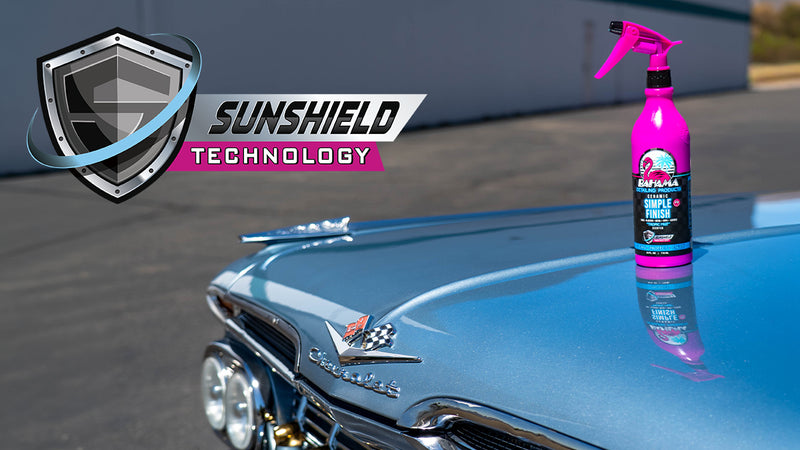
SunShield UV covers the 290-400nm range and blocks 98% of UV at the clear coat. It has been battle-tested in 108°F Sun Belt sun, and treated paint is still beading and UV shielded at 14 days.
It also layers. Each application builds on the last, so a car that gets Final Touch on a regular rhythm carries a stronger barrier than one that gets it once a year. It replaces both the wax and the pro coating. If you want the deeper story, here is what SunShield UV technology is and how it works.
Don't Forget Trim, Tires and the Interior
Paint gets the attention, but the sun hits everything. Black plastic turns gray, rubber seals dry out, tires go brown and dashboards crack.
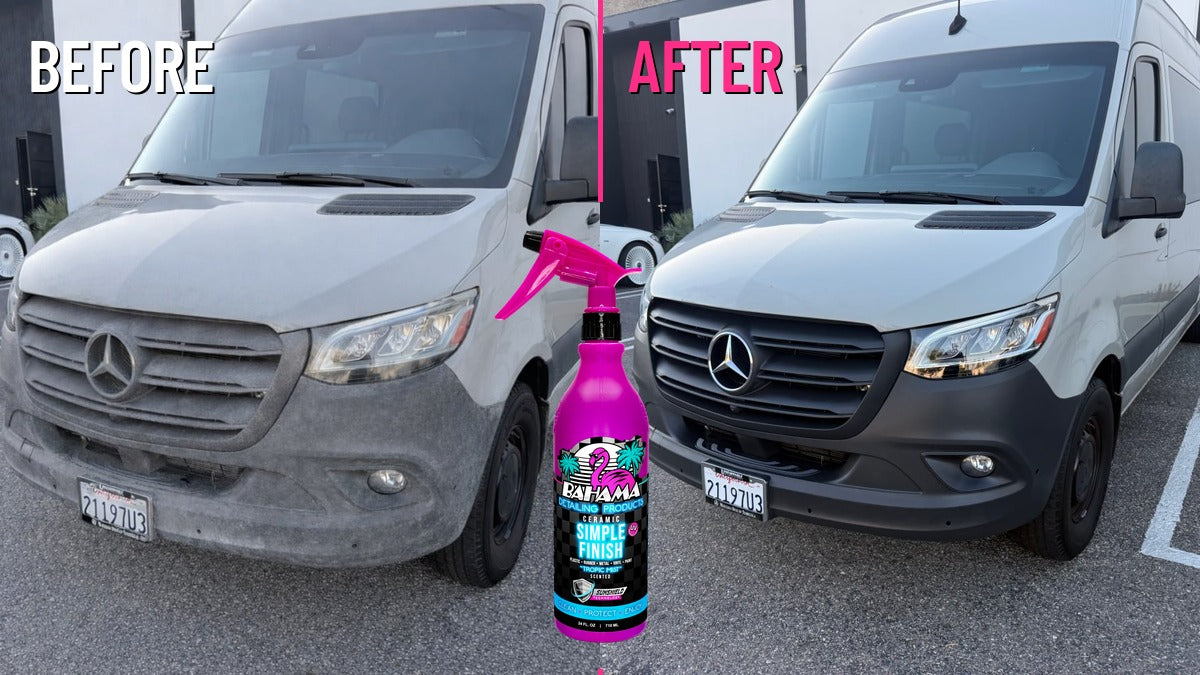
Simple Finish handles the exterior plastic, rubber and tires. It brings a faded bumper back in about three minutes, spray and wipe, with no sling. If your trim is already chalky, start with our guide to restoring faded plastic.
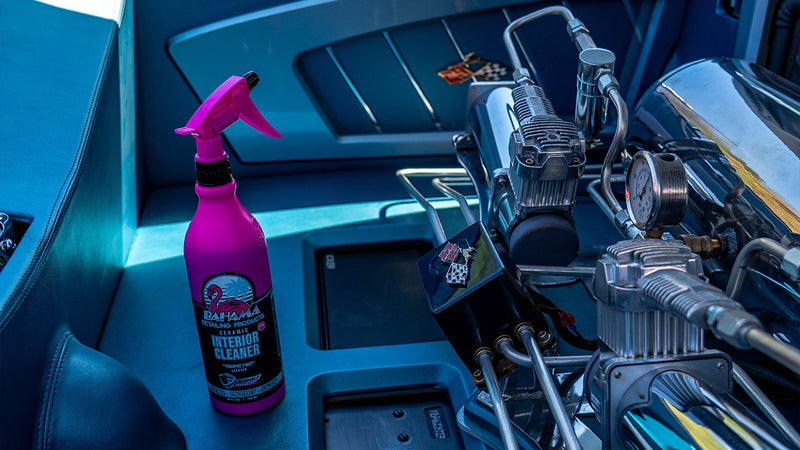
Inside, UV comes straight through the glass. Wipe the dash, door panels, leather, vinyl and screens with Ceramic Interior Cleaner and a Starting Line towel. It cleans and lays down UV protection in the same pass, with a streak-free, no-gloss finish. A towel that has been through brake dust and tire dressing has no business on your dash.
Habits That Slow Sun Damage, and How Often to Reapply
- Park smart. A garage, a carport or even the shady side of a building cuts hours of direct exposure.
- Use a breathable cover if the car sits outside for long stretches.
- Get contamination off fast. Bird droppings and bug guts etch quicker in heat. A mist of Final Touch and a Victory Lap lifts light messes between washes.
- Never work on a hot panel. Product flashes too fast and streaks. Wash early or late in the day.
- Wash often. Dirt holds heat and contaminants against the paint.
For reapplication, keep it simple. Wash with Mega Foaming Soap whenever the car is dirty, since every wash tops up a ceramic layer with SunShield UV. Lay down a full Final Touch coat every 3 to 6 months, and use it as a quick detail spray in between. Put Simple Finish back on trim and tires whenever they start to look dry.
The easy test is water. If it beads tight and rolls off, your layer is working. If it sheets and sits, it is time. If you live somewhere summers are brutal, our desert driving damage guide covers the heat and dust side too.
The Bottom Line
Sun damage is slow, so the fix is consistency, not one big Saturday. Wash. Restore. Protect. A pro ceramic coating is $1k+, and the Full System Set puts all four bottles in your garage for $135 and only takes a couple hours.
Frequently Asked Questions
Can sun-faded car paint be restored?
Light fading and dullness can often be improved with a thorough wash, a clay bar and fresh protection, or a machine polish from a pro. Peeling or cracked clear coat needs a repaint.
Does car wax protect against UV?
Some waxes offer a little UV protection, but wax wears away quickly. Final Touch replaces wax with a graphene and SiO2 layer that carries SunShield UV and lasts 3 to 6 months.
Is a ceramic coating worth it for sun protection?
A pro ceramic coating is $1k+ and the shop keeps your car for days. Final Touch gives you an ultra hydrophobic, UV-shielding layer you apply yourself in about an hour.
Can I use Simple Finish on my paint for UV protection?
Not on gloss paint. Simple Finish is for plastic, trim, rubber, tires, wheels, matte or satin paint, PPF and vinyl wrap. Gloss paint, glass and chrome get Final Touch.
Does parking in the shade really make a difference?
Yes. UV damage adds up hour by hour, so every hour out of direct sun is an hour your protection does not have to absorb.

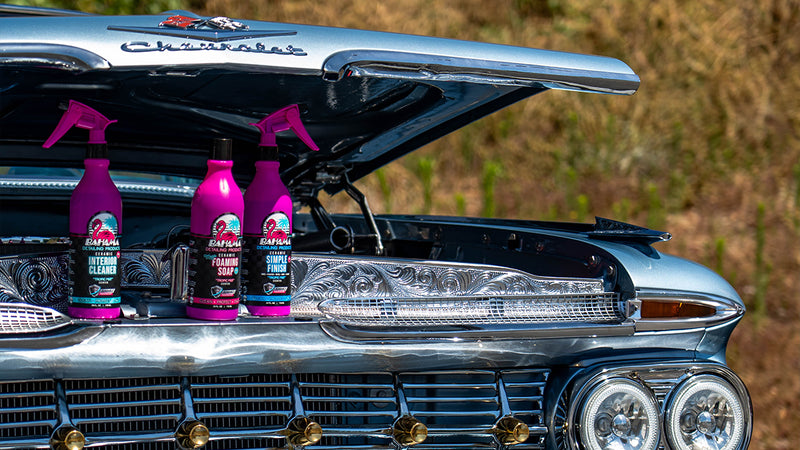
Wash, interior, restore and protect: all four Bahama ceramic bottles in one set. A pro ceramic coating is $1k+. This system only takes a couple hours.

Drying, interior, wheels and trim, and buffing the Final Touch coating, each with its own towel. No wheel grime on the dash, no drying towel soaking up your coating.