Candy paint is the most striking finish in lowrider culture and the least forgiving. To protect candy paint on a lowrider, you need to do two things well: keep UV off the clear coat, and keep grit away from it every time you touch the car.
Get those right and the color stays deep. Get them wrong and the candy goes flat, hazy and blotchy, and fixing it means a respray, not a weekend with a polisher.
Here is why candy is so vulnerable, what actually hurts it, and a simple routine that protects it.
Why Is Candy Paint So Hard to Protect?
Candy gets its depth from layers. A reflective metallic base goes down first, then a tinted transparent candy coat, then clear on top. Light passes through all of it and bounces back, which is why the color looks like you can see into it.
That effect depends on the clear coat staying optically clean. Scratches, haze and UV damage scatter the light before it reaches the candy, and the color reads dull or uneven.
Repairs are the real problem. Candy is hard to blend, so damage on one spot often means repainting a whole panel or more. Prevention costs a fraction of that.
What Damages Candy Paint?
UV exposure
UV light breaks down clear coat over time. It starts as a slight haze and ends as chalky, cracked clear that kills the candy underneath. Tinted candy layers can also fade under long sun exposure, so the color shifts even before the clear fails.
For a deeper look at fading on custom finishes, read our guide to UV protection for custom paint.
Wash-induced scratches
Most swirl marks are put there by a towel or a dirty mitt. On a solid color they are annoying. On candy they put a haze over the depth you paid for.
Bird droppings, sap and fallout
Droppings, tree sap and road tar sit on the clear and can etch it if left to bake. On candy, the fix is sanding and polishing, which is risky on a thin multi-stage finish. A slick, hydrophobic surface gives these contaminants less to grip, and quick removal does the rest.
How to Wash Candy Paint Without Scratching It
The wash is where most candy damage happens, so treat it as protection, not just cleaning.
- Work in the shade on a cool panel. Soap and water drying on hot candy leaves spots that are hard to remove safely.
- Rinse first. Get loose grit off before anything touches the paint.
- Foam, then wash. Thick foam softens dirt so your mitt glides instead of dragging.
- Keep grit at the bottom of the bucket. A grit guard traps what comes off your mitt so it does not go back on the paint.
- Straight lines, light pressure. Move front to back along the panel, not in circles, and let the soap do the work.
- Wheels and tires last, with separate tools, so brake dust never touches the body.
The Candy Paint Protection Routine
Every bottle in the Bahama system has a towel built for it. Follow the steps in order and name the towel at each one, and you avoid the cross-contamination that scratches candy.
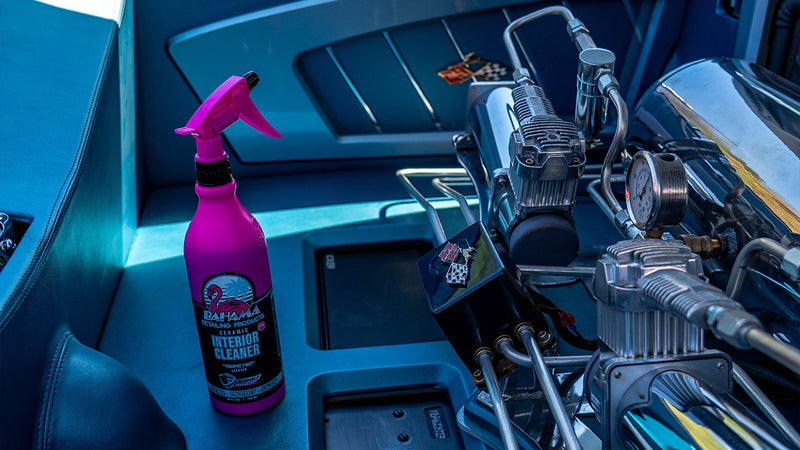
- Wash. Foam the car with Ceramic Mega Foaming Soap through a foam cannon or from a Grit Guard Bucket. It is pH neutral, so it is safe on custom paint and any coating, and it leaves a beading ceramic layer with SunShield UV behind. Inside, clean the dash, door panels and upholstery with Ceramic Interior Cleaner on a Starting Line towel.
- Dry. Lay a Big Bird flat on the hood and roof and blot rather than drag. Use a Lil' Bird for mirrors, glass, jambs and around trim. Water spots are made in the drying, not in the wash.
- Restore. Spray Ceramic Simple Finish on tires, rubber seals and plastic trim, and wipe with a Finish Line towel. It does not go on the candy, the glass or the chrome.
- Protect. Spray Ceramic Final Touch Detail Spray on the candy, the glass and the chrome. Wipe it smooth into a consistent layer and let it dry for 5 minutes.
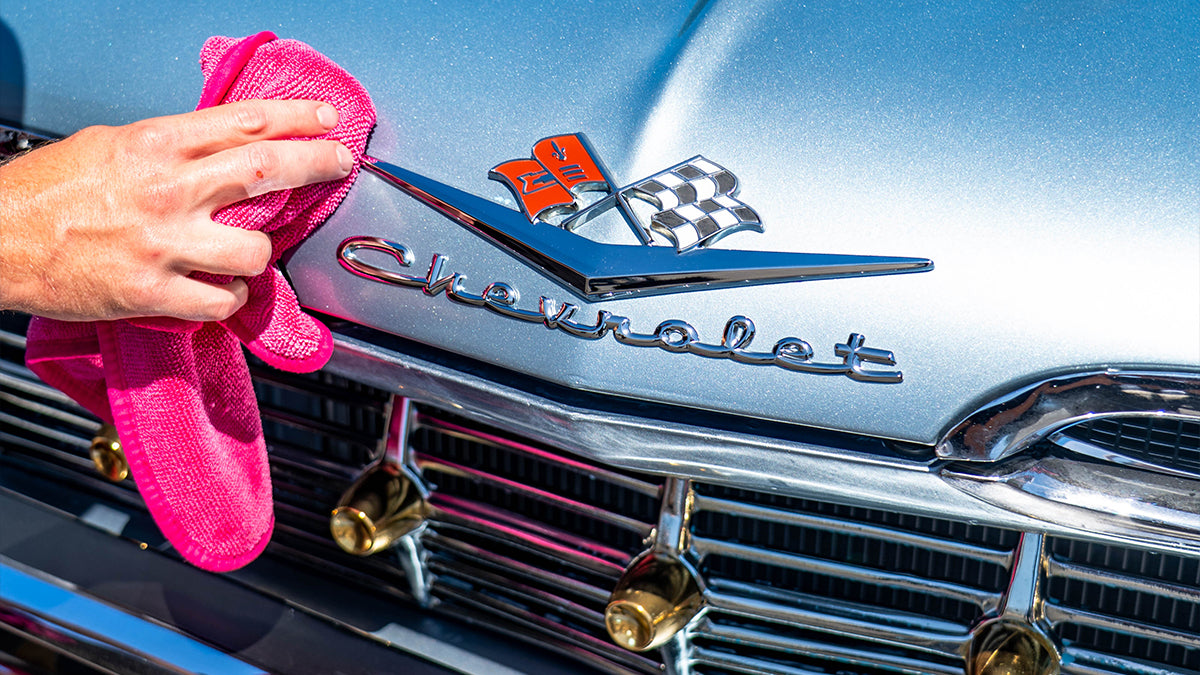
- Finish. Buff with a dry Victory Lap. The 450 GSM edgeless plush lifts the residue while the coating stays on the paint. Keep the car dry for about 24 hours so the layer cures.

The most ceramic of the four. Spray it on, wipe it smooth into a consistent layer, let it dry for 5 minutes, then buff. What is left is a streak-free, water-spot-free, ultra hydrophobic ceramic layer with UV protection.
Why Final Touch Suits Candy Paint
Candy owners have long reached for carnauba wax. It looks good for a short while, then it is gone. Our breakdown of the best car wax for lowriders covers why graphene has taken over.
Final Touch is a Graphene + SiO₂ ceramic layer with SunShield UV built in. SunShield blocks 98% of UV at the clear coat across the 290-400nm range, which is exactly the light that dulls candy over time.
It is also ultra hydrophobic. Water pulls into tight beads and rolls off instead of drying into spots on your panels. A full coat takes about an hour from wash to finish and lasts 3 to 6 months, and it layers and builds with every application.
One thing it is not: a polish. Final Touch is not abrasive and will not remove swirls or etching. It protects what you have. If the clear is already scratched, get it corrected by someone who knows candy, then protect it.
How Often Should You Maintain Candy Paint?
- After every cruise or show: remove droppings, bugs and sap the same day. A light mist of Final Touch and a Victory Lap handles fresh spots on top of an existing layer.
- Every wash: foaming soap, then dry with the Birds. Each wash tops up the ceramic layer.
- Every few months: a full Final Touch coat, with 24 hours dry afterward.
- Before show season: inspect the clear in good light, decontaminate if the paint feels rough, then lay down a fresh coat.
Garage storage and a breathable car cover help more than any product. Shade is the cheapest UV protection there is.
Wire wheels need their own routine. See lowrider chrome wheel cleaning for the full process.

The towel for buffing Ceramic Final Touch. 450 GSM edgeless plush lifts the residue while the coating stays on the paint.
Frequently Asked Questions
Can I use a clay bar on candy paint?
Yes, with a fine-grade clay, plenty of lubricant and light pressure. Clay leaves the paint bare, so follow it with a coat of Final Touch.
How do I remove water spots from candy paint?
Fresh spots usually lift with a mist of Final Touch and a Victory Lap. Etched mineral spots need careful correction, so prevent them by drying with a Big Bird instead of letting the car air dry.
Will a graphene coating change my candy color?
No. The layer is clear. Clean, protected paint often looks deeper simply because nothing is scattering the light.
Is Ceramic Mega Foaming Soap safe on candy paint?
Yes. It is pH neutral and safe on custom paint and existing coatings.
Final Thoughts
Protecting candy paint comes down to UV and grit. Wash gently, dry with the right towel, and keep a ceramic layer on it. Wash. Restore. Protect. On candy, the towel matters as much as the bottle, which is why the Premium Towel Set exists: one towel per job, zero cross-contamination.

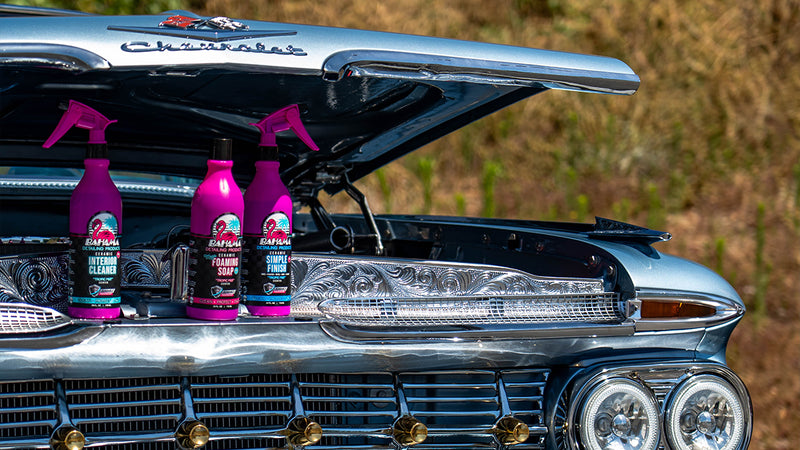
Wash, interior, restore and protect: all four Bahama ceramic bottles in one set. A pro ceramic coating is $1k+. This system only takes a couple hours.

Drying, interior, wheels and trim, and buffing the Final Touch coating, each with its own towel. No wheel grime on the dash, no drying towel soaking up your coating.