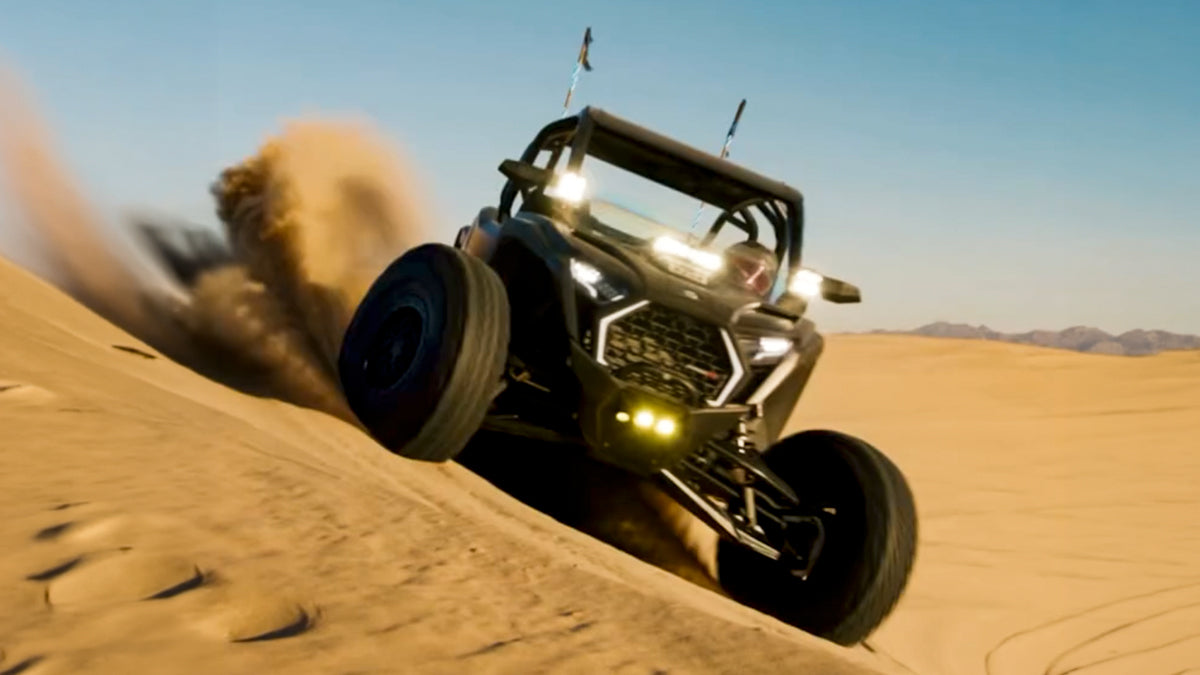
A UTV spends its life in the open. No roof over most of the cab, no garage on the trail, and hours parked in full sun at the dunes, the ranch or the trailhead. That's why side-by-sides fade faster than almost anything else you own.
To protect a UTV from UV damage, keep a UV-blocking layer on every surface the sun hits: the plastic body panels, the seats and dash, the tires, and any paint or glass. Renew it as part of your regular wash, and keep the machine shaded or covered when it's parked. Here's how.
What Does UV Damage Look Like on a UTV?
Most of a side-by-side is plastic, and plastic shows UV damage in a predictable order:
- Fading: black panels go gray, colored panels go pale. Usually the hood, fenders and roof first.
- Chalking: a dry, powdery surface that rubs off on your hand.
- Brittleness: plastic that used to flex starts cracking at mounting points and edges.
- Seat and dash damage: vinyl dries out and cracks, dash plastic warps or fades.
- Decal and graphics fading: wraps and graphics lose color and start lifting at the edges.
- Tire sidewalls: rubber goes brown and dry, and can start to check.
UV breaks down plastic and rubber over time, and heat speeds it up. You can't stop the sun, but you can keep a layer between it and the machine.
Why Do UTVs Fade Faster Than Cars?
Three reasons. First, most of the body is unpainted plastic with no clear coat on top, so the sun works directly on the material. Second, the cab is open, so the seats, dash and controls get the same exposure as the hood.
Third, trail washing is hard on surfaces. Mud and dust are abrasive, and harsh cleaners strip whatever protection was there. Every aggressive wash leaves the plastic more exposed than before.
The answer is a wash routine that cleans gently and puts protection back down every time.
How to Protect a UTV From UV: The Routine
Work in the shade if you can, on cool surfaces.
1. Wash
Rinse the heavy mud first, then foam the machine with Ceramic Mega Foaming Soap. It's pH neutral, safe on any coating, and leaves a beading ceramic layer with SunShield UV behind, so the wash itself adds protection. Use a soft mitt on the plastic and a Grit Guard Bucket to keep grit out of the mitt. Our guide on removing mud from a UTV without scratching the plastic covers the heavy stuff.
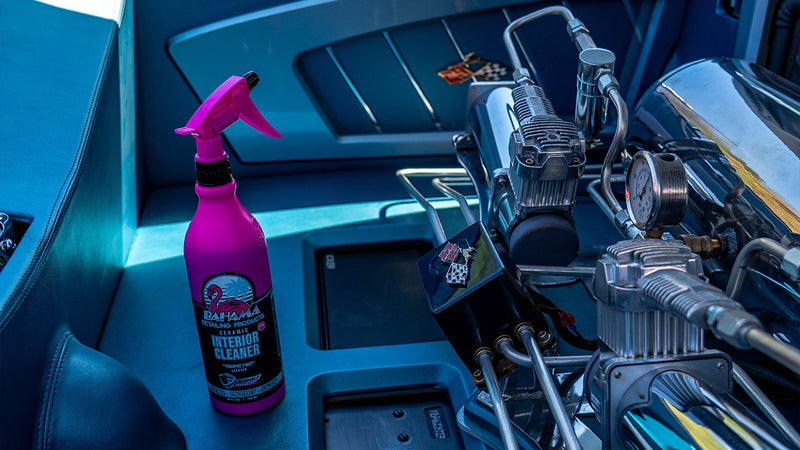
In the cab, mist Ceramic Interior Cleaner onto a Starting Line towel and wipe the dash, seats, grab handles and any screens. It cleans and lays down UV protection in the same pass, with a streak-free, no-gloss finish that won't make the seats slippery.
2. Dry
Water spots are made in the drying, not in the wash. A Lil' Bird is sized for a side-by-side: fenders, seats, the dash and the windshield. Grab a Big Bird for the roof and hood if your machine has big flat panels. Blot rather than drag.
3. Restore
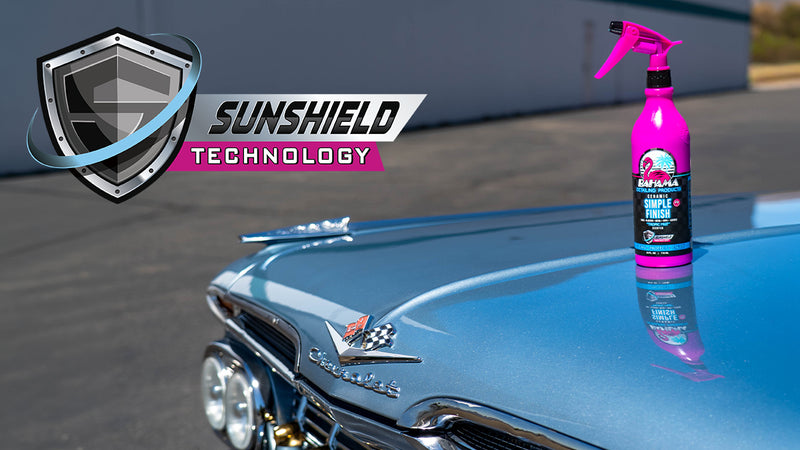
This is the big UV step on a UTV. Spray Ceramic Simple Finish on the plastic body panels, fenders, roof, bumpers, tires and wheels, and wipe it in with a Finish Line towel. Do each tire and rim together; gloss rims get a quick buff after.
It brings faded plastic back to a like-new look with SunShield UV, and it covers matte or satin panels, wraps and graphics too. Spray, wipe, walk away. A faded bumper takes about three minutes.
Keep it off glass and chrome, and off any gloss-painted panels.

Faded plastic, trim, rubber and tires back to like-new, then protected. Just as good on matte, satin, PPF and vinyl wrap.

Wheels, tires and trim. Dual-sided: a short nap to lift grime and a plush side to wipe it clean, so your finishing towels never do the dirty work.
4. Protect
Gloss-painted panels, glass and chrome get Ceramic Final Touch Detail Spray. Spray, wipe it smooth into a consistent layer, and let it dry 5 minutes. If your windshield is polycarbonate rather than glass, follow the windshield maker's care instructions and keep to gentle washing and drying.
5. Finish
Buff the Final Touch with a dry Victory Lap. It lifts the residue while the coating stays on the surface. Never buff Final Touch with the Birds. Keep it dry about 24 hours after a full coat so it cures.
How Well Does SunShield UV Hold Up in the Sun?
All four Bahama bottles carry SunShield UV, so every step above adds to the same protection.
- 98% of UV blocked at the clear coat across the 290-400nm range.
- 14 days still beading and UV shielded in Sun Belt testing.
- Battle-tested in 108°F Sun Belt sun.
The carrier is graphene plus SiO₂, which also makes surfaces hydrophobic. Water beads and runs off, carrying dust with it, and the layer builds with every application. For more on how it works, read What Is SunShield UV Technology?
How Should You Park and Store a UTV to Limit Sun Exposure?
Product is one layer. Shade is another, and it's free.
- Park in shade whenever you stop for more than a few minutes. Even a little shade over the seats and dash helps.
- Use a breathable cover when it lives outside. A non-breathable tarp traps moisture and can rub dust into the plastic when the wind moves it.
- Only cover a clean machine. A cover over dust turns into sandpaper.
- Indoors still counts. Light through shop windows and open doors adds up. Keep the protection layer up even if it lives in a barn.
How Often Should You Reapply UV Protection on a UTV?
Every wash with Mega Foaming Soap tops up the layer. Restore the plastic and tires whenever they start to look dry or gray again, and do it more often in high-sun months. Put down a full Final Touch coat on paint and glass when water stops beading the way it did; a full coat lasts 3 to 6 months.
The easiest way to stay on top of it is to make Restore part of every proper wash instead of a separate project. For tires and wheels specifically, see the UTV tire and wheel care guide.
Frequently Asked Questions
Can you restore faded UTV plastic?
In most cases, yes. If the plastic is faded but not cracked, Simple Finish brings it back to a like-new look with SunShield UV. Cracked or brittle plastic needs replacing.
Is Simple Finish safe on UTV seats?
Clean the seats with Interior Cleaner instead. It protects vinyl and leather with UV and leaves a no-gloss finish, so the seats don't get slick.
Does a UTV cover protect against UV?
A breathable cover blocks direct sun while parked, which helps a lot. It does nothing while you ride, so you still need protection on the surfaces.
Can I use Final Touch on UTV plastic?
Final Touch is fine on plastic for extra slickness, but Simple Finish is the product built to restore and protect plastic, trim and tires.
Keep It Looking Like It Just Left the Dealer
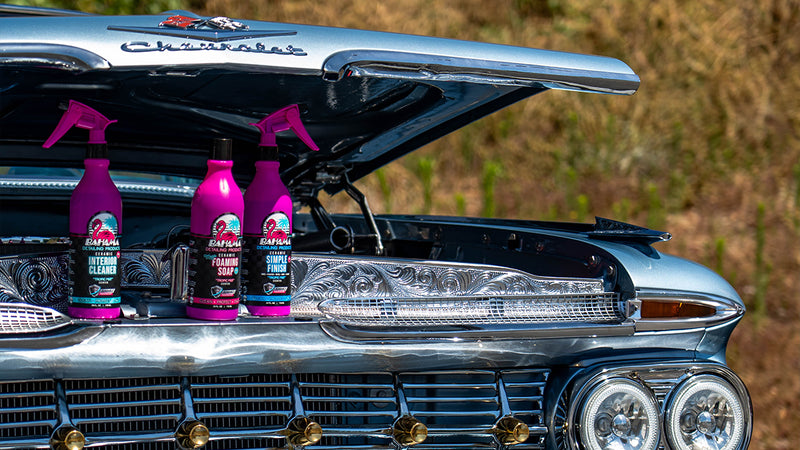
A side-by-side lives in the sun, so protection has to ride along with every wash. Wash. Restore. Protect. The Full System Set gives you all four bottles with SunShield UV, so plastic, seats, tires, paint and glass are all covered in one routine.

Wash, interior, restore and protect: all four Bahama ceramic bottles in one set. A pro ceramic coating is $1k+. This system only takes a couple hours.

Drying, interior, wheels and trim, and buffing the Final Touch coating, each with its own towel. No wheel grime on the dash, no drying towel soaking up your coating.