Off-road trucks come home with a kind of dirt street cars never see: red clay, caliche, river silt, desert dust packed into every seam. Hit it with a gas station brush or a dry towel and you trade mud for scratches.
Here's how to detail an off-road truck the right way: rinse the mud before it dries, soak what's stuck, wash gently, then restore the trim and tires and protect the paint so the next trail cleanup is easier. Below is the full process, plus what to do about trail damage and the parts underneath.
Why Should You Wash Mud Off Before It Dries?
Wet mud lets go. Dried mud, especially clay, sets up like a cast on paint, wheel wells and suspension parts, and getting it off means soaking and scrubbing. Scrubbing is where scratches happen.
The practical rule: give the truck a rinse the same day you get home, even if the full detail waits for the weekend. Knock the heavy stuff off the body, out of the wheel wells and off the frame while it's still soft.
Mud left in wheel wells and on frame rails also holds moisture against steel. That's a rust problem, not just a looks problem.
How to Detail an Off-Road Truck: The Full Process
1. Pre-rinse from the bottom up
Start with the undercarriage, wheel wells, frame rails and suspension. A pressure washer is fine here, and you can get closer on bare metal underneath than you should on paint. On painted panels, keep the wand back and use a wide fan tip. Let the water do the lifting.
2. Soak the stubborn spots
Dried mud that survived the rinse needs time, not force. Cover it in foam and let it soak to soften the bond. Keep it wet, because foam that dries on the panel just makes another layer to remove. Rinse again before you touch anything.
3. Wash
Foam the truck with Ceramic Mega Foaming Soap through a foam cannon, or mix it in a bucket. It lifts road film, mud and bug guts, it's pH neutral and safe on any coating, and it leaves a beading ceramic layer with SunShield UV behind.
Wash top to bottom with a deep-pile mitt so grit gets trapped in the fibers instead of dragged across the paint. Rinse the mitt in a Grit Guard Bucket before every reload, and change the water when it turns brown.
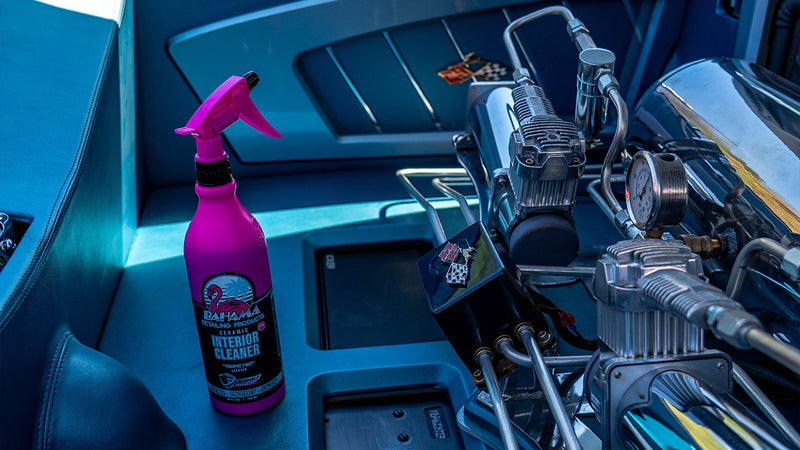
Inside, trail dust gets everywhere. Vacuum, then mist Ceramic Interior Cleaner onto a Starting Line towel and wipe the dash, door panels, console and vinyl or leather seats. Keep that towel inside the cab only.
4. Wheels and tires
Off-road tread holds packed mud that rinsing won't clear. Work the tread with a stiff brush and scrub the wheel wells with a dedicated long-handled brush. Wheels and tires get their own bucket water and brushes, never the body mitt. For more, see our guide to cleaning off-road wheels and undercarriage.

Thick cannon foam that lifts road film, mud and bug guts, then leaves a beading ceramic layer behind. pH-neutral, so it is safe on any coating.
5. Dry
Water spots are made in the drying, not in the wash. A lifted truck has a lot of roof, hood and tailgate. A Big Bird sheets a big panel in one pull. Blot rather than drag. Use a Lil' Bird for glass, mirrors, door jambs and the seams around the bed rails.
6. Restore
Fender flares, bumpers, running boards, bed liner, tires and wheels take the worst of the sun and the trail. Spray Ceramic Simple Finish and wipe it in with a Finish Line towel. Do the tire and rim together; gloss rims get a quick buff after.
Spray, wipe, walk away. It brings faded plastic back with SunShield UV and doesn't sling. Keep it off gloss paint, glass and chrome.

Faded plastic, trim, rubber and tires back to like-new, then protected. Just as good on matte, satin, PPF and vinyl wrap.
7. Protect
Work one panel at a time on cool paint. Spray Ceramic Final Touch Detail Spray, wipe it smooth into a consistent layer, and let it dry 5 minutes. Do the glass and any chrome the same way.
8. Finish
Buff each panel with a dry Victory Lap. It lifts the residue while the coating stays on the paint. Never buff Final Touch with the Birds; a drying towel drinks the coating right off. After a full coat, keep the truck dry about 24 hours so it cures.

The most ceramic of the four. Spray it on, wipe it smooth into a consistent layer, let it dry for 5 minutes, then buff. What is left is a streak-free, water-spot-free, ultra hydrophobic ceramic layer with UV protection.
How Do You Protect Off-Road Paint Between Runs?
A protected truck cleans up faster. With an ultra hydrophobic layer on the paint, mud and dust sit on the coating instead of the clear coat, and more of it rinses off before you ever touch the panel.
A full Final Touch coat takes about an hour from wash to finish and lasts 3 to 6 months. Trucks that hit the trail often benefit from a quick top-up after every proper wash: mist, wipe, let it dry, buff. The layer builds with every application.
Desert and high-sun trucks get UV from every angle. All four bottles carry SunShield UV, so the soap, the restorer and the interior cleaner each add to it. For rock chips and pinstriping, see how to protect off-road truck paint from rock chips, UV and trail damage.
How Do You Deal With Trail Damage?
Wash first, then inspect. Clean paint is the only way to see what the trail actually did.
- Pinstriping from brush: light ones often sit in the clear coat and can be improved with a polish. Deep ones need a pro. Protect the area afterward either way.
- Rock chips: touch up anything down to bare metal soon, before moisture gets in.
- Scuffed plastic: textured flares and bumpers hide a lot. Simple Finish evens out the look of faded or scuffed plastic, though it won't fill a gouge.
What About the Undercarriage and Exposed Metal?
Skid plates, frame rails, hardware and suspension parts on a build take direct hits. After the wash, look for chipped coating at welds, bolts and impact points. Treat any bare steel with a rust-inhibiting touch-up before the next run.
Rinsing the underside every time is the cheapest rust prevention there is. Mud packed into frame pockets holds water long after the rest of the truck is dry.
Frequently Asked Questions
Can I pressure wash my lifted truck's paint?
Yes, carefully. Keep the wand well back from painted panels and use a wide fan tip. Save the close, aggressive spray for bare metal underneath.
How do I get dried red clay off paint?
Soak it with foam and keep it wet until it softens, rinse, then wash gently. If the paint still feels rough after the wash, a clay bar removes what's left.
Is Ceramic Mega Foaming Soap safe on aftermarket paint and coatings?
Yes. It's pH neutral and safe on any coating, so it cleans without stripping existing protection.
Can I use Simple Finish on a bed liner?
Yes. Bed liner is on the Simple Finish list, along with plastic, trim, rubber, tires and wheels.
Clean Truck, Ready for the Next Run
Off-road trucks earn their dirt. Getting it off without adding scratches is just about the order and the right towel for each job. Wash. Restore. Protect. The Full System Set puts all four bottles in one box and protects the whole truck, not just the paint. For more on products, read the best products for washing off-road trucks.

Wash, interior, restore and protect: all four Bahama ceramic bottles in one set. A pro ceramic coating is $1k+. This system only takes a couple hours.

Drying, interior, wheels and trim, and buffing the Final Touch coating, each with its own towel. No wheel grime on the dash, no drying towel soaking up your coating.