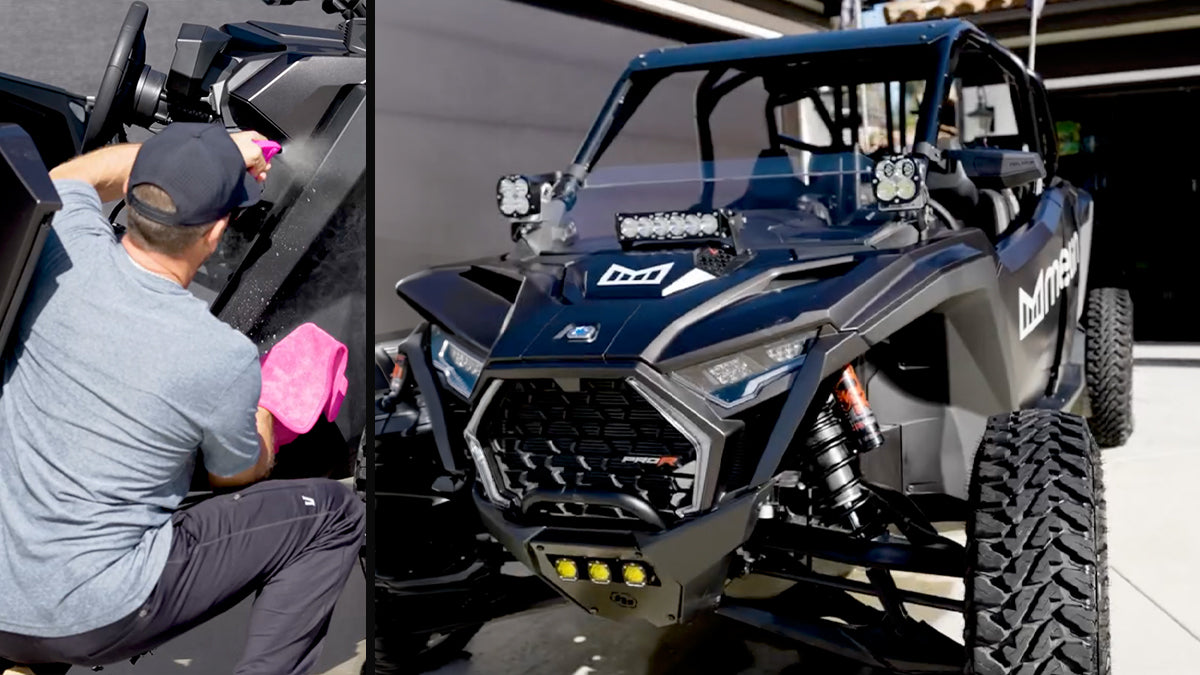
A UTV takes more abuse in one weekend than most cars see in a year. Mud packs into every gap, dust coats every panel, and the sun works on bare plastic the whole time it sits outside.
Learning how to detail a UTV properly is mostly about doing the right things in the right order: knock off the heavy stuff, foam wash, dry it completely, restore the plastics, then protect paint and glass. Do that and your side-by-side stays sharp, and the next wash gets easier.
Here is the full routine, the products for each surface, and the mistakes that cost UTV owners the most.
Why Is a UTV Harder to Detail Than a Car?
Most of what you see on a side-by-side is unpainted plastic. Fenders, doors, dash and bed panels are raw, textured material that fades to gray when UV gets to it.
Everything is exposed. Wiring, connectors, suspension and the roll cage all live out in the open, so water and grit get everywhere a car keeps sealed away.
And most UTVs live outdoors. Constant sun, rain and dust mean protection matters as much as cleaning. A quick hose-down removes the dirt but leaves every surface bare for the next ride.
What Do You Need to Detail a UTV?
Keep the kit simple. Every bottle has a towel built for it.
- Wash: Ceramic Mega Foaming Soap, a foam cannon or a Grit Guard Bucket, a soft brush for plastics and a wash mitt for paint.
- Interior: Ceramic Interior Cleaner with a Starting Line towel.
- Dry: a Big Bird for the hood, roof and bed, and a Lil' Bird for the tight spots.
- Restore: Ceramic Simple Finish with a Finish Line towel.
- Protect and Finish: Ceramic Final Touch Detail Spray buffed off with a dry Victory Lap.
Optional but useful: a leaf blower or compressed air for seams, and a few small detail brushes for the cage welds and suspension.
How to Prep a UTV Before You Wash It
Let the machine cool down before any water touches it. Cold water on a hot engine or exhaust is asking for trouble, and soap dries on hot panels before you can rinse it.
Knock off caked mud first. Let it dry and brush it off, or soak it with a gentle rinse until it softens. Dragging a mitt through wet mud is how plastic panels get scratched. Our guide to removing mud from a UTV without scratching plastic covers this in detail.
Cover or avoid exposed electrical connectors, the air intake and anything your owner's manual says to keep dry. Skip the high-pressure wand on plastics, seals and connectors: a garden hose or a wide, low-pressure pattern does the job without forcing water where it does not belong.
If you ride near the coast or through salty water, take extra time rinsing the frame and underside. Salt hides in crevices and keeps working long after the ride.
The Step-by-Step UTV Detailing Routine
Work in the shade and follow the same order every time: Wash, Dry, Restore, Protect, Finish.
- Wash. Cover the machine in Ceramic Mega Foaming Soap through a foam cannon, or mix it in a bucket. Let the foam sit and loosen road film and mud while you start on the wheels. Agitate plastics with a soft brush, paint with a mitt, and the cage welds with a detail brush. The soap is pH neutral and leaves a beading ceramic layer with SunShield UV behind, so even the wash step adds protection. Rinse top to bottom.
- Dry. Sheet water off the hood, roof and bed with a Big Bird. Blot, do not drag. Switch to a Lil' Bird for mirrors, door edges, the dash and around the cage. Blow out seams and connectors with air first if you have it. Water spots are made in the drying, not in the wash.
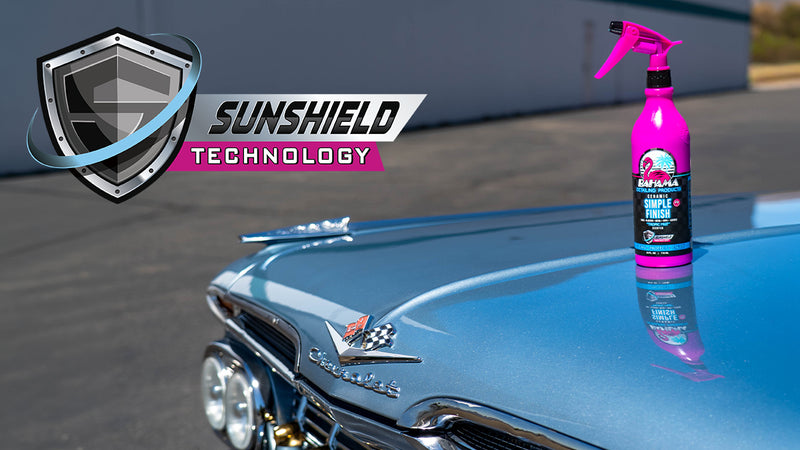
- Restore. Spray Ceramic Simple Finish on fenders, doors, bumpers, trim, the roll cage and the bed liner, then wipe it in with a Finish Line towel. Hit tires and wheels together in the same pass, then give gloss wheels a quick buff. Spray, wipe, walk away.
- Protect. On painted panels and a glass windshield, spray Ceramic Final Touch Detail Spray, wipe it smooth into a consistent layer and let it dry for 5 minutes. Keep Simple Finish off gloss paint and glass; that is Final Touch territory.
- Finish. Buff the Final Touch layer off with a dry Victory Lap. Never use a drying towel here: the Birds are built to drink water, and they will drink the coating too. Keep the machine dry for about 24 hours so the layer cures.
If your windshield is plastic or polycarbonate rather than glass, follow the manufacturer's care guidance for that panel.

Faded plastic, trim, rubber and tires back to like-new, then protected. Just as good on matte, satin, PPF and vinyl wrap.
How Do You Clean and Protect UTV Seats and the Dash?
The cockpit of a UTV is half interior, half exterior. It gets rained on, sat on in muddy gear and baked by overhead sun with no roof to stop it.
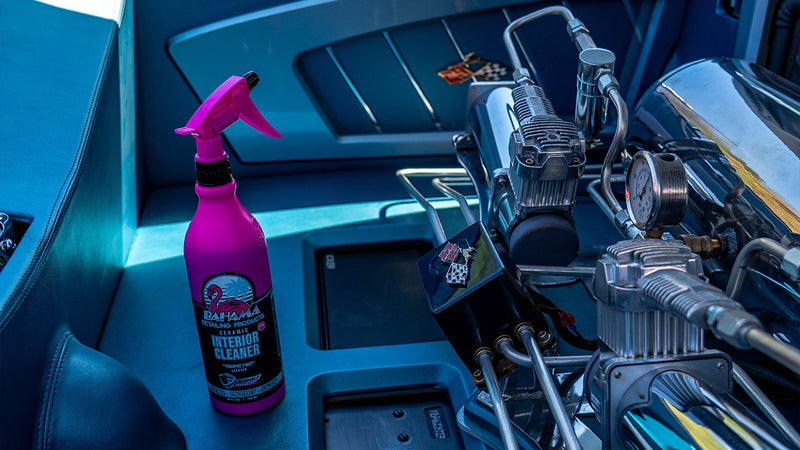
After the wash and dry, spray Ceramic Interior Cleaner onto a Starting Line towel and work across the dash, gauge cluster, grab handles, door panels and vinyl seats. It cleans and lays down UV protection in the same pass, with a streak-free, no-gloss finish, so nothing gets slippery where you grab or sit.
Keep the interior towel for the interior. A towel that has been through brake dust and tire dressing has no business on your dash.

Dash, doors, leather, vinyl and screens. Cleans and lays down UV protection in the same pass, with a streak-free, no-gloss finish.
How to Protect UTV Plastics From Fading
Faded, chalky plastic is the most common complaint from side-by-side owners. Once the surface goes gray, a wash alone will not bring it back.
Simple Finish is built for this. On a faded bumper it takes about three minutes: spray and wipe, and the color comes back with SunShield UV on top. It dries without sling, so you are not flinging dressing onto the paint the first time you hit the throttle.
The roll cage gets the same treatment. Powder coat and bare metal take Simple Finish well, and a protected cage sheds water and mud more easily at the welds where grime collects.
For the deeper version of this, read how to protect a UTV from UV damage and fading and our general guide to restoring faded plastic on any vehicle.
How Often Should You Detail a UTV?
Wash after every muddy ride. Mud that dries on a panel is harder to remove and more likely to scratch on the way off.
Wet, salty or coastal riding calls for more frequent washes and careful drying around the frame and electrics. Dry, dusty riding is easier on the machine but still worth a wash before dust gets ground into plastic.
Restore the plastics and protect paint and glass on a regular schedule rather than waiting for fading to show up. A full Final Touch coat lasts 3 to 6 months, and because the system layers and builds with every application, each round makes the next one easier.
Before storing the machine for the off-season, give it the full routine. A clean, protected UTV comes out of storage looking the way it went in.
Does This Routine Work on Other Powersports Machines?
Yes. ATVs, dirt bikes and motorcycles share the same problems: exposed plastic, exposed metal and a life spent outdoors. Scale the same Wash, Dry, Restore, Protect, Finish order to the machine, and use the Lil' Bird as your main drying towel on anything small.
For bike-specific steps, see how to detail a dirt bike.
Frequently Asked Questions
Can I pressure wash my UTV?
Use low pressure and a wide pattern, and keep it off electrical connectors, seals, bearings and the air intake. A garden hose plus foam does most of the work without the risk.
What is the best way to restore faded UTV plastic?
Wash and dry the panel, then spray Ceramic Simple Finish and wipe it in with a Finish Line towel. It brings faded plastic back and adds SunShield UV protection in one step.
Can I use the same product on UTV plastic and paint?
No. Simple Finish is for plastic, trim, tires, wheels and metal. Painted panels and glass get Final Touch, buffed off with a Victory Lap.
How do I clean UTV seats?
For vinyl seats, spray Ceramic Interior Cleaner onto a Starting Line towel and wipe. It cleans and adds UV protection without leaving a slippery finish.
Should I dry a UTV or let it air dry?
Dry it. Air drying leaves water spots and lets water sit in seams and around the frame. Blot with a Big Bird and Lil' Bird, and blow out tight spots with air.
The Bottom Line
Detailing a UTV comes down to sequence: prep, wash, dry, restore the plastics, protect paint and glass, and finish with a clean buff. Wash. Restore. Protect. If you want every bottle in one box, the Full System Set covers the whole machine, not just the paint.

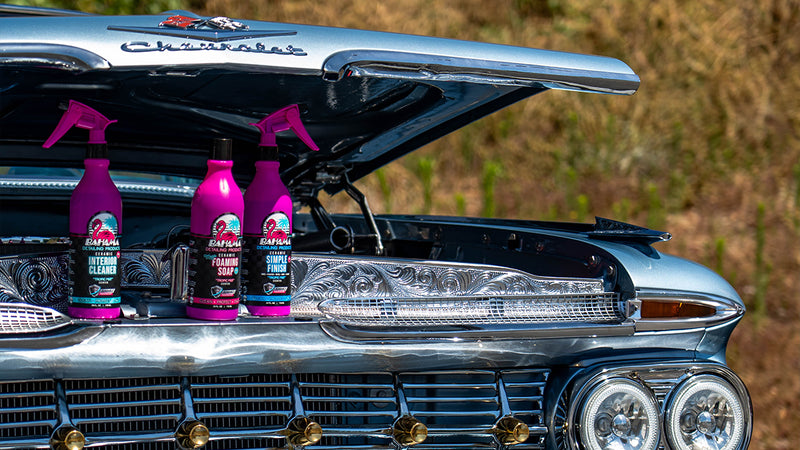
Wash, interior, restore and protect: all four Bahama ceramic bottles in one set. A pro ceramic coating is $1k+. This system only takes a couple hours.

Drying, interior, wheels and trim, and buffing the Final Touch coating, each with its own towel. No wheel grime on the dash, no drying towel soaking up your coating.