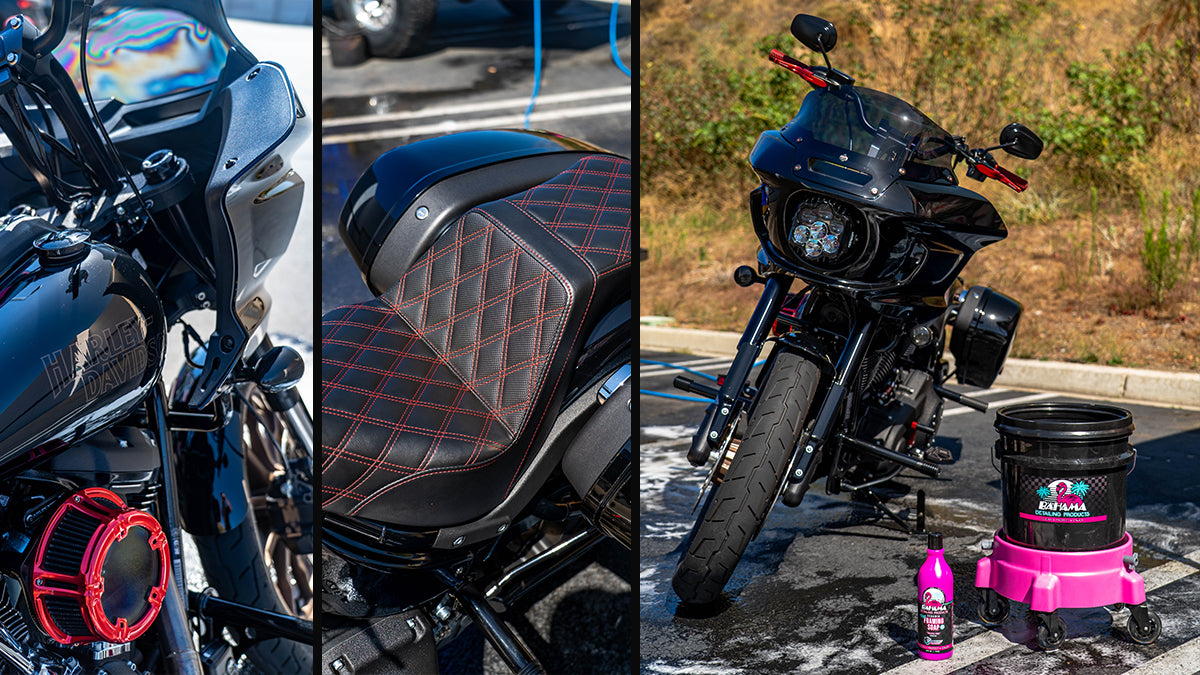
A motorcycle puts everything on display. Paint, chrome, bare aluminum, rubber and plastic all sit inches apart, and the engine is right there in the open. That makes detailing a bike more fiddly than a car, and more rewarding when you get it right.
To detail a motorcycle properly, you wash it cool and gently, dry it fast, restore the rubber, plastic and metal, then protect the paint, glass and chrome. Each surface gets the right product and the right towel, in the right order.
This guide covers the whole process, from cool-down to the final buff.
What Surfaces Are You Detailing on a Motorcycle?
Know what you are working with before you reach for a bottle.
- Painted tank, fenders and fairings: clear-coated paint. Treat it like car paint.
- Chrome: exhaust, mirrors, trim and some wheels. Bright, easily spotted and easily scratched.
- Bare and coated aluminum: engine cases, wheels and levers. Prone to dullness and corrosion from moisture and road salt.
- Rubber: tires, grips and seals. UV fades and dries them out.
- Plastic and matte parts: panels, covers and trim that go gray in the sun.
- Clear windscreen and gauge covers: often plastic, so they scratch easily.
Each one has a job in the routine below. Mixing them up is how you end up with streaky chrome or slippery grips.
How to Prepare a Motorcycle for a Wash
- Let it cool down completely. Cold water on a hot engine, exhaust or brakes spots instantly and can stress parts. Wait until you can rest a hand on the engine and pipes.
- Work in the shade. Sun dries soap on the tank before you can rinse.
- Cover sensitive spots. Plug the exhaust outlet and cover exposed electrical connectors and the ignition if your bike calls for it.
- Get the right tools. A soft wash mitt, soft brushes for the engine and wheels, and separate towels for each step.
Step-by-Step: How to Detail a Motorcycle
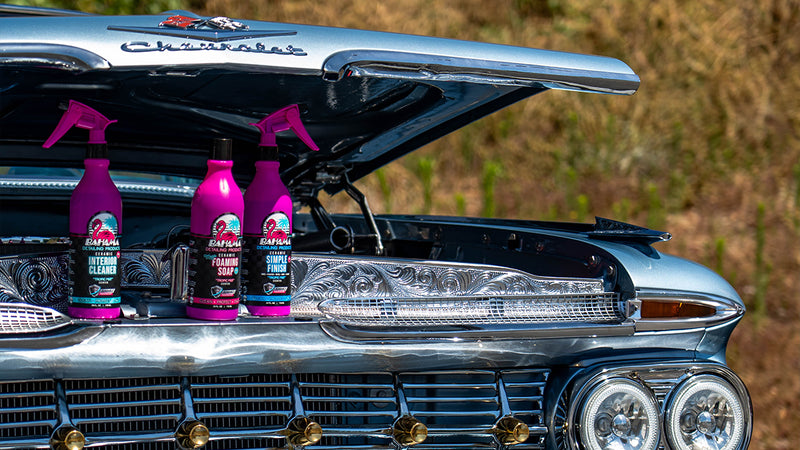
Here is the full routine in site order: Wash, Dry, Restore, Protect, Finish. Each bottle has a towel built for it.
Step 1: Wash
Rinse the bike top to bottom with a gentle hose or a wide fan spray. Keep water pressure away from bearings, electrical connectors, the gauge cluster and air intake.
Foam the bike with Ceramic Mega Foaming Soap through a foam cannon or from a Grit Guard Bucket. It is pH neutral and safe on custom and candy paint, lifts road film and bug guts, and leaves a beading ceramic layer with SunShield UV behind.
Wash the tank, fairings and fenders first with a soft mitt, then chrome and engine covers, and wheels last with their own brush. That order keeps brake dust and grime off your paint. For a heavily oiled engine, a gentle degreaser on the cases first helps. Avoid harsh alkaline degreasers on bare aluminum.
Step 2: Dry
Blow water out of the engine fins, switchgear and crevices with a leaf blower or compressed air. Then blot the tank and fairings with a Lil' Bird. At 18x18 and 1600 GSM it is sized for a bike, and it gets into tight spots around the bars and mirrors. On a big touring bike, a Big Bird handles the fairings faster.
Water spots are made in the drying, not in the wash, and chrome shows every one.

Glass, mirrors, door jambs and every spot the big towel is too much for. Same 1600 GSM pile, seamless edge.
Step 3: Restore
Spray Ceramic Simple Finish onto a Finish Line towel and wipe plastic trim, rubber seals, matte parts and bare aluminum engine cases. Simple Finish brings faded surfaces back and protects them with SunShield UV.
On wheels, treat the tire sidewall and rim together, and give gloss rims a quick buff after. Keep it off the tire tread and off the brake rotors, and never put anything on grips or foot pegs that would make them slippery.
Simple Finish does not go on the painted tank, the windscreen or chrome. Those belong to the next step.
Step 4: Protect
Spray Ceramic Final Touch Detail Spray onto the painted tank, fenders and fairings, the chrome and the windscreen. Wipe it smooth into a consistent layer and let it dry for 5 minutes.
Final Touch is the most ceramic of the four Bahama bottles: a Graphene + SiO₂ layer that is ultra hydrophobic, so rain beads and rolls off instead of spotting your chrome. It is not abrasive and it is not a polish. If your chrome has heat bluing or pitting, deal with that first using a dedicated metal polish, then protect it.
Step 5: Finish
Buff with a dry Victory Lap. The edgeless plush lifts the residue while the coating stays on the paint. Never buff with the Birds. Keep the bike dry for about 24 hours so the layer cures.

The most ceramic of the four. Spray it on, wipe it smooth into a consistent layer, let it dry for 5 minutes, then buff. What is left is a streak-free, water-spot-free, ultra hydrophobic ceramic layer with UV protection.
How to Clean Motorcycle Chrome and Aluminum
Chrome and aluminum look similar from a distance and need different care up close.
Chrome is a hard plated surface. Wash it, dry it straight away so it does not spot, then protect it with Final Touch and a Victory Lap. Our guide to cleaning and protecting motorcycle chrome covers pipes and wheels in detail.
Bare aluminum is softer and dulls faster. Wash it gently, then wipe it with Simple Finish on a Finish Line. If it is already oxidized, a dedicated metal polish comes first.
One Towel Per Job on a Bike
On a motorcycle everything is close together, which makes cross-contamination easy. The towel that wiped your chain area or rear wheel will scratch your tank.
Keep the Birds for drying, the Finish Line for wheels, rubber and metal, and the Victory Lap for buffing Final Touch. Most swirl marks are put there by a towel.
How Often Should You Detail a Motorcycle?
- After every ride: a quick wipe of bugs and a chain check.
- Regularly through riding season: wash with the foaming soap, which tops up the ceramic layer each time.
- Every few months: a full Final Touch coat, which lasts 3 to 6 months.
- Before storage: a full detail, so dirt and moisture are not sitting on the bike all winter.
Shopping for a kit? See the best motorcycle detailing products.
Frequently Asked Questions
Can I use a pressure washer on my motorcycle?
Carefully. Use a wide fan tip held well back, and keep it off wheel bearings, steering head, brakes, connectors and the gauge cluster.
Is Ceramic Mega Foaming Soap safe on custom motorcycle paint?
Yes. It is pH neutral and safe on custom, candy and metallic paint, plus any existing coating.
Can I put tire shine on motorcycle tires?
Only on the sidewall, never the tread. Simple Finish on the sidewall and rim is fine. Keep anything slippery off the contact patch.
Which towel should I use to dry a motorcycle?
A Lil' Bird for most bikes, plus a Big Bird for big fairings. Blot, do not drag.
Every Detail Shows on a Bike
On a motorcycle, every surface is up close. Wash cool, dry fast, and give each surface its own product and towel. Wash. Restore. Protect. The Full System Set covers every bottle in this routine and protects the whole bike, not just the paint.

Wash, interior, restore and protect: all four Bahama ceramic bottles in one set. A pro ceramic coating is $1k+. This system only takes a couple hours.

Drying, interior, wheels and trim, and buffing the Final Touch coating, each with its own towel. No wheel grime on the dash, no drying towel soaking up your coating.