Knowing how to detail a dirt bike is mostly knowing what not to blast. Plastics scratch, graphics lift at the edges, and bearings hate water under pressure. Wash it the way you would a car and you will pay for it in faded panels and gritty pivots.
The fix is a simple order of work: soften the mud, wash gently, dry fast, restore the plastics, protect anything glossy, then lube what the water stripped. Here is the full post-ride routine, step by step.
When Should You Wash a Dirt Bike?
As soon as you can after the ride. Wet mud lets go of plastic and aluminum easily. Dried clay bonds, and getting it off means scrubbing, which is exactly how graphics get scratched.
If you cannot wash the same day, at least give the bike a low-pressure rinse to keep the mud from setting. Then do the full job when you have time.
What Surfaces Are You Actually Cleaning?
A dirt bike packs a lot of different materials into a small space. Each one wants slightly different handling.
- Plastic body panels: soft, textured and easy to scratch. They fade in the sun faster than you expect.
- Graphics: adhesive vinyl over plastic. The seams are the weak point.
- Aluminum frame, swingarm and hubs: dull and oxidize when left wet and dirty.
- Engine cases and chain area: oil and grease mixed with dirt. Soap alone will not cut it.
- Wheels, spokes and tires: packed with mud and brake dust in every corner.
- Seat, grips and controls: clean them, but never make them slick.
Keep that list in mind. It decides which product and which towel touches what.
How to Detail a Dirt Bike: The Step-by-Step Routine
This follows the same order as every Bahama detail: Wash, Dry, Restore, Protect, Finish. Each bottle has a towel built for it, and on a bike that matters even more, because one muddy towel can scratch every panel it touches.
Prep: Pre-Rinse and Degrease
Plug the exhaust and cover the airbox opening first. Then rinse top to bottom with moderate pressure to knock off the bulk of the mud. Keep the nozzle well back from graphics seams, wheel bearings, the steering head, the swingarm pivot and electrical connectors.
Hit the engine cases, chain area and swingarm with a dedicated degreaser and let it dwell briefly. Agitate with a soft brush, then rinse. Do this before the soap so you are not spreading grease across clean plastic.
1. Wash: Ceramic Mega Foaming Soap
Foam the whole bike with Ceramic Mega Foaming Soap, through a foam cannon or from a Grit Guard Bucket. Let the foam sit a moment so it can lift road film and mud instead of you scrubbing it off.
Use a soft mitt or brush on plastics and graphics, and a stiffer brush on tires, spokes and the frame's lower rails. Work top down. The soap is pH neutral, so it is safe on vinyl graphics, and it leaves a beading ceramic layer with SunShield UV behind.
Rinse thoroughly, especially in spoke nipples, frame tubes and under the fenders, where trapped soap and water sit longest.

Thick cannon foam that lifts road film, mud and bug guts, then leaves a beading ceramic layer behind. pH-neutral, so it is safe on any coating.
2. Dry: Lil' Bird
A bike is exactly what the Lil' Bird was made for. At 18x18 it gets into shrouds, number plates, the tank area and around the triple clamps without dragging a big towel through the mud you missed.
Blot rather than drag. A leaf blower helps clear water from the frame, the chain and the radiator louvers. Water spots are made in the drying, not in the wash, so do not let the bike air dry in the sun.
3. Restore: Ceramic Simple Finish
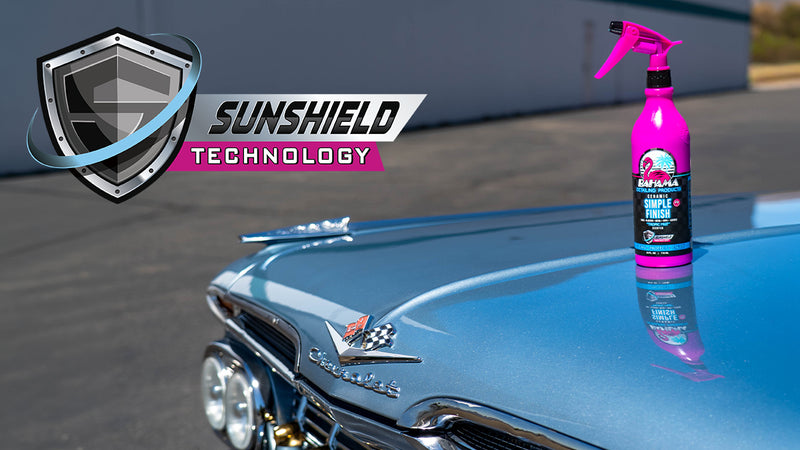
This is the step that makes a dirt bike look new again. Spray Ceramic Simple Finish onto plastics, graphics, fork guards, rubber, the seat base trim, aluminum and the tires, then wipe it in with a Finish Line towel.
Spray, wipe, walk away. Faded plastic darkens back up, and it carries SunShield UV so it stays that way longer. There is no sling, so it will not fling off the tires onto your fresh plastics.
The Finish Line is dual-sided: the short nap lifts leftover grime, the plush side wipes clean. Keep it for this dirty work only. A towel that has been through chain grime has no business on your helmet visor or your truck's paint.

Wheels, tires and trim. Dual-sided: a short nap to lift grime and a plush side to wipe it clean, so your finishing towels never do the dirty work.
4. Protect: Ceramic Final Touch Detail Spray
Most dirt bikes have very little gloss paint, but if yours has a painted frame, a gloss tank cover, chrome or a headlight lens, those get Ceramic Final Touch Detail Spray. Spray it on, wipe it smooth into an even layer and let it dry for 5 minutes.
Keep Final Touch off the seat, grips, footpegs, levers and anything you brake with. Slick is the whole point of the product, and the last place you want it.
5. Finish: Victory Lap
Buff the Final Touch layer off with a dry Victory Lap. The edgeless plush lifts the residue while the coating stays put. Never buff with the Lil' Bird: a drying towel that thick drinks the coating straight off the surface.
If you can, keep the treated surfaces dry for about 24 hours so the layer cures.
What to Do After the Wash
A clean bike is also your best chance to spot problems. Before you put it away:
- Lube the chain. Washing strips it every time.
- Lube cable ends, lever pivots and the kickstand pivot.
- Pull the exhaust plug and airbox cover, and check the air filter.
- Press down any graphics corners that are starting to lift before they catch on a boot.
- Look for loose spokes, cracked plastic, leaking fork seals and worn brake pads.
On the next ride, you will notice the payoff. Treated plastics release mud far more easily, so the next wash starts as a rinse instead of a scrub. For more on keeping colors bright, see our guide on protecting dirt bike plastics and graphics.
Common Dirt Bike Detailing Mistakes
- Pressure washing up close. It forces water past bearing seals and peels graphics at the seams.
- Washing a hot engine. Let it cool first. Cold water on hot cases and pipes is not doing them any favors.
- Using dish soap or harsh degreaser on plastics. It dries plastic out and speeds up fading. Save degreaser for the engine and chain.
- One towel for everything. Most swirl marks are put there by a towel. One towel per job, zero cross-contamination.
- Dressing the seat or grips. Clean them, never coat them.
Want the deeper dive on soap choice? Our dirt bike wash guide covers what is safe for plastics and graphics, and the enduro maintenance guide covers keeping a bike race-ready between rides.
Frequently Asked Questions
Can I use a pressure washer on my dirt bike?
Yes, carefully. Use a wide fan, stay well back, and keep the spray off bearings, seals, electrical connectors and graphics edges. A garden hose and foam does most of the work anyway.
How do I keep dirt bike plastics from fading?
UV is the cause. Wipe Ceramic Simple Finish onto the plastics after every wash so they get a fresh layer of SunShield UV protection.
Is Ceramic Mega Foaming Soap safe on dirt bike graphics?
Yes. It is pH neutral and safe on vinyl graphics. Whatever soap you use, keep high pressure away from the graphics seams.
Should I put detail spray on my dirt bike seat?
No. Clean the seat with soap and water and leave it at that. Anything you sit on or hold should never be slick.
What towel should I dry a dirt bike with?
The Lil' Bird. It is sized for bikes and tight spots, and it soaks up water fast so you are not dragging a wet towel across the plastics.
A Clean Bike Is a Maintained Bike
The post-ride wash is also your inspection. Do it the same way every time and the bike stays fast to clean and easy to read. If you want every bottle in this routine in one box, the Full System Set is the last 4 detailing products you'll ever need. Wash. Restore. Protect.

Wash, interior, restore and protect: all four Bahama ceramic bottles in one set. A pro ceramic coating is $1k+. This system only takes a couple hours.

Drying, interior, wheels and trim, and buffing the Final Touch coating, each with its own towel. No wheel grime on the dash, no drying towel soaking up your coating.