Detailing a classic car is preservation, not just cleaning. Original paint, old chrome and dried-out rubber cannot be swapped for new parts off a shelf, and one aggressive session can take off what decades did not.
The right way to detail a classic car is gentle and in order: wash with a pH neutral soap, dry without scratching, restore the rubber and trim, then protect paint and chrome against the sun. Only correct the paint if it truly needs it.
Here is how to do each step without risking the finish you are trying to save.
Know Your Classic Car's Paint Before You Start
Many older cars wear single-stage paint: lacquer or enamel with no separate clear coat. The color is the top layer, so anything abrasive is working directly on the color.
Later cars moved to a base coat under a clear coat, like a modern car. A repaint could be either. If you are not sure, rub an inconspicuous spot with a little polish on a white cloth. If color comes off on the cloth, it is single-stage.
Single-stage paint rewards a light touch. Skip heavy compounds and harsh cleaners, and keep the products pH neutral.
Check the Condition First
Before any water touches the car, walk around it. Look for peeling, lifting edges and bubbling. Those usually mean rust underneath, and washing over them pushes water under the paint. Get them repaired first.
If the car wears an original patina, do not try to clean it away. Wash it gently, protect it, and leave the character alone. On an original-condition classic, patina is often the most valuable part of the finish.
What You Need to Detail a Classic Car
Every bottle has a towel built for it, and on a classic that pairing is what keeps grit off delicate paint.
- Wash: Ceramic Mega Foaming Soap, two buckets with a Grit Guard Bucket, and soft wash mitts. Interior: Ceramic Interior Cleaner with a Starting Line towel.
- Dry: a Big Bird for panels, a Lil' Bird for chrome trim and jambs.
- Restore: Ceramic Simple Finish with Finish Line towels for tires, rubber, black trim and vinyl.
- Protect and Finish: Ceramic Final Touch Detail Spray, buffed with Victory Lap.
- Only if needed: a finishing polish and a dedicated metal polish for heavily pitted chrome.
How to Detail a Classic Car, Step by Step
1. Wash: Gentle, Top Down, Two Buckets
Pre-rinse at low pressure to float off loose dirt. Keep pressure away from paint edges, weatherstripping and chrome trim, where it can lift old paint or drive water behind the trim.
Fill one bucket with Mega Foaming Soap and one with clean rinse water, each with a grit guard. Work roof down, one panel at a time, with almost no pressure. Let the foam lift the dirt. It is pH neutral and safe on single-stage paint, and it leaves a beading ceramic layer with SunShield UV behind.
Use a separate mitt for the rocker panels, lower doors and wheels. That is where the heavy grit lives, and it should never reach the upper panels.
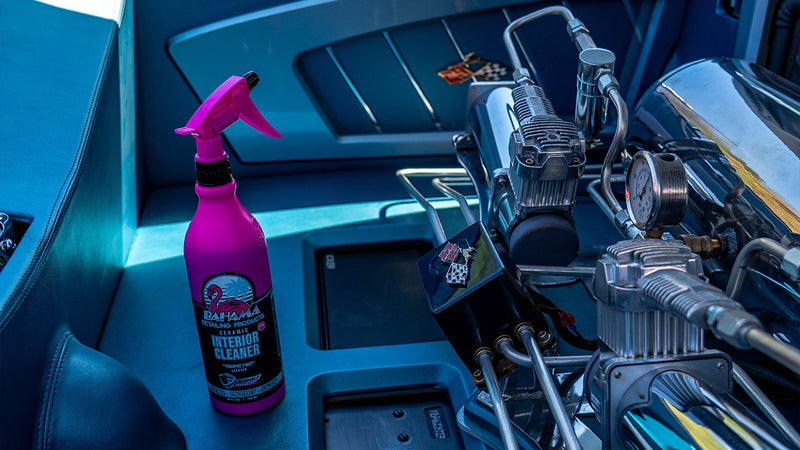
Inside, wipe the dash, door panels, vinyl and leather with Ceramic Interior Cleaner on a Starting Line towel. It cleans and lays down UV protection in the same pass, with a no-gloss finish that suits an original interior.

Dash, doors, leather, vinyl and screens. Cleans and lays down UV protection in the same pass, with a streak-free, no-gloss finish.
2. Dry: Big Bird and Lil' Bird
Dry immediately. Water spots are made in the drying, not in the wash. Lay a Big Bird across the hood, roof and trunk lid and pull it gently toward you. Then use a Lil' Bird on chrome trim, emblems, door jambs and the gaps around bumpers, where water hides and drips later.
3. Optional: Correct the Paint Gently
If the paint is oxidized or dull, use the gentlest correction that works. A hand-applied finishing polish on a foam pad, worked in small sections with light pressure, is often enough on single-stage paint.
Skip the rotary buffer unless you know exactly what you are doing. Heat and speed can burn through old lacquer fast. A dual-action polisher on a low setting with a soft pad is far safer. Our guide to removing oxidation from classic car paint goes deeper.
4. Restore: Simple Finish + Finish Line
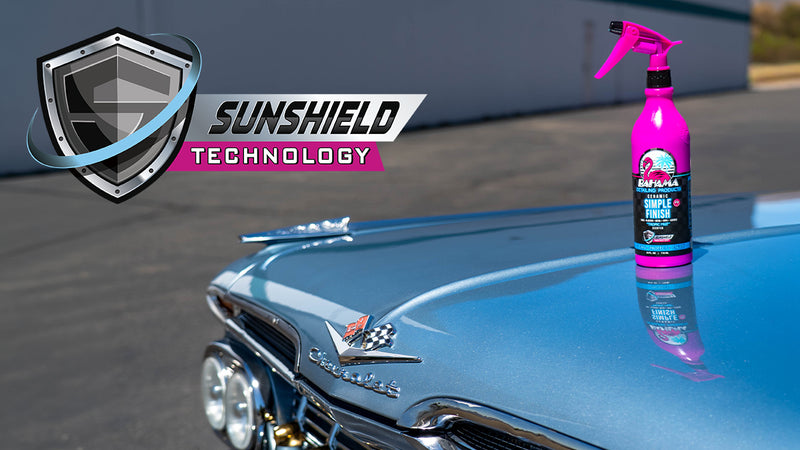
Old rubber, black trim, vinyl tops and tires take the most sun and show it. Spray Ceramic Simple Finish and wipe it in with a Finish Line towel. Faded surfaces come back to like-new and get SunShield UV on top.
Simple Finish covers tire and rim together. On gloss painted or chrome-plated wheels, give the rim a quick buff after. Keep it off the body paint, glass and chrome bumpers, where it streaks.
5. Protect: Final Touch on Paint, Chrome and Glass
Spray Ceramic Final Touch Detail Spray onto one panel at a time, wipe it smooth into an even layer, and let it dry for 5 minutes. Do the paint, the chrome bumpers and grille, the window trim and the glass.
Final Touch is not abrasive and not a polish, so it is safe on single-stage paint and plated chrome. It leaves an ultra hydrophobic layer that makes the next wash easier and keeps water from drying into spots on the chrome.
For badly pitted or rusty chrome, clean it up first with a dedicated metal polish, then protect it with Final Touch. Our guide to detailing chrome on a classic car covers bumpers, trim and wheel covers. Watch pot metal trim: it is softer and more porous than plated steel, so use even lighter pressure.
6. Finish: Buff With Victory Lap
Buff the dried Final Touch with a dry Victory Lap. The edgeless plush lifts the residue while the coating stays on the paint. Do not use the Birds for this. Their thick pile drinks the coating off the panel.
Keep the car dry and out of the rain for about 24 hours so the layer cures.

The most ceramic of the four. Spray it on, wipe it smooth into a consistent layer, let it dry for 5 minutes, then buff. What is left is a streak-free, water-spot-free, ultra hydrophobic ceramic layer with UV protection.
Why UV Protection Matters More on a Classic
Single-stage paint has no clear coat taking the hit, so UV works directly on the color. That is how reds go pink and blacks go gray. Rubber seals dry and crack, and vinyl tops and interiors fade.
All four Bahama bottles carry SunShield UV, built to shield across the 290-400nm UV range. On a classic, that means every wash, every trim wipe and every coat of Final Touch adds to the protection instead of relying on one product. For more on the paint side, read why modern graphene protection beats old-school wax.
How Often Should You Detail a Classic Car?
It depends on how much the car is driven and where it is stored, but a simple rhythm works:
- After every drive or show: dust off gently with Final Touch and a Victory Lap. Never dry wipe dust off single-stage paint.
- Regular wash: the full Wash, Dry, Restore routine whenever the car is actually dirty.
- Full protect coat: a full coat of Final Touch takes about an hour from wash to finish and lasts 3 to 6 months.
- Once a year or before storage: inspect the paint closely, clay if it feels rough, and correct only what needs it.
Frequently Asked Questions
Can I use a pressure washer on a classic car?
Only gently. Use low pressure, a wide fan and plenty of distance, and keep the spray away from paint edges, weatherstripping and chrome trim. A hose and foam is safer on old paint.
Is Ceramic Mega Foaming Soap safe on original lacquer?
Yes. It is pH neutral and safe on any coating, including single-stage lacquer and enamel. Wash with light pressure and two buckets.
Can I use Final Touch on chrome bumpers?
Yes. Final Touch is the Bahama product for paint, glass and chrome. Spray, wipe smooth, let it dry 5 minutes, then buff with a Victory Lap.
How do I prepare a classic car for winter storage?
Give it a full wash and dry, restore the rubber and trim, and apply a full coat of Final Touch so it can cure before storage. Use a breathable cover, not plastic, which traps moisture.
Preserve History. Protect Value.
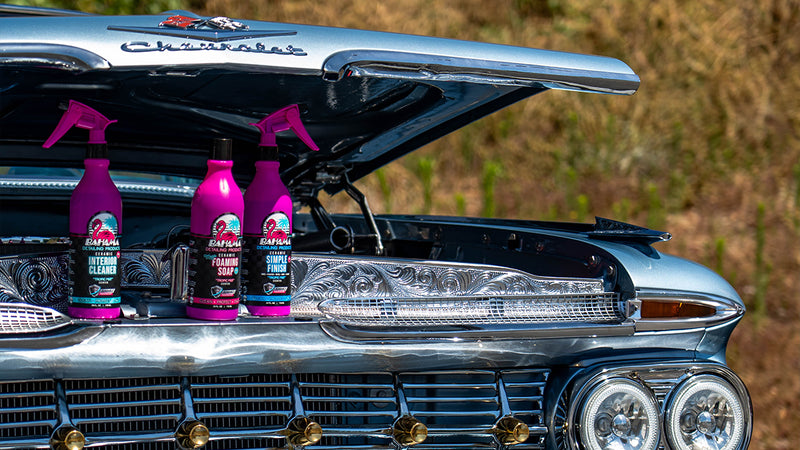
A classic that is washed gently and protected properly stays original longer, and original is what holds value. Build the routine once and repeat it. The Full System Set puts all four bottles in one box, and it is gentle enough for a vintage finish. Wash. Restore. Protect.

Wash, interior, restore and protect: all four Bahama ceramic bottles in one set. A pro ceramic coating is $1k+. This system only takes a couple hours.

Drying, interior, wheels and trim, and buffing the Final Touch coating, each with its own towel. No wheel grime on the dash, no drying towel soaking up your coating.