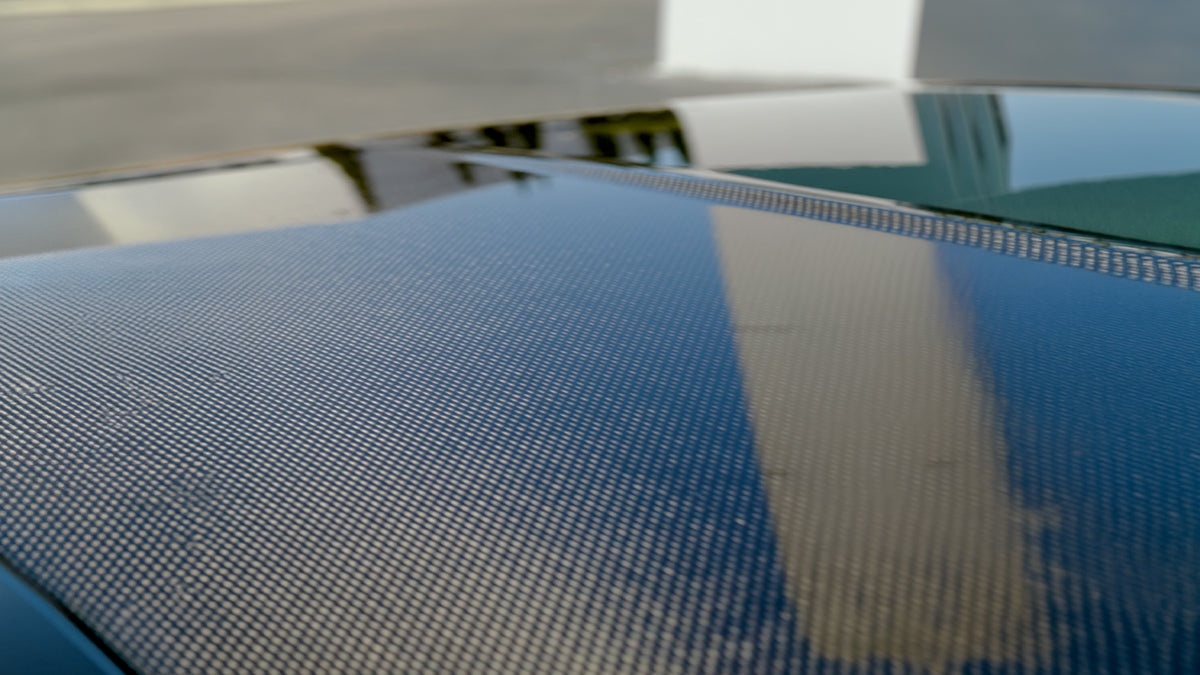
Carbon fiber on a supercar is not one surface. It might be a gloss clear-coated hood, a satin splitter, a forged carbon mirror cap or a weave you can see on the dash. To clean carbon fiber properly, you first have to know which kind you are looking at.
The short answer: wash it like paint, never scrub it, and protect it with the product that matches its finish. Gloss carbon gets a ceramic spray. Matte and satin carbon gets a restorer that will not add shine. Here is the full breakdown.
What Kind of Carbon Fiber Is on Your Car?
Almost all automotive carbon fiber is sealed in resin and then finished. The finish decides how you treat it.
- Gloss clear-coated carbon. Hoods, roofs, mirror caps and spoilers with a deep, wet-looking finish. There is a clear coat on top, so it behaves like gloss paint.
- Matte or satin carbon. Splitters, diffusers, side skirts and some body panels. The finish is meant to be flat, and the wrong product leaves blotchy shiny patches.
- Interior carbon trim. Dash inlays, center consoles, door trim and steering wheel accents. Usually gloss or satin, and handled like the rest of the cabin.
Not sure? Look at it under a light. If it reflects like the paint next to it, treat it as gloss. If it diffuses the light, treat it as matte.
Why Does Carbon Fiber Need Special Care?
Carbon panels are expensive and slow to replace, and damage on a weave is easy to see. A scratch through clear coat on carbon cannot simply be blended the way a scratch on paint sometimes can.
The resin and clear over the weave also break down with UV over time. That is what turns a deep weave hazy or yellowed. Low aero pieces take the rest of the abuse: road grit, rock chips and brake dust.
So the rules are simple. Gentle chemistry, very little friction, and UV protection every time you touch it.
How to Wash Carbon Fiber Panels
Start cool and in the shade. Rinse to float off loose grit, especially on splitters and side skirts where it collects.
Foam the car with Ceramic Mega Foaming Soap. It is pH neutral and safe on any coating, so it will not touch the clear, the resin or an existing ceramic coating or PPF. Let the foam dwell, then wash with a soft mitt from a bucket with a Grit Guard Bucket, using straight, light passes.
Rinse and dry right away. Lay a Big Bird across hoods and roofs and pull it toward you, and use a Lil' Bird for mirror caps, vents and aero edges. Blot rather than drag. Water spots are made in the drying, not in the wash.

Sheets a roof, hood or tailgate dry in one pull. Seamless edge, so nothing hard ever touches the paint.
How to Protect Gloss Carbon Fiber
Gloss carbon has a clear coat, so it gets the same protection as the paint: Ceramic Final Touch Detail Spray.
- Protect. Spray a panel, wipe it smooth into a consistent layer, and let it dry 5 minutes.
- Finish. Buff it off with a dry Victory Lap. The edgeless 450 GSM weave lifts the residue while the coating stays on the panel, with no edge to drag across the clear.
Final Touch leaves an ultra hydrophobic graphene and SiO2 layer with SunShield UV, which blocks 98% of UV at the clear coat. Keep the panel dry for about 24 hours after a full coat so it cures. A full coat lasts 3 to 6 months.
Final Touch is not abrasive and not a polish. If your gloss carbon already has swirls, that is a job for a careful machine polish by someone who knows thin clear. Protect it afterward so you need that service less often.

The most ceramic of the four. Spray it on, wipe it smooth into a consistent layer, let it dry for 5 minutes, then buff. What is left is a streak-free, water-spot-free, ultra hydrophobic ceramic layer with UV protection.
How to Protect Matte and Satin Carbon Fiber
Matte carbon needs a product that cleans up the finish and protects it without filling in the texture. That is Ceramic Simple Finish, which is made for matte and satin paint, PPF, vinyl wrap, plastic and trim.
Spray it onto a Finish Line towel, wipe the panel evenly, and walk away. It brings tired, faded surfaces back to an even, like-new finish with SunShield UV and no sling.
Two rules for matte carbon: never polish it, and never use anything that promises shine. Either will leave permanent glossy patches. For more on flat finishes, read our matte paint detailing guide.

Faded plastic, trim, rubber and tires back to like-new, then protected. Just as good on matte, satin, PPF and vinyl wrap.
How to Clean Carbon Fiber Interior Trim
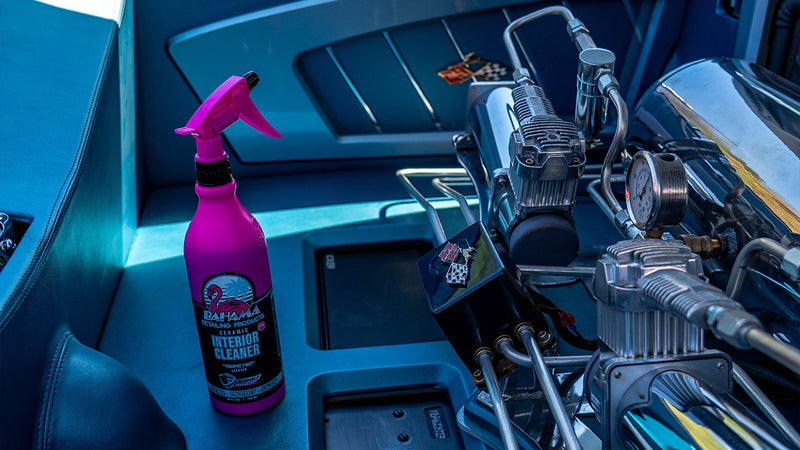
Interior carbon picks up fingerprints, hand lotion and dust more than any panel outside. Use Ceramic Interior Cleaner with a Starting Line towel.
Spray the towel, not the trim, so nothing drips into switches or screens. Interior Cleaner cleans and lays down UV protection in the same pass, with a streak-free, no-gloss finish. The ButterSoft suede edges on Starting Line keep you from dragging a hard edge across gloss inlays.
A towel that has been through brake dust and tire dressing has no business on your dash. Keep the interior towel inside.
The Full Supercar Routine, in Order
Every bottle has a towel built for it. Here is how carbon fits into a full detail.
- Wash: Ceramic Mega Foaming Soap outside; Ceramic Interior Cleaner and Starting Line inside.
- Dry: Big Bird on the big panels, Lil' Bird on mirrors, vents, aero and glass.
- Restore: Ceramic Simple Finish with Finish Line on matte carbon, trim, tires, wheels and PPF.
- Protect: Ceramic Final Touch on gloss paint, gloss carbon, glass and chrome. Dry 5 minutes.
- Finish: buff with a dry Victory Lap. Never buff Final Touch with the Birds.
For the rest of the car, see how to detail an exotic car, and if you are dealing with dusty wheels near your carbon, our guide to removing brake dust from exotic wheels.
Frequently Asked Questions
Can I use regular car soap on carbon fiber?
Use a pH neutral soap. Mega Foaming Soap is safe on clear-coated carbon, matte carbon, PPF and ceramic coatings.
Can I polish carbon fiber?
Gloss clear-coated carbon can be polished by someone experienced, since the clear can be thin. Matte or satin carbon should never be polished.
What protects carbon fiber from UV yellowing?
Regular UV protection on the clear or resin. All four Bahama bottles carry SunShield UV; use Final Touch on gloss carbon and Simple Finish on matte carbon.
Is Simple Finish safe on gloss carbon fiber?
Keep Simple Finish for matte and satin finishes. Gloss carbon has a clear coat, so it gets Final Touch and a Victory Lap buff.
The Bottom Line
Carbon fiber is easy to care for once you know its finish: gloss gets Final Touch, matte gets Simple Finish, and every surface gets its own towel. Wash. Restore. Protect. One towel per job. Zero cross-contamination, and the Premium Towel Set has all of them.

Wash, interior, restore and protect: all four Bahama ceramic bottles in one set. A pro ceramic coating is $1k+. This system only takes a couple hours.

Drying, interior, wheels and trim, and buffing the Final Touch coating, each with its own towel. No wheel grime on the dash, no drying towel soaking up your coating.