An e-bike gets just as dirty as a regular bike, but it carries a battery, a motor, a display and a lot of wiring. Hit those with a hose the way you would a mountain bike and you can end up with a dead display or a corroded connector.
The good news: e-bike detailing is easy once you change a few habits. Wash with low pressure and plenty of foam, dry the electrics by hand, and use the right protection on each surface. This guide walks you through how to wash and protect an electric bike without putting the electronics at risk.
What Makes Washing an E-Bike Different?
Most e-bikes are built to handle rain and road spray. That is not the same as being built for a pressure washer. A focused jet can push water past seals around the motor, battery mount, charge port and display that rain would never get through.
Your owner's manual is the final word on what your bike can take, including whether the battery should come off before a wash. Check it once, then build your routine around it.
The other difference is surfaces. A typical e-bike mixes gloss or matte painted frames, raw plastic battery and motor covers, rubber tires and grips, a vinyl or leather saddle, and a screen. Each wants different care, and some want none at all.
How to Wash an E-Bike, Step by Step
Before you start
- Turn the system off. Never wash a bike that is powered on or charging.
- Remove the battery if your manual says to, and keep the exposed contacts on the bike dry. If the battery stays on, make sure it is locked in and the charge port cover is closed.
- Remove or cover the display if it detaches. If it does not, plan to keep spray off it and wipe it by hand.
- Work in the shade, on a cool bike. Product that dries on a hot frame streaks.
Step 1: Gentle rinse
Use a garden hose on a soft shower setting, or a watering can, to wet the bike and float off loose dirt. Keep water moving and aim away from the motor housing, battery mount, display and charge port. Never use a pressure washer on an e-bike.
Step 2: Foam and hand wash
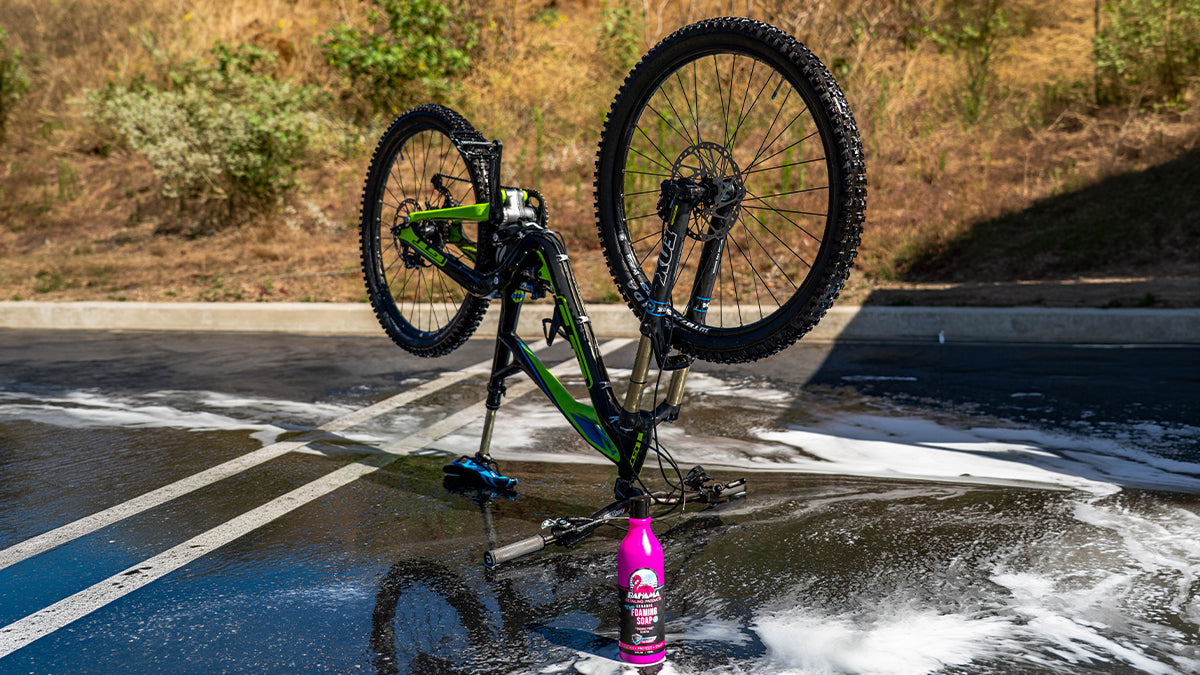
Cover the frame, fork and wheels in Ceramic Mega Foaming Soap, either through a foam cannon on low or from a Grit Guard Bucket with a soft mitt. It is pH-neutral, so it is safe on paint, matte finishes and decals, and it leaves a beading ceramic layer with SunShield UV behind.
Wash from the top down. Use a soft brush on the drivetrain and wheels, and keep that brush away from the frame afterward so chain grime does not end up on the paint.
Step 3: Clean the saddle and grips
Rinse loose dirt off and wipe the saddle with Ceramic Interior Cleaner on a Starting Line towel. It is made for vinyl and leather, cleans and lays down UV protection in the same pass, and leaves a no-gloss finish, so the saddle does not end up slick.
Step 4: Rinse low and slow
Rinse the foam off the same gentle way you wet the bike. Take an extra pass around the drivetrain and brake calipers so no soap is left in the gaps.
How Do You Dry an E-Bike Without Water Spots?
Water spots are made in the drying, not in the wash. On an e-bike, drying also matters for the electrics, so do it by hand.
A Lil' Bird is the right size for a bike. It gets into the frame junctions, around the motor, under the battery mount and along the fork. Blot rather than drag. A Big Bird is overkill on most bikes but handy on cargo e-bikes with big flat panels.
Pay special attention to the charge port, battery contacts and display edges. Let the bike sit until those areas are fully dry before you reinstall the battery or charge it.

Glass, mirrors, door jambs and every spot the big towel is too much for. Same 1600 GSM pile, seamless edge.
How to Protect an E-Bike: Restore, Protect, Finish
Once the bike is clean and dry, protect each surface with the right bottle. Every bottle has a towel built for it.
Restore: plastic, rubber and matte frames
Ceramic Simple Finish is for battery covers, motor covers, chain guards, fenders, rubber, tire sidewalls and matte or satin frames. It brings faded plastic back and adds SunShield UV protection without changing a matte finish. Spray it onto a Finish Line towel, wipe it on, and wipe it even with the plush side.
For more on bringing tired plastic back, see our guide to restoring faded plastic.

Faded plastic, trim, rubber and tires back to like-new, then protected. Just as good on matte, satin, PPF and vinyl wrap.
Protect: gloss paint and chrome
On a gloss painted frame and any chrome trim, use Ceramic Final Touch Detail Spray. Spray it on, wipe it smooth into an even layer, and let it dry for 5 minutes. The result is an ultra hydrophobic layer, so road spray beads and rolls off and the next wash is quicker.
Finish: buff with Victory Lap
Buff the Final Touch layer with a dry Victory Lap. The edgeless plush lifts the residue while the coating stays on the frame. Never buff Final Touch with the Birds. Keep the bike dry for about 24 hours so the layer can cure.
Where Should You Never Spray Product on an E-Bike?
- Brake rotors, pads and calipers. Any slick residue on a braking surface is a safety problem. If product lands on a rotor, clean it off with brake cleaner before you ride.
- Grips, pedals and the saddle top. Slick is the last thing you want where you hold on or sit. Keep Simple Finish and Final Touch off them.
- The chain and drivetrain. Neither bottle is a lubricant. Clean the chain, dry it, and re-lube it with a proper chain lube.
- The display and charge port. Wipe the screen with a slightly damp, clean towel only, and keep sprays away from electrical openings.
If you also ride a motorcycle, the same surface logic applies. Our motorcycle detailing guide covers the bigger version of this routine.
Frequently Asked Questions
Can I wash my e-bike with a hose?
Yes, on a gentle shower setting with the system off. Avoid pressure washers and keep the stream away from the motor, battery mount, display and charge port.
Should I take the battery off before washing an e-bike?
Follow your owner's manual. If you remove it, keep the contacts dry, and always let everything dry fully before reinstalling or charging.
What is the safest soap for an e-bike?
A pH-neutral soap like Ceramic Mega Foaming Soap. It is gentle on paint, matte finishes and decals, and leaves a beading ceramic layer behind.
Can I use a detail spray on a matte e-bike frame?
Use Ceramic Simple Finish on matte and satin frames. Save Final Touch for gloss paint and chrome.
Keep It Charged, Keep It Clean
A careful hand wash, a proper dry and the right bottle on each surface keep an e-bike looking sharp without risking the electronics. Wash. Restore. Protect. For the towels that make each step easy, the Premium Towel Set gives you one towel per job, with zero cross-contamination.

Wash, interior, restore and protect: all four Bahama ceramic bottles in one set. A pro ceramic coating is $1k+. This system only takes a couple hours.

Drying, interior, wheels and trim, and buffing the Final Touch coating, each with its own towel. No wheel grime on the dash, no drying towel soaking up your coating.