Arizona heat. Nevada sun. Texas highways. California dunes. Desert driving damage is real, and it shows up faster than most owners expect: chalky paint, gray trim, cracked dashboards and fine scratches that seem to appear from nowhere.
The fix is not one magic product. It is a simple routine that keeps three things in check: UV, heat and dust. Wash often and gently, restore the plastic and rubber the sun goes after first, and keep a hydrophobic, UV-blocking layer on the paint and glass.
Here is what each threat does to your vehicle, why standard protection struggles in the desert, and the routine that holds up.
What Does the Desert Actually Do to a Vehicle?
Desert damage comes from three forces that stack on top of each other. Handle one and ignore the others, and you still lose.
UV radiation
Long days of direct, high-altitude sun mean more UV hitting every surface. UV breaks down clear coat over time, which is where oxidation and fading start. It also attacks the polymers in rubber seals, plastic trim and vinyl, leaving them brittle and gray. Our guide to how UV rays destroy car paint walks through the process in detail.
Heat
A dark car parked in the afternoon sun gets hot enough to burn your hand. Heat speeds up almost every kind of breakdown, and the daily swing from hot afternoons to cool nights keeps paint, plastic and rubber expanding and contracting. Old-school waxes soften in that kind of heat, which is exactly when you need them most.
Fine dust
Desert dust is fine, abrasive and everywhere. It settles on the car every day, and the moment you wipe it off dry or drag a dirty towel across it, it acts like fine sandpaper. Most of the light scratching on desert cars is not from driving. It is from cleaning the wrong way.
Why Standard Protection Struggles in the Desert
Carnauba wax softens in the heat. It feels great on a mild day, but on a scorching panel it gets soft and tacky, holds dust and wears away quickly.
Pro ceramic coatings are a big commitment. They work, but a pro ceramic coating is $1k+ and the shop keeps your car for days. If you have a daily driver, a truck and a couple of toys in the garage, that math gets ugly fast.
Basic soaps only clean. In the desert you wash a lot, and a plain soap leaves the panel bare every single time. A harsh one strips whatever protection was there.
Paint is not the only target. Most protection plans stop at the clear coat. In the desert, the trim, tires, seals and dashboard fade first, and they need protection too.
A Desert-Ready Protection Routine
This is the same Wash, Dry, Restore, Protect, Finish order the whole Bahama system is built around, tuned for heat and dust. Every bottle carries SunShield UV, and every bottle has a towel built for it.
- Wash. Work early or late, in the shade, on a cool panel. Foam the vehicle with Ceramic Mega Foaming Soap through a foam cannon so the dust lifts before you touch it, or use a Grit Guard Bucket to keep grit off your mitt. It is pH neutral, so frequent washing builds protection instead of stripping it.
- Dry. Desert water is often hard, and it spots fast in dry air. Dry right away with a Big Bird on the big panels, blotting rather than dragging, and a Lil' Bird for mirrors, glass and jambs. Water spots are made in the drying, not in the wash.
- Restore. Spray Ceramic Simple Finish on trim, fender flares, rubber seals, tires and wheels, and wipe it in with a Finish Line towel. Faded plastic comes back dark and gets a fresh UV layer. Keep it off gloss paint and glass.
- Protect. Spray Ceramic Final Touch Detail Spray on paint, glass and chrome, wipe it smooth, and let it dry 5 minutes.
- Finish. Buff with a dry Victory Lap. Then keep the car dry for about 24 hours so the layer cures. A full coat takes about an hour from wash to finish and lasts 3 to 6 months.
Bahama was battle-tested in 108°F Sun Belt sun, and the system was still beading and UV shielded after 14 days of Sun Belt testing.

Faded plastic, trim, rubber and tires back to like-new, then protected. Just as good on matte, satin, PPF and vinyl wrap.
How Do You Remove Desert Dust Without Scratching?
Daily dust is where most desert scratches start, so how you remove it matters as much as what you put on.
- Never wipe dry dust off dry paint. No palm swipe, no dry towel. Rinse first or use plenty of lubrication.
- Use Final Touch as your between-wash detail spray. On lightly dusty paint, mist a panel, wipe gently in one direction, and buff with a clean Victory Lap. Heavy dust or mud needs a real wash.
- Flip and swap towels often. A towel loaded with grit is a scratch pad. Most swirl marks are put there by a towel.
- One towel per job. A towel that has been through brake dust and tire dressing has no business on your paint or your dash.
How to Protect Your Interior from Desert Sun
UV comes through the glass, and a closed cabin in desert sun gets hotter than the outside air. Dashboards crack, leather dries out and plastics fade.
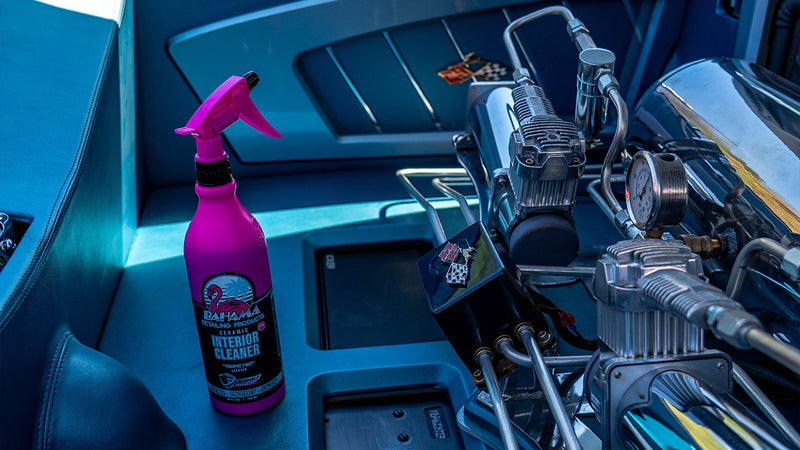
Wipe the dash, doors, leather, vinyl and screens with Ceramic Interior Cleaner and a Starting Line towel. It cleans and lays down SunShield UV protection in the same pass, with a streak-free, no-gloss finish that will not glare off the windshield.
A windshield sunshade and shaded parking help a lot. So does keeping the inside of the glass clean, so you are not tempted to wipe the dash with whatever towel is lying around.

Dash, doors, leather, vinyl and screens. Cleans and lays down UV protection in the same pass, with a streak-free, no-gloss finish.
Powersports in the Desert: UTVs, Dirt Bikes and Motorcycles
Powersports machines take the worst of it. They live outside, run through dust at speed, and are mostly unpainted plastic, which fades faster than clear-coated paint.
The same routine works. Mega Foaming Soap is safe on plastic, decals and frames. Simple Finish is the hero here: plastics, graphics, seats, tires and bed liner all take it. Dry with a Lil' Bird, which is sized for bikes and smaller machines. For the full process, see how to protect a UTV from UV damage and how to restore faded plastic.
Small Habits That Add Up
- Park smart. Shade, a carport or a breathable cover cuts the daily UV and heat load.
- Wash before the sun is high. Early morning or evening, never on a hot panel.
- Do not let bug guts and bird droppings bake. Remove them the same day with a foam pre-soak.
- Top up between full coats. A quick Final Touch pass after a wash keeps the layer building.
Frequently Asked Questions
How often should I wash my car in the desert?
Wash whenever dust builds up on the paint, which in the desert is often. With a pH-neutral ceramic soap, frequent washing adds protection instead of removing it.
Does car wax hold up in desert heat?
Not well. Traditional wax softens on a hot panel, attracts dust and wears quickly. A graphene and SiO2 layer like Final Touch is a better fit and lasts 3 to 6 months per full coat.
What is the best way to protect black trim from desert sun?
Clean it, then apply Ceramic Simple Finish with a Finish Line towel. It brings faded plastic back to like-new and adds SunShield UV protection.
Can I detail my car in direct desert sun?
Avoid it. Products dry before you can work them and water spots form instantly. Wash and protect in the shade or during the cool part of the day.
Is a pro ceramic coating worth it for desert driving?
It can be, but it is $1k+ and the shop keeps your car for days. The Full System Set gives you a hydrophobic, UV-protected layer on the whole vehicle in a couple of hours.
The Bottom Line
The desert attacks paint, plastic, rubber and the cabin all at once, so your protection has to cover all of them. Wash gently, dry fast, restore the trim, protect the paint and keep it topped up. The Full System Set covers every surface: a pro ceramic coating is $1k+, and this system only takes a couple hours.

Wash, interior, restore and protect: all four Bahama ceramic bottles in one set. A pro ceramic coating is $1k+. This system only takes a couple hours.

Drying, interior, wheels and trim, and buffing the Final Touch coating, each with its own towel. No wheel grime on the dash, no drying towel soaking up your coating.