The best motorcycle detailing products are the ones built for what a bike actually is: a dense mix of paint, chrome, bare metal, rubber, plastic and vinyl packed into tight spaces, parked outside more often than not, and ridden in full sun.
Most riders grab a car wash soap and a random rag, then wonder why the tank looks tired and the rubber goes gray by the end of the season. The fix is not more products. It is the right four bottles, each matched to a surface, and a towel for each job.
Here is what to look for, what to skip, and the exact routine we use on bikes.
Why Is Motorcycle Detailing Different From Car Detailing?
On a car, most of the surface is big, flat painted panels. On a motorcycle, most of the surface is small, curved and mixed. One wipe can cross painted tank, chrome trim, a rubber knee pad and a plastic cover.
That changes the rules. A product that is great on paint can streak chrome. A tire dressing that looks good on a car sidewall can end up on a footpeg or a brake rotor. Everything needs a clear job.
Bikes also take more direct sun. There is no roof shading the tank and no garage for a lot of riders. UV breaks down paint, fades plastic and dries out rubber over time, and a bike sees all three on every ride.
What Should You Look For in a Motorcycle Wash Soap?
Start with the wash, because every other step depends on it. A good bike soap needs three things.
- pH neutral. Bikes carry anodized parts, brushed aluminum, chrome, powder coat and decals. A pH neutral soap cleans all of them without dulling or stripping anything.
- Thick, clinging foam. Foam that sits on vertical surfaces and works into the frame, engine fins and wheel spokes does the loosening for you, so you scrub less.
- Protection left behind. A soap that only cleans leaves bare surfaces. A soap that leaves a hydrophobic, UV protective layer turns every wash into maintenance.
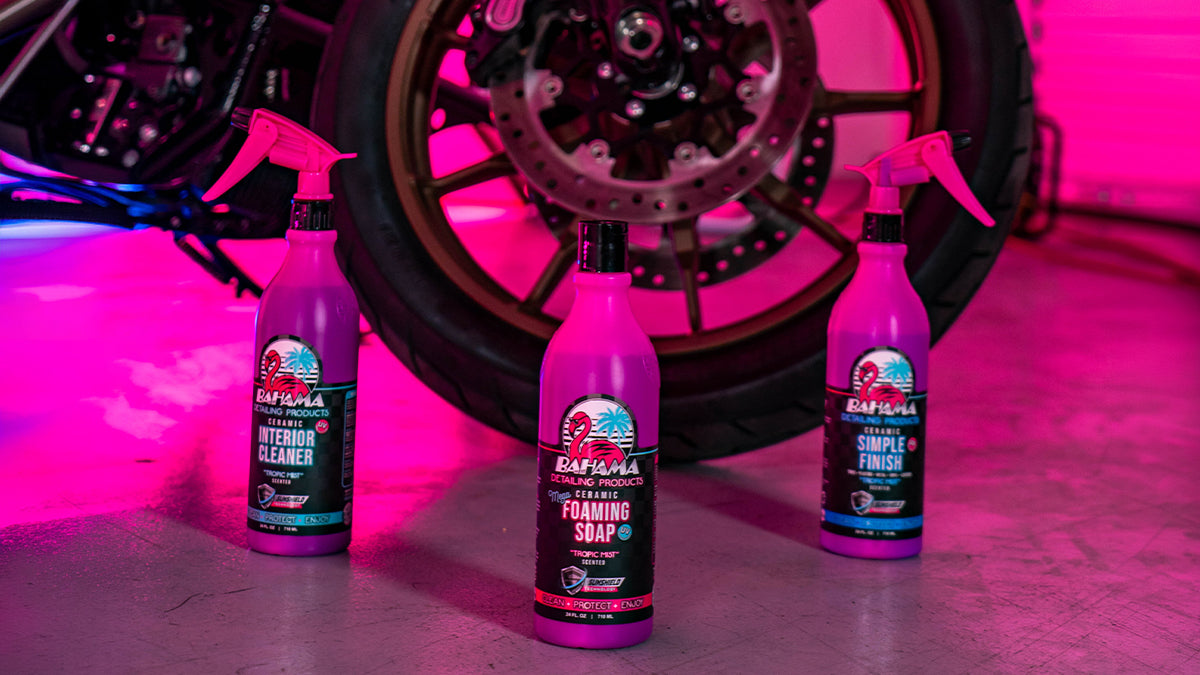
Ceramic Mega Foaming Soap checks all three. It is pH neutral, safe on any coating, and leaves a beading ceramic layer with SunShield UV behind as it rinses. Run it through a foam cannon or a bucket with a Grit Guard Bucket so the grit you pull off stays at the bottom instead of going back onto the tank.
For a deeper look at why graphene soaps work differently, read our breakdown of graphene car soap.

Thick cannon foam that lifts road film, mud and bug guts, then leaves a beading ceramic layer behind. pH-neutral, so it is safe on any coating.
Which Products Go on Which Motorcycle Surfaces?
This is where most bike routines go wrong. Here is the simple map.
Painted tank, fenders and fairings
Gloss paint gets Ceramic Final Touch Detail Spray. It is the most ceramic of the four bottles and it replaces wax and the pro coating. Graphene plus SiO2 leaves an ultra hydrophobic, slick layer that sheds water and road film.
Chrome, pipes and polished metal
Chrome also gets Final Touch. It keeps water from sitting on the plating and drying into spots, and it makes fingerprints and bug residue wipe off easier. Final Touch is not a polish, so if your chrome already has heavy oxidation, take care of that with a dedicated metal polish first.
Plastic, rubber, vinyl and wheels
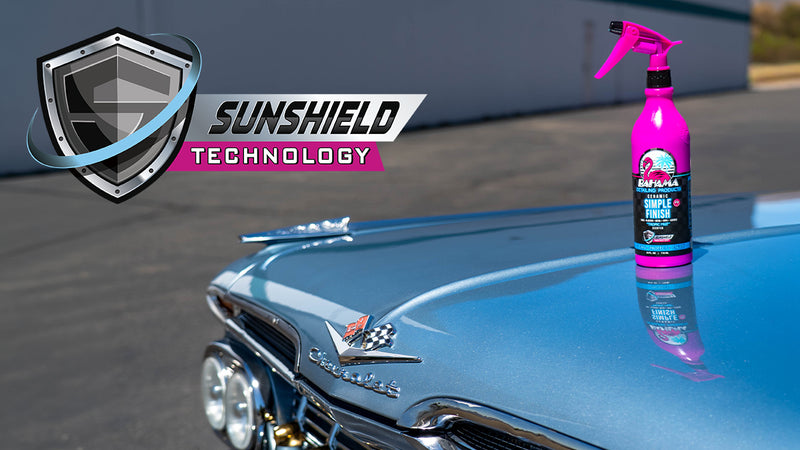
Ceramic Simple Finish handles everything that fades: plastic covers, rubber trim, vinyl, tire sidewalls and wheels. It also works on matte and satin paint, PPF and vinyl wrap. Spray, wipe, walk away. No sling.
Keep it off gloss paint, glass, chrome, and anything you grip or brake with: tire tread, grips, footpegs and brake rotors.
Seat and gauges
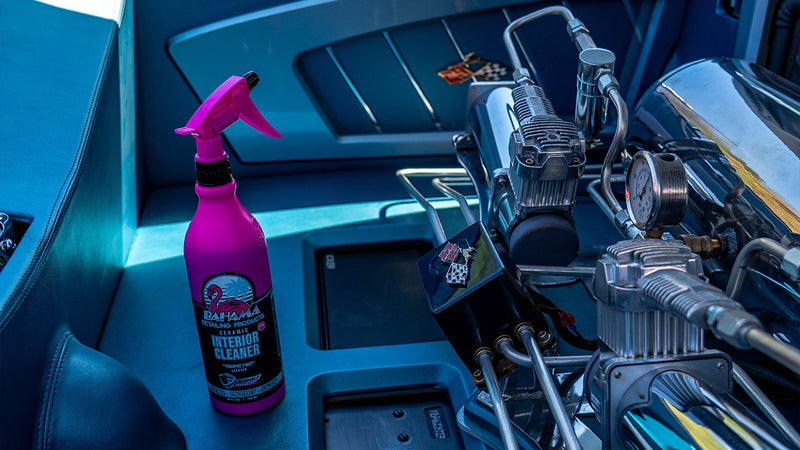
Leather and vinyl seats and the dash display get Ceramic Interior Cleaner. It cleans and lays down UV protection in the same pass, with a streak-free, no-gloss finish, so your seat does not turn slippery.
How Do You Protect Motorcycle Chrome and Paint From UV?
UV damage is slow and cumulative. You rarely see it happen. You just notice one day that the red tank is closer to pink and the black plastic has gone chalky.
The answer is layering UV protection every time you touch the bike. All four Bahama bottles carry SunShield UV, so the wash, the restore step and the protect step each add to the barrier instead of relying on one product to do it all.
Final Touch is the one that does the heavy lifting on paint and chrome. A full coat takes about an hour from wash to finish and lasts 3 to 6 months. It layers and builds with every application, so the bike gets better protected the longer you stay on the routine.
If your bike lives outside, our guide to protecting motorcycle paint from UV fading goes deeper on parking, covers and timing.

The most ceramic of the four. Spray it on, wipe it smooth into a consistent layer, let it dry for 5 minutes, then buff. What is left is a streak-free, water-spot-free, ultra hydrophobic ceramic layer with UV protection.
How Do You Care for Motorcycle Tires and Rubber?
Rubber dries out and fades under UV. Once it goes brittle, nothing brings the material back, so prevention is the whole game.
Use Simple Finish on sidewalls, rubber trim, cable boots and knee pads. Spray it onto a Finish Line towel rather than straight at the wheel, then wipe the sidewall. That keeps product off the tread and the brake rotor.
On a bike, that detail matters more than on a car. Two contact patches is all you have, so nothing slick goes near the tread. Ever.
Finish Line's dual-sided towel is built for this. The short nap lifts brake dust and grime, the plush side wipes clean. It takes the dirty work so your finishing towels never have to.

Faded plastic, trim, rubber and tires back to like-new, then protected. Just as good on matte, satin, PPF and vinyl wrap.
A Simple Motorcycle Detailing Routine
Every bottle has a towel built for it. Here is the full routine, in order.
- Wash. Bike cool and in the shade. Rinse, then cover it in Ceramic Mega Foaming Soap and let the foam dwell while you work a soft brush around the engine, spokes and frame. Rinse top to bottom. Wipe the seat and gauges with Ceramic Interior Cleaner and a Starting Line towel.
- Dry. Blow water out of tight spots if you have a blower, then blot everything with a Lil' Bird. At 18x18 it is sized for tanks, fenders and the details. Blot rather than drag. Water spots are made in the drying, not in the wash.
- Restore. Ceramic Simple Finish with a Finish Line towel on plastic, rubber, vinyl, tire sidewalls and wheels. Gloss rims get a quick buff after.
- Protect. Ceramic Final Touch on paint, chrome and the windscreen. Spray, wipe it smooth into a consistent layer, and let it dry 5 minutes.
- Finish. Buff it off with a dry Victory Lap. Its edgeless weave lifts the residue while the coating stays on the paint. Never buff Final Touch with a drying towel; the thick pile drinks the coating right off the panel.
After a full Final Touch coat, keep the bike dry for about 24 hours so it cures. Between full coats, Final Touch doubles as your quick detail spray after a ride.
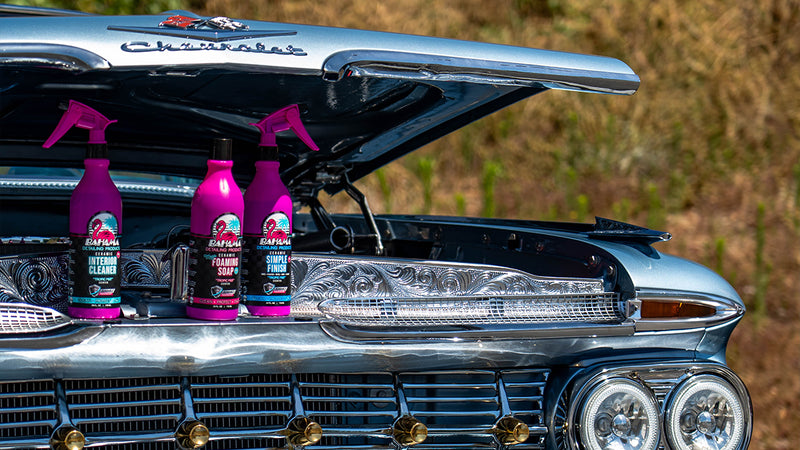
If you want the whole kit in one box, the Full System Set covers all four bottles. The last 4 detailing products you'll ever need.

Glass, mirrors, door jambs and every spot the big towel is too much for. Same 1600 GSM pile, seamless edge.
What Motorcycle Detailing Products Should You Skip?
- Household cleaners and dish soap. Too harsh for decals and coatings, and they leave nothing protective behind.
- Greasy tire shine. Anything that slings or migrates is a risk on a bike. Use a dry-to-the-touch product, sidewall only.
- One rag for everything. A towel that has been through brake dust and tire dressing has no business on your tank. Most swirl marks are put there by a towel.
- Abrasive chrome cleaners as routine care. Polish only when oxidation calls for it. Protect the rest of the time.
For a full walkthrough with photos of each stage, see how to detail a motorcycle.
Frequently Asked Questions
Can I use car detailing products on a motorcycle?
Yes, if they are pH neutral and you match each product to the right surface. The Bahama bottles work on cars, bikes and everything in the garage; the key on a bike is keeping anything slick off the tread, grips and brakes.
How often should I wash my motorcycle?
Wash whenever it is visibly dirty, and soon after rain, bugs or salty roads. Because Mega Foaming Soap leaves a protective layer behind, frequent washing helps rather than hurts.
Is ceramic spray safe on motorcycle chrome?
Final Touch is safe on chrome and is the right product for it. Spray, wipe smooth, let it dry 5 minutes, then buff with a dry Victory Lap.
Can I put tire dressing on motorcycle tires?
Only on the sidewall, applied with a towel, never sprayed near the tread or rotors. Simple Finish dries without sling, which is what you want on two wheels.
Which towel should I use to dry a motorcycle?
Lil' Bird. It is 18x18 and 1600 GSM, so it handles the tank, fenders and tight spots without dragging grit across the paint.
The Bottom Line
The best motorcycle detailing products are a short list: a pH neutral foaming soap, a restorer for plastic and rubber, a ceramic spray for paint and chrome, and the right towel for each. Wash. Restore. Protect. One towel per job. Zero cross-contamination, and the Premium Towel Set covers every one of them.

Wash, interior, restore and protect: all four Bahama ceramic bottles in one set. A pro ceramic coating is $1k+. This system only takes a couple hours.

Drying, interior, wheels and trim, and buffing the Final Touch coating, each with its own towel. No wheel grime on the dash, no drying towel soaking up your coating.