

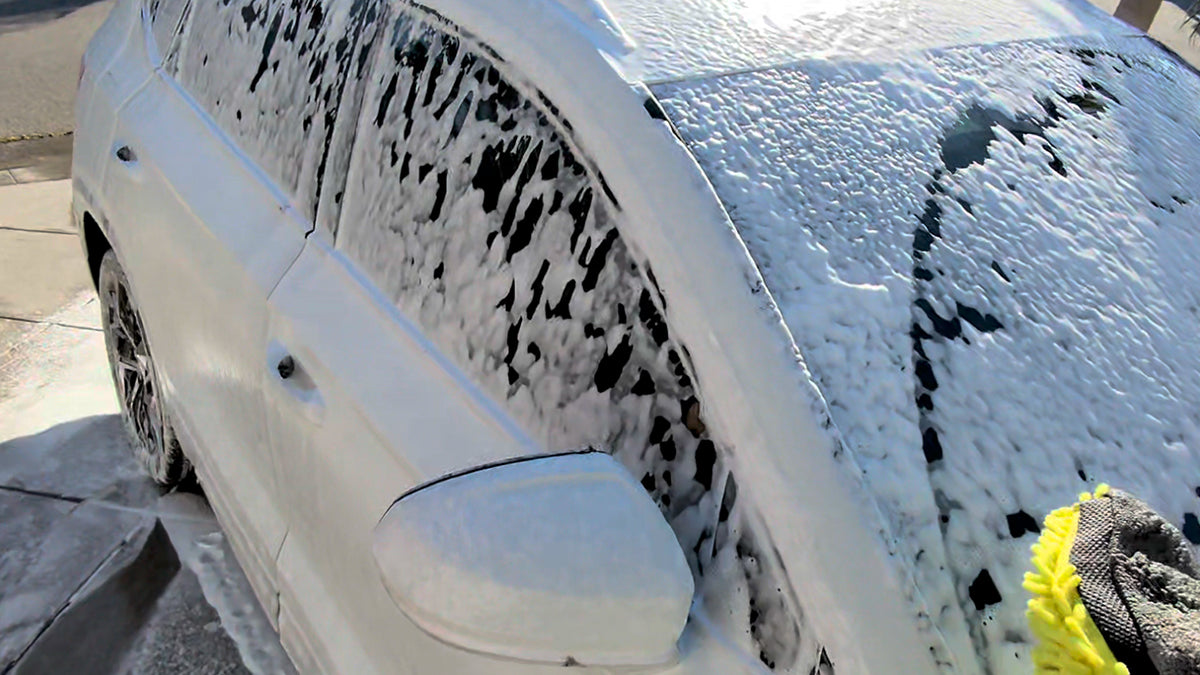
Salt is the most destructive material your daily driver encounters on a regular basis. Road salt, sea salt near coastal areas, and salt from agricultural spray work in the same way: it bonds to paint, chrome, and undercarriage metal and draws moisture, accelerating oxidation and corrosion dramatically compared to fresh water alone. A car left in a coastal environment or driven on salted winter roads without regular rinsing will show corrosion damage within 2–3 years. Properly maintained, the same car can go decades without visible salt damage.
How Salt Damages Paint
Salt damage isn't just corrosion. Salt crystals embedded in paint micro-pores act as abrasives during washing, creating fine scratches. Salt also draws moisture through clear coat micro-cracks, accelerating oxidation of the base coat from below. On unprotected paint, you'll see dull, chalky oxidation appearing first on horizontal surfaces (hood, roof, trunk) where salt accumulates and isn't rinsed by rain.
The Post-Drive Rinse: Non-Negotiable
In coastal areas or after driving on salted roads: rinse the car the same day, ideally within a few hours. Focus on:
- Rocker panels and lower door edges where salt spray accumulates
- Wheel wells and suspension components
- Undercarriage (a hose underneath the car for 60 seconds removes most salt)
- Lower bumpers and grille openings where salt collects at high velocity
A rinse doesn't require soap. Pure water dissolves and removes road salt. Soap is needed when you're dealing with bonded grime, grease, or contaminants, but a 5-minute rinse after a salt exposure event is more valuable than a full wash a week later.

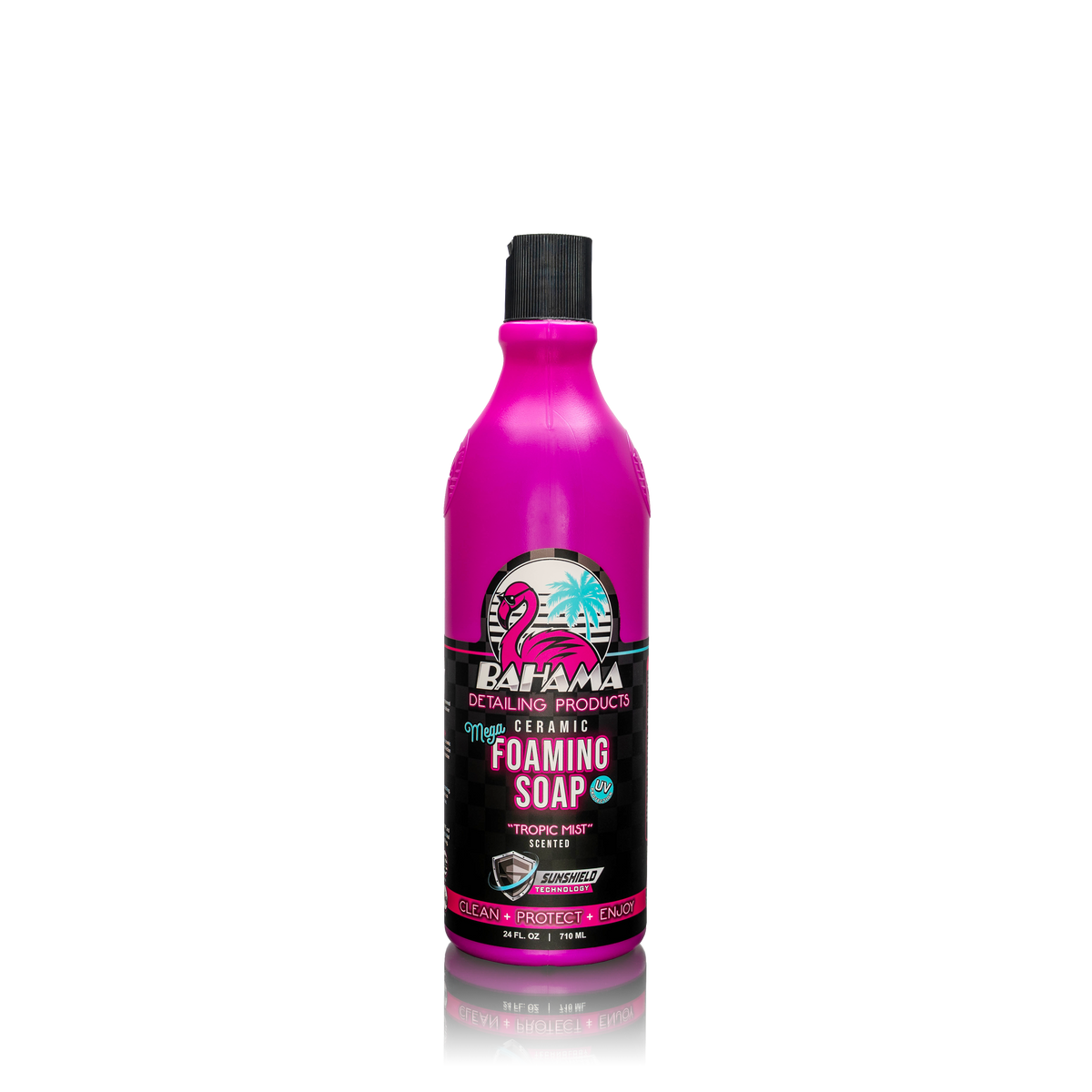
Mega Ceramic Foaming Soap
The best everyday car soap is a ceramic foaming formula that leaves behind UV protection with every wash.
Using pH-Neutral Shampoo After Salt Exposure
After rinsing, a full wash with Bahama Graphene Wash & Coat removes salt residue that the rinse didn't break down. pH-neutral shampoo is essential here: alkaline cleaners can react with salt compounds and drive them deeper into paint pores rather than lifting them.
The graphene component in Bahama Graphene Wash & Coat leaves a hydrophobic molecular layer after every wash. This layer makes salt adhesion harder, salt beads on graphene-protected paint like water, rather than bonding to the surface.
Graphene Protection as a Salt Barrier
A well-maintained graphene protection layer is the best preventive defense against salt damage. The SiO2 nanoparticles fill paint micro-pores, removing the surface texture that salt crystals grip. The hydrophobic surface causes saltwater to sheet off rather than sit and evaporate, leaving concentrated salt residue behind.
Bahama Detail Spray, applied after each wash, maintains this protective layer. In coastal environments or winter road conditions, apply Detail Spray more frequently, after every salt exposure event, not just monthly. The more consistently you maintain the graphene layer, the less work salt can do.
Undercarriage and Metal Protection
Paint is only part of the salt damage equation. Undercarriage metal, brake components, suspension, and exhaust systems are more exposed and more vulnerable. A full undercarriage rinse after every salt event is the single highest-impact action you can take for long-term vehicle preservation.
For exposed metal components, a light coat of corrosion inhibitor after cleaning provides additional protection. Chrome trim and exposed metal edges are particularly vulnerable because salt solution wicks under chrome plating through pinholes, causing the rust bubbling and lifting that destroys vintage trim.

Ceramic Simple Finish
Pair your car soap with a protectant that actually lasts, ceramic chemistry that builds UV and water protection wash after wash.
Frequency in High-Salt Environments
- Coastal daily drivers: rinse every 2–3 days minimum; full wash weekly
- Winter road salt: rinse same day when possible; full wash within 3 days
- Graphene sealant: reapply with every wash cycle using Bahama Graphene Wash & Coat
- Detail spray topper: apply after every wash or rinse cycle in high-salt conditions
Frequently Asked Questions
Does wax protect against salt?
Wax provides some protection but degrades quickly in salt environments. Graphene + SiO2 protection bonds to paint at the molecular level and provides significantly better and longer-lasting salt resistance.
How long can salt sit on a car before causing damage?
Visible paint damage from salt can develop within weeks on unprotected paint. On graphene-protected paint, the timeline extends significantly, but early rinsing is always the best practice.
Is Bahama Graphene Wash & Coat safe for use on wheels and undercarriage?
Yes, Bahama Graphene Wash & Coat is pH-neutral and safe on all vehicle surfaces including wheels, undercarriage, and chrome trim. It removes salt contamination without reacting with metal surfaces.
Protect What You Drive Every Day
Salt is slow, patient, and relentless. The cars that hold up in coastal and winter climates aren't the ones that get detailed occasionally, they're the ones that get rinsed consistently. Build the rinse habit, maintain your graphene barrier with Bahama products, and salt becomes something your car sheds rather than absorbs.